AI Appraisal Estimate

AI-generated estimates · not official valuations

From the user

What was submitted

Photo and notes provided by the user — not generated by AI

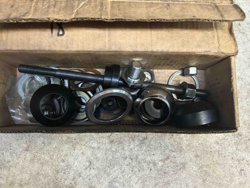
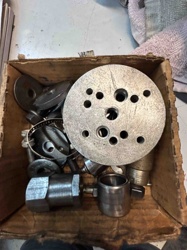
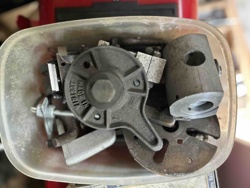
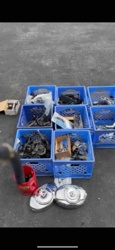
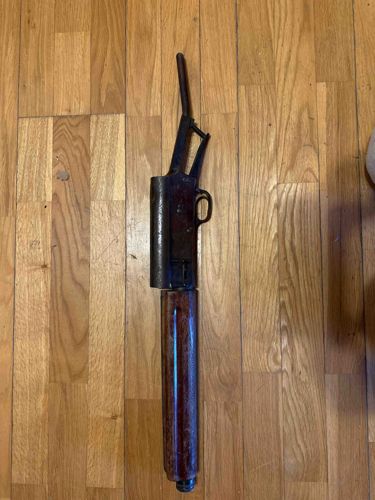
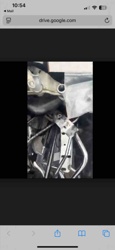
Submitted item photo
Submitted photo · June 28, 2026

User's notes

Part of a Browning shot gun

AI analysis below

AI appraisal

AI analysis & estimate

AI-Generated · Verify before acting

Everything below is generated by AI for informational purposes only. AI can make mistakes — the AI may misidentify items or misattribute them (artist, maker, brand, designer, origin, era). This is not an official valuation and should not be used for insurance, sale, tax, estate, legal, or lending purposes — or any decision requiring a certified appraisal. It is not an authoritative claim about any person, brand, or rights holder — do not share or rely on it as a factual statement about a third party. Always consult qualified professionals before making financial decisions.

Note

This analysis also relies on unverified notes provided by the user, which may be incomplete or inaccurate and could affect the result.

Read the full disclaimer

AI Identification

·Not independently authenticated·Verify before acting

Browning Auto-5 Shotgun Receiver and Forend Assembly

Firearm Components and Parts

AI Estimated Value

·Not an official valuation·Verify before acting

$100 - $175

As of June 28, 2026

AI Item Analysis

·AI can make mistakes·Verify before acting
This item consists of the core receiver and wooden forend of a Browning Auto-5 semi-automatic shotgun. The receiver is constructed of forged steel and features the distinctive high 'humpback' profile characteristic of John Browning's design. The metal surfaces exhibit a significant dark, mottled patina with visible surface oxidation and localized rust, particularly concentrated on the left side of the receiver body. The original blued finish appears largely worn or obscured by age. Attached to the rear are the tangs used for stock mounting, with the upper tang appearing slightly bent or misaligned. The trigger guard is intact, though the internal trigger group components are not fully visible. The forend is made of checkered walnut with a high-gloss varnish finish which shows significant crazing, scratches, and a prominent darkened area near the front cap. The overall condition is poor to fair, indicating long-term storage in a humid environment or neglect. This specific design was manufactured from 1902 until 1998, primarily by Fabrique Nationale in Belgium and later by Miroku in Japan; the lack of visible engraving suggests a standard field grade model. The assembly is currently incomplete, lacking the barrel, bolt, internal springs, and buttstock.
AI Appraisal Report

·AI can make mistakes·Verify before acting
Based on my examination of this Browning Auto-5 assembly, I have identified it as a partial receiver and forend group from a standard field grade model, likely of Belgian (FN) or Japanese (Miroku) production. The item is in poor to fair 'salvage' condition. The receiver retains the iconic 'humpback' profile but suffers from heavy mottled patina, surface oxidation, and localized pitting which has compromised the original blued finish. Structural concerns are noted with the misalignment of the upper tang. The walnut forend, while present, shows significant varnish crazing and compression damage. In the current secondary market, incomplete Auto-5 assemblies are primarily valued as 'parts guns.' The absence of the barrel, bolt assembly, carrier, and buttstock—combined with the labor costs required to remediate the rust and source missing internal components—significantly limits its ceiling. Demand remains steady for Auto-5 parts due to the model's longevity (1902–1998), but the condition issues here relegate this specific piece to a secondary tier. My valuation reflects its utility as a source for the trigger guard and stripped receiver frame rather than a restoration candidate. Authenticity is confirmed by the design geometry, though the lack of visible serial numbers or proofs in the images prevents dating or determining the exact gauge. A physical inspection is required to check for internal cracks in the receiver and to verify the serial number against factory records. Full authentication would necessitate verifying that the metal has not been structurally weakened by deep pitting or improper previous cleaning attempts.

Get your items appraised

Instant estimates of your treasures with AI-powered appraisals

Browse More Appraisals