Japanese Kabazaiku (Cherry Bark) Tea Caddy
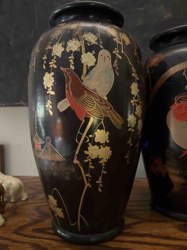
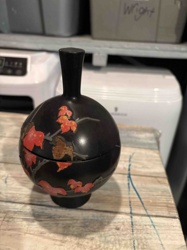
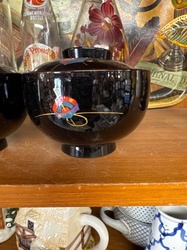
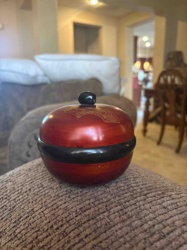
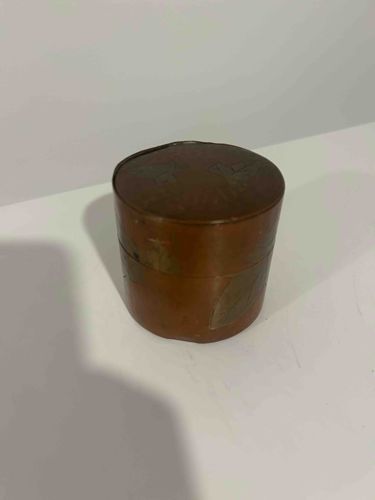
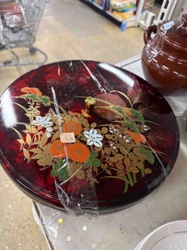
This is a traditional Japanese tea caddy (chazutsu) crafted using the Kabazaiku technique, which utilizes the polished bark of the mountain cherry tree. The item is cylindrical in form with a fitted lid that sits flush against the body. Its physical characteristics include a warm, reddish-brown natural wood aesthetic with a semi-glossy finish typical of aged cherry bark. The exterior is decorated with delicate, inlaid or lightly etched motifs that appear to represent leaves or floral patterns, which are characteristic of the Akita Prefecture craftsmanship where this art form originated. In terms of construction, it features a rigid interior structure likely made of wood or tin to ensure an airtight seal for tea preservation. The condition shows visible signs of age and use; there is a noticeable dark patina throughout, slight unevenness in the rim of the lid, and minor surface abrasions consistent with mid-20th-century vintage kitchenware. No explicit maker's marks are visible in the provided view, but the style strongly suggests an origin in K Kakunodate, Japan. The material is prized for its ability to regulate moisture, making it both a functional tool for tea storage and a piece of folk art. Its minimalist profile and organic texture represent a refined example of Japanese regional craft (Mingei).
AI-Generated Appraisal Disclaimer
Estimated Value
$150 - $250
Basic Information
Category
Antique Japanese Lacquerware and Woodwork
Appraised On
December 30, 2025
Estimated Value
$150 - $250
Item Description
This is a traditional Japanese tea caddy (chazutsu) crafted using the Kabazaiku technique, which utilizes the polished bark of the mountain cherry tree. The item is cylindrical in form with a fitted lid that sits flush against the body. Its physical characteristics include a warm, reddish-brown natural wood aesthetic with a semi-glossy finish typical of aged cherry bark. The exterior is decorated with delicate, inlaid or lightly etched motifs that appear to represent leaves or floral patterns, which are characteristic of the Akita Prefecture craftsmanship where this art form originated. In terms of construction, it features a rigid interior structure likely made of wood or tin to ensure an airtight seal for tea preservation. The condition shows visible signs of age and use; there is a noticeable dark patina throughout, slight unevenness in the rim of the lid, and minor surface abrasions consistent with mid-20th-century vintage kitchenware. No explicit maker's marks are visible in the provided view, but the style strongly suggests an origin in K Kakunodate, Japan. The material is prized for its ability to regulate moisture, making it both a functional tool for tea storage and a piece of folk art. Its minimalist profile and organic texture represent a refined example of Japanese regional craft (Mingei).
Get Your Items Appraised
Instant estimates of your treasures with AI-powered instant appraisals