Stemmed Bifacial Projectile Point
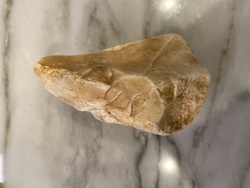
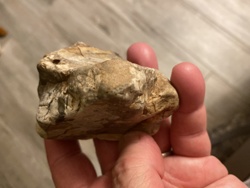
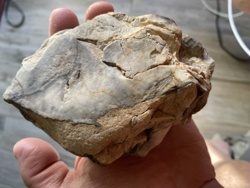
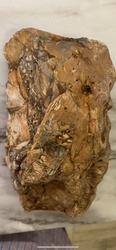
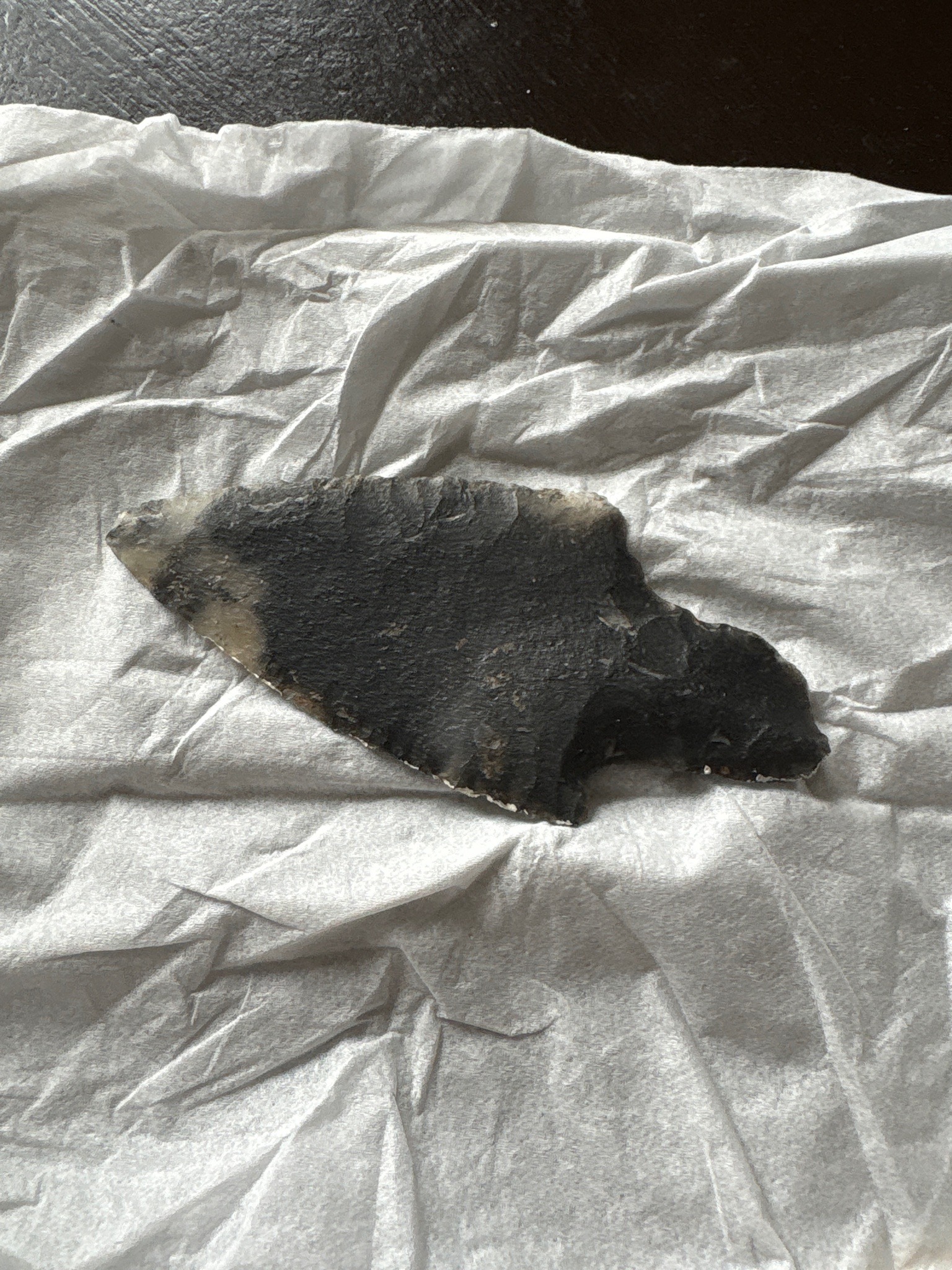
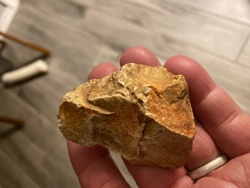
This artifact is a medium-to-large bifacial lithic projectile point, likely used as a spear head or knife blade. It is crafted from a dark, fine-grained chert or flint, characterized by its deep charcoal to black coloration with distinct light cream or tan inclusions near the distal tip and along the lower margins. The object demonstrates skillful percussion and pressure flaking, resulting in a lanceolate body with a slightly asymmetrical profile. It features a prominent contracting stem or base designed for hafting to a wooden shaft. The edges show evidence of secondary retouching, which provides a sharp, serrated-like finish. Its physical condition includes bluntness at the tip and minor chipping along the blade edge, suggesting use-wear or impact. The surface possesses a distinct dull patina indicative of long-term environmental exposure. Based on its morphology, specifically the stemmed base and blade shape, this piece likely originates from an Archaic or Woodland period archaeological context, representing prehistoric craftsmanship used for hunting and butchering. No modern maker's marks are visible, supporting its status as an ancient hand-knapped tool.
AI-Generated Appraisal Disclaimer
Estimated Value
$350 - $600
Basic Information
Category
Archaeological Artifacts / Prehistoric Lithics
Appraised On
May 4, 2026
Estimated Value
$350 - $600
Item Description
This artifact is a medium-to-large bifacial lithic projectile point, likely used as a spear head or knife blade. It is crafted from a dark, fine-grained chert or flint, characterized by its deep charcoal to black coloration with distinct light cream or tan inclusions near the distal tip and along the lower margins. The object demonstrates skillful percussion and pressure flaking, resulting in a lanceolate body with a slightly asymmetrical profile. It features a prominent contracting stem or base designed for hafting to a wooden shaft. The edges show evidence of secondary retouching, which provides a sharp, serrated-like finish. Its physical condition includes bluntness at the tip and minor chipping along the blade edge, suggesting use-wear or impact. The surface possesses a distinct dull patina indicative of long-term environmental exposure. Based on its morphology, specifically the stemmed base and blade shape, this piece likely originates from an Archaic or Woodland period archaeological context, representing prehistoric craftsmanship used for hunting and butchering. No modern maker's marks are visible, supporting its status as an ancient hand-knapped tool.
Related Tags
Get Your Items Appraised
Instant estimates of your treasures with AI-powered instant appraisals