Japanese Six-Panel Byōbu Folding Screen
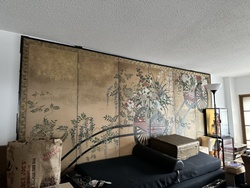
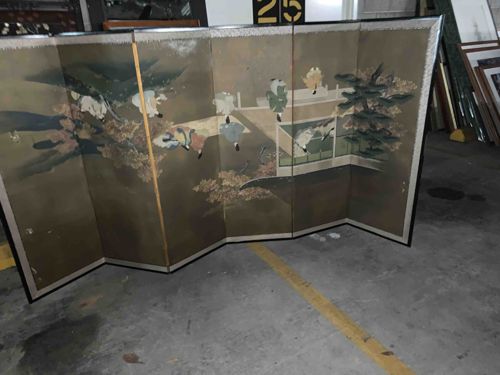
This is an antique Japanese six-panel folding screen, traditionally known as a byōbu. The screen features a continuous narrative scene painted in the Yamato-e style, likely depicting a classical literary theme or a scene from daily life in a palace garden. The artwork is executed on a gold-leaf or gilded paper ground, which has aged to a deep, warm bronze patina. The composition includes multiple figures in traditional heian-period attire (karaginu mo) interacting near architectural elements and lush pine trees. The figures are rendered with fine brushwork, showing colorful robes in shades of green, blue, and white. The construction consists of paper hinges (gata) connecting the six panels, bordered by a patterned silk brocade mounting and a dark lacquered wood frame with protective metal corners. Regarding condition, there is visible wear consistent with an antique age (likely late Edo to Meiji period), including surface abrasions, small losses to the pigment, and notable staining or foxing on the upper silver-toned decorative border. One panel shows significant vertical creasing and possible structural separation at the hinge. The craftsmanship indicates a refined hand, with careful attention to the placement of gold clouds (suyari-gumi) to create spatial depth. This piece serves as both a functional room divider and a significant work of decorative art from the Japanese tradition.
AI-Generated Appraisal Disclaimer
Estimated Value
$2,500 - $4,500
Basic Information
Category
Asian Antiques / Decorative Furniture
Appraised On
January 12, 2026
Estimated Value
$2,500 - $4,500
Additional Details Provided By Owner
User Provided Information
Antique
Item Description
This is an antique Japanese six-panel folding screen, traditionally known as a byōbu. The screen features a continuous narrative scene painted in the Yamato-e style, likely depicting a classical literary theme or a scene from daily life in a palace garden. The artwork is executed on a gold-leaf or gilded paper ground, which has aged to a deep, warm bronze patina. The composition includes multiple figures in traditional heian-period attire (karaginu mo) interacting near architectural elements and lush pine trees. The figures are rendered with fine brushwork, showing colorful robes in shades of green, blue, and white. The construction consists of paper hinges (gata) connecting the six panels, bordered by a patterned silk brocade mounting and a dark lacquered wood frame with protective metal corners. Regarding condition, there is visible wear consistent with an antique age (likely late Edo to Meiji period), including surface abrasions, small losses to the pigment, and notable staining or foxing on the upper silver-toned decorative border. One panel shows significant vertical creasing and possible structural separation at the hinge. The craftsmanship indicates a refined hand, with careful attention to the placement of gold clouds (suyari-gumi) to create spatial depth. This piece serves as both a functional room divider and a significant work of decorative art from the Japanese tradition.
Related Tags
Get Your Items Appraised
Instant estimates of your treasures with AI-powered instant appraisals