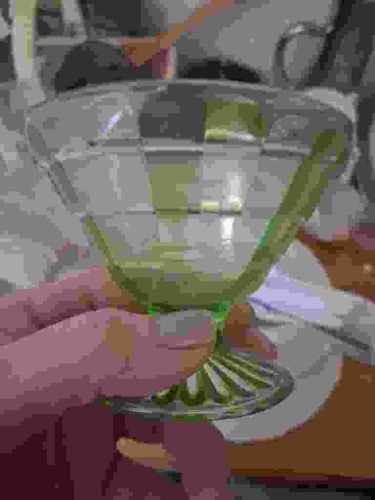
Uranium Glass Sherbet Cup with Ribbed Pedestal Base
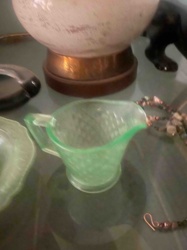
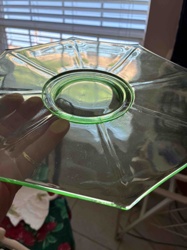
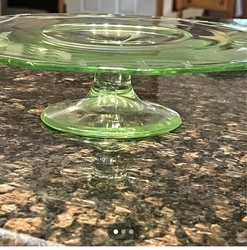
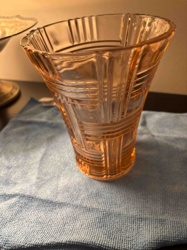
This is a vintage sherbet cup or dessert dish crafted from transparent green 'uranium glass,' which is notable for containing a small amount of uranium oxide that causes the glass to fluoresce bright green under ultraviolet light. The cup features a flared, conical upper bowl with smooth interior walls and a subtle paneled or faceted exterior structure that catches the light. It is supported by a short, integrated stem that transitions into a wide, decorative pedestal base. The base is of particular interest, featuring a deeply molded radial rib pattern extending from the center to the outer edge, which adds visual texture and stability. The glassware appears to be characteristic of American Depression-era glass, likely dating between the late 1920s and early 1940s. Its delicate, thin-walled construction and the specific shade of light green are indicative of production by major manufacturers of the period such as Hazel-Atlas, Federal Glass, or Hocking Glass Company. Looking at the condition, the glass retains a high degree of clarity with no visible inclusions or large bubbles common in lower-quality pressings. While the image shows minor light reflection, the surface appears largely free of significant chips or cracks on the rim and base, though a close inspection for 'flea bites' would be recommended for a final appraisal. The craftsmanship is consistent with high-volume mold-blown or pressed glass of the early 20th century.
AI-Generated Appraisal Disclaimer
Estimated Value
$15.00 - $25.00
Basic Information
Category
Antique Glassware / Depression Glass
Appraised On
March 20, 2026
Estimated Value
$15.00 - $25.00
Item Description
This is a vintage sherbet cup or dessert dish crafted from transparent green 'uranium glass,' which is notable for containing a small amount of uranium oxide that causes the glass to fluoresce bright green under ultraviolet light. The cup features a flared, conical upper bowl with smooth interior walls and a subtle paneled or faceted exterior structure that catches the light. It is supported by a short, integrated stem that transitions into a wide, decorative pedestal base. The base is of particular interest, featuring a deeply molded radial rib pattern extending from the center to the outer edge, which adds visual texture and stability. The glassware appears to be characteristic of American Depression-era glass, likely dating between the late 1920s and early 1940s. Its delicate, thin-walled construction and the specific shade of light green are indicative of production by major manufacturers of the period such as Hazel-Atlas, Federal Glass, or Hocking Glass Company. Looking at the condition, the glass retains a high degree of clarity with no visible inclusions or large bubbles common in lower-quality pressings. While the image shows minor light reflection, the surface appears largely free of significant chips or cracks on the rim and base, though a close inspection for 'flea bites' would be recommended for a final appraisal. The craftsmanship is consistent with high-volume mold-blown or pressed glass of the early 20th century.
Get Your Items Appraised
Instant estimates of your treasures with AI-powered instant appraisals