AI Appraisal Estimate

AI-generated estimates · not official valuations

From the user

What was submitted

Photo and notes provided by the user — not generated by AI

Submitted item photo
Submitted photo · June 8, 2026

User's notes

No additional notes provided.

AI analysis below

AI appraisal

AI analysis & estimate

AI-Generated · Verify before acting

Everything below is generated by AI for informational purposes only. AI can make mistakes — the AI may misidentify items or misattribute them (artist, maker, brand, designer, origin, era). This is not an official valuation and should not be used for insurance, sale, tax, estate, legal, or lending purposes — or any decision requiring a certified appraisal. It is not an authoritative claim about any person, brand, or rights holder — do not share or rely on it as a factual statement about a third party. Always consult qualified professionals before making financial decisions.

Read the full disclaimer

AI Identification

·Not independently authenticated·Verify before acting

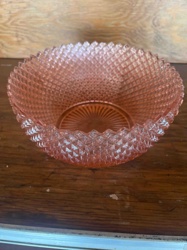
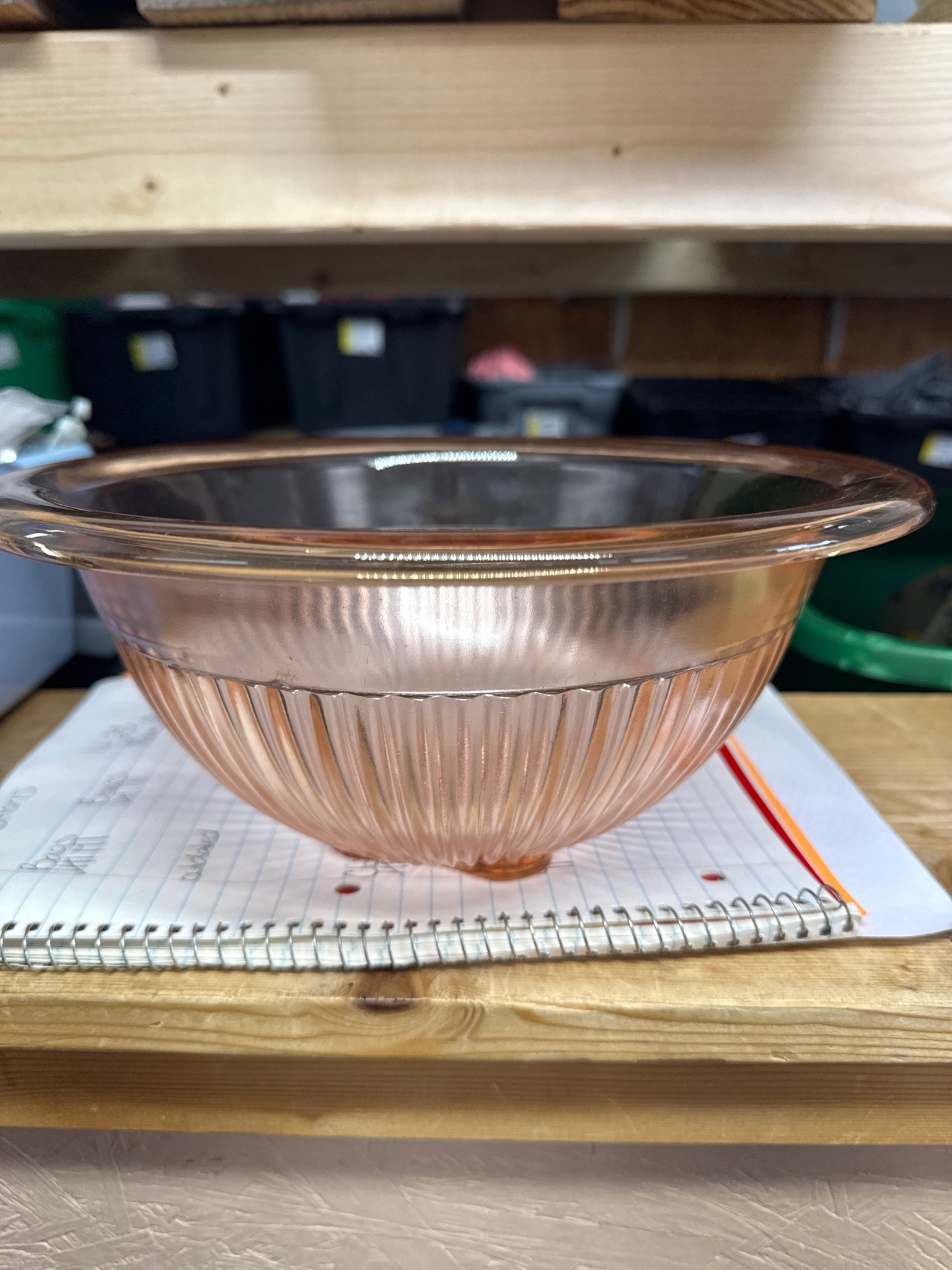
Pink Depression Glass Ribbed Mixing Bowl

Vintage Glassware / Depression Glass

AI Estimated Value

·Not an official valuation·Verify before acting

$45 - $65

As of June 8, 2026

AI Item Analysis

·AI can make mistakes·Verify before acting
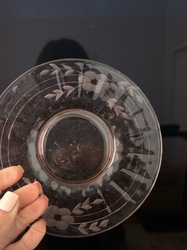
This is a vintage mixing bowl crafted from translucent pink depression glass, likely manufactured in the United States during the 1930s to early 1940s. The bowl features a classic flared rim and a body characterized by vertical optic ribbing that extends from the base to approximately two-thirds of the way up the exterior wall, creating a textured surface that catches and refracts light. The upper portion remains smooth, ending in a wide, out-folded rim that provides a secure grip for handling. It rests on a small, recessed circular foot. The color is a soft salmon-pink, characteristic of the 'Rosalin' or 'Pink' hues produced by companies like Federal Glass, Hocking Glass, or Hazel-Atlas. Based on its scale relative to the spiral notebook beneath it, the bowl appears to be approximately 8-9 inches in diameter at the rim. While the glass shows good clarity, fine surface scratches and minor 'straw marks' (mold cooling lines common in mass-produced glass of this era) may be present. No significant chips or cracks are immediately visible, suggesting well-maintained condition for its age. The craftsmanship is typical of machine-pressed kitchenware of the Great Depression era, balancing utility with decorative appeal through the use of colored glass and repeating geometric patterns.
AI Appraisal Report

·AI can make mistakes·Verify before acting
Upon visual examination of the provided image, I have evaluated this ribbed pink Depression glass mixing bowl, measuring approximately 8.5 inches in diameter. The item exhibits the characteristic 'Rosalin' or soft salmon-pink hue and mold-blown vertical ribbing consistent with 1930s-era production by firms like Federal Glass or Hazel-Atlas. Based on the visual inspection, the glass maintains good clarity without evidence of 'sick glass' (permanent clouding from dishwasher chemicals), and the rim appears free of major fleabites or chips, which often plague glassware of this age. Authenticity is supported by the presence of 'straw marks' typical of machine-pressed techniques from the period. The market for Depression glass has stabilized after a historical peak, with utility items like mixing bowls maintaining consistent demand among 'shabby chic' and farmhouse-style collectors. Comparables for vertical-ribbed patterns in this size generally realize between $40 and $70 at specialized glass shows or online marketplaces. Factors limiting the value include the high production volume of this specific pattern and commonality of the color compared to rarer 'Royal Lace' or cobalt blue pieces. Limitations: This appraisal is based solely on digital imagery. To finalize this valuation, an in-person inspection is required to check for internal stress cracks not visible to the eye and to assess the tactile depth of surface scratches. Verification of its provenance would further secure its historical context. True authentication would require black-light testing to check for specific fluorescence patterns and a precise measurement of weight to ensure it is not a later 'New Depression' reproduction from the 1970s.

Get your items appraised

Instant estimates of your treasures with AI-powered appraisals

Browse More Appraisals