AI Appraisal Estimate

AI-generated estimates · not official valuations

From the user

What was submitted

Photo and notes provided by the user — not generated by AI

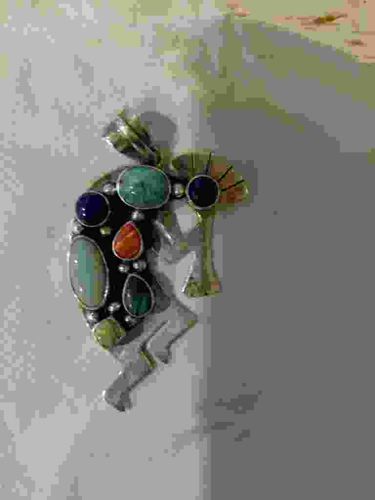
Submitted item photo
Submitted photo · June 8, 2026

User's notes

New Mexico Kokopeli silver, semi precious stones, 2000's

AI analysis below

AI appraisal

AI analysis & estimate

AI-Generated · Verify before acting

Everything below is generated by AI for informational purposes only. AI can make mistakes — the AI may misidentify items or misattribute them (artist, maker, brand, designer, origin, era). This is not an official valuation and should not be used for insurance, sale, tax, estate, legal, or lending purposes — or any decision requiring a certified appraisal. It is not an authoritative claim about any person, brand, or rights holder — do not share or rely on it as a factual statement about a third party. Always consult qualified professionals before making financial decisions.

Note

This analysis also relies on unverified notes provided by the user, which may be incomplete or inaccurate and could affect the result.

Read the full disclaimer

AI Identification

·Not independently authenticated·Verify before acting

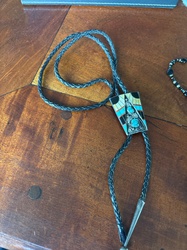
Southwestern Multi-Stone Kokopelli Sterling Silver Pendant

Jewelry - Native American / Southwestern Style

AI Estimated Value

·Not an official valuation·Verify before acting

$175.00 - $250.00

As of June 8, 2026

AI Item Analysis

·AI can make mistakes·Verify before acting
This is a detailed Southwestern-style pendant depicting the deity Kokopelli, a humpbacked flute player associated with fertility and music. Crafted in the early 2000s in New Mexico, the piece is constructed from silver, likely sterling (925), featuring a multi-stone inlay and bezel-set design. The deity's body is embellished with various semi-precious stones including turquoise, lapis lazuli, malachite, spiny oyster shell, and opal, each set in silver bezels separated by decorative silver granules or 'droplets.' The headpiece features a traditional radiating fan design, and the overall construction utilizes a combination of casting and hand-setting techniques. The pendant includes a large, decorative bail at the top for suspension from a chain. Notable craftsmanship is visible in the precision of the stone cuts and the balanced distribution of color across the figure's arched back. The silver shows a light natural patina typical of pieces from this era, with no significant visible damage, chips to the stones, or deep scratches. The aesthetic is characteristic of contemporary Native American or Southwestern artisan jewelry common in Albuquerque and Santa Fe markets during the turn of the millennium.
AI Appraisal Report

·AI can make mistakes·Verify before acting
I have examined the digital representation and description of this Southwestern deity pendant. The piece is a classic representation of 'Zuni-style' multi-stone inlay, though likely produced by a contemporary artisan in the New Mexico region circa 2000. Upon visual inspection, the sterling silver (925) setting shows excellent structural integrity with a pleasing natural patina. The inlay work—comprising turquoise, lapis lazuli, malachite, spiny oyster, and synthetic opal—appears flush and securely set with no visible gaps or cracked stones. This 'channel' and 'droplet' silver work was highly prevalent in Santa Fe and Albuquerque markets during the late 90s and early 2000s. While Kokopelli is a common motif, the complexity of using five distinct stone types increases its decorative appeal. The current secondary market for non-signed Southwestern silver remains stable; however, mass-produced 'tourist' versions can saturate the market. This specific piece is valued toward the higher end of its category due to the variety of the stones and the oversized decorative bail. Limitations: A definitive valuation is restricted by the lack of a physical hallmark or maker’s mark, which could double the value if attributed to a known master silversmith. Without a physical inspection, I cannot verify the silver purity through acid testing or determine if the turquoise has been stabilized. A microscopic exam is required to distinguish the opal between natural and lab-created (Gilson) variants. To fully authenticate, I recommend providing the original gallery receipt or provenance documentation from the New Mexico purchase.

Get your items appraised

Instant estimates of your treasures with AI-powered appraisals

Browse More Appraisals