Antique Blue and White Transferware Reticulated Platter
Antique Ceramics and Pottery

Antique Blue and White Transferware Reticulated Platter

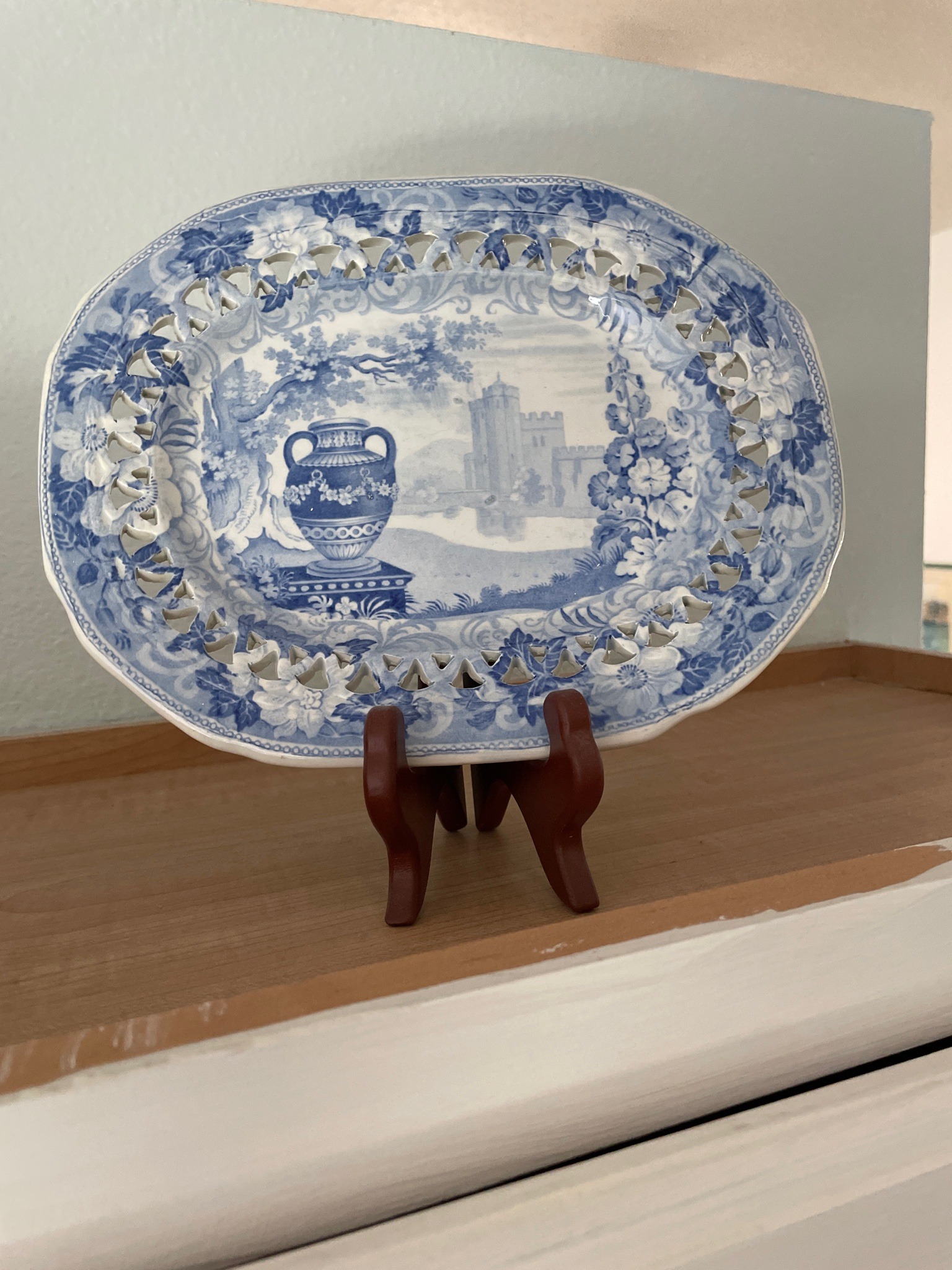
This is an elongated oval-shaped ceramic platter featuring an intricate blue and white transferware design typical of 19th-century British earthenware. The central scene depicts a classical landscape with a prominent large urn on a pedestal in the foreground, set against a backdrop of a river and a medieval-style castle. The well of the platter is surrounded by a dense floral border that transitions into a highly decorative reticulated or 'pierced' rim, characterized by a series of small, hand-cut triangular apertures. The outer edge has a delicate scalloped or 'wavy' finish. The monochromatic blue glaze varies in intensity, creating a sense of depth in the landscape and shadows. Construction indicates a refined earthenware body, likely ironstone or creamware. The condition appears to be very good with no visible chips or cracks on the surface, though fine crazing and minor manufacturing stilt marks on the reverse would be typical for its age. The style suggests an early Victorian era origin, approximately 1830-1860, potentially by a Staffordshire maker such as Spode, Wedgwood, or Davenport. The level of detail in the piercing and the clarity of the transfer print indicate high-quality craftsmanship, often referred to as 'Lace Edge' transferware.
Estimated Value

$450 - $650

Basic Information

Category

Antique Ceramics and Pottery

Appraised On

May 8, 2026

Estimated Value

$450 - $650

Item Description

This is an elongated oval-shaped ceramic platter featuring an intricate blue and white transferware design typical of 19th-century British earthenware. The central scene depicts a classical landscape with a prominent large urn on a pedestal in the foreground, set against a backdrop of a river and a medieval-style castle. The well of the platter is surrounded by a dense floral border that transitions into a highly decorative reticulated or 'pierced' rim, characterized by a series of small, hand-cut triangular apertures. The outer edge has a delicate scalloped or 'wavy' finish. The monochromatic blue glaze varies in intensity, creating a sense of depth in the landscape and shadows. Construction indicates a refined earthenware body, likely ironstone or creamware. The condition appears to be very good with no visible chips or cracks on the surface, though fine crazing and minor manufacturing stilt marks on the reverse would be typical for its age. The style suggests an early Victorian era origin, approximately 1830-1860, potentially by a Staffordshire maker such as Spode, Wedgwood, or Davenport. The level of detail in the piercing and the clarity of the transfer print indicate high-quality craftsmanship, often referred to as 'Lace Edge' transferware.
Get Your Items Appraised

Instant estimates of your treasures with AI-powered instant appraisals

Browse More Appraisals