AI estimate as of October 10, 2025 · verify with a professional before acting
AI-Generated · Verify before acting
Everything on this page is generated by AI for informational purposes only. AI can make mistakes — the AI may misidentify items or misattribute them (artist, maker, brand, designer, origin, era). This is not an official valuation and should not be used for insurance, sale, tax, estate, legal, or lending purposes — or any decision requiring a certified appraisal. It is not an authoritative claim about any person, brand, or rights holder — do not share or rely on it as a factual statement about a third party. Always consult qualified professionals before making financial decisions.
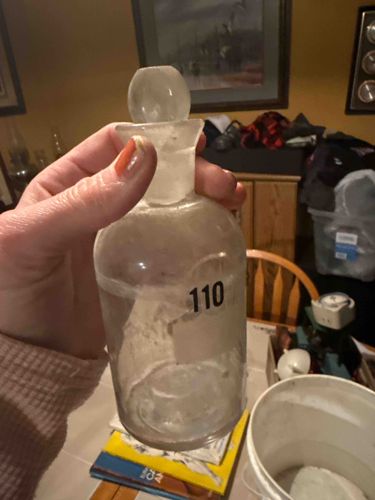
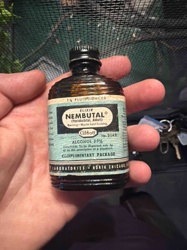
This is a vintage clear glass reagent bottle, likely used for chemical storage in a laboratory or as a pharmaceutical bottle. It features a classic cylindrical body with a short, flared neck that tapers to accommodate a ground glass stopper. The stopper itself is a solid, rounded piece designed to create an airtight seal with the bottle's neck, a common feature for preserving the integrity of chemical reagents. The glass appears to be colorless and relatively thick, suggesting durability. There is a prominent black numeral '110' applied as a label on the side of the bottle, possibly indicating an inventory number, volume marking, or internal classification. The overall condition of the bottle shows signs of age and use, with visible residue or cloudiness on the interior and exterior surfaces, indicative of past contents or prolonged storage. There are no immediate visible cracks or significant chips, but the general dullness of the glass suggests a lack of recent cleaning and potential etching from its previous contents. The ground glass stopper ensures a high degree of craftsmanship for its intended purpose of sealing against evaporation or contamination. The design functionality points to a utility item rather than decorative, dating potentially from the early to mid-20th century. The quality is typical for laboratory glassware of that era, focusing on practicality and chemical resistance.
AI Appraisal Report
Based on my visual examination of the provided image, this vintage clear glass reagent bottle with a ground glass stopper appears authentic to its described purpose as laboratory or pharmaceutical storage. The thick, colorless glass, flared neck, and precisely fitted ground glass stopper are consistent with early to mid-20th-century laboratory glassware designed for chemical preservation. The black numeral '110' suggests an inventory mark rather than a volume, which is common for such items.
The condition, as described, shows visible residue and cloudiness, indicating prior use and age. While no major chips or cracks are evident from the image description, the dullness of the glass suggests a need for thorough cleaning and potential etching, which could affect its aesthetic value if intended for display. The functional integrity of the ground glass seal is a key positive aspect for collectors of scientific instruments.
Market conditions for common vintage laboratory glassware are moderate. While there is a niche demand for these historical utility items, especially those with complete stoppers, only pieces with unique characteristics (e.g., rare labels, unusual shapes, prominent manufacturers' marks, or historical provenance) command higher prices. This particular bottle, lacking specific manufacturer identification or unique features beyond its functional design, falls into the more common category.
Factors impacting its value include its good general structural condition (no reported breaks), the presence of its original ground glass stopper, and its historical appeal. The residue and cloudiness detract slightly but are often accepted as patination for such items. Rarity is not particularly high for standard reagent bottles.
Limitations in authenticity verification from images alone are significant. I cannot physically assess the glass quality, specific manufacturing marks (which could be obscured by residue), or the true extent of etching or internal damage. An in-person examination would allow for tactile inspection of the stopper's fit, a detailed assessment of any faint markings, and a definitive determination of the type and severity of internal residues or etching. Provenance documentation, though unlikely for an item of this type, would be the only way to confirm any specific historical use.