AI estimate as of October 27, 2025 · verify with a professional before acting
AI-Generated · Verify before acting
Everything on this page is generated by AI for informational purposes only. AI can make mistakes — the AI may misidentify items or misattribute them (artist, maker, brand, designer, origin, era). This is not an official valuation and should not be used for insurance, sale, tax, estate, legal, or lending purposes — or any decision requiring a certified appraisal. It is not an authoritative claim about any person, brand, or rights holder — do not share or rely on it as a factual statement about a third party. Always consult qualified professionals before making financial decisions.
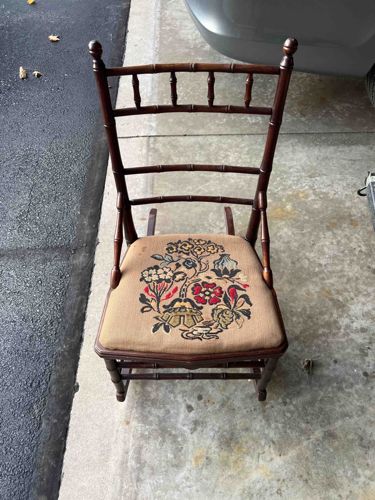
This is a Victorian-era folding rocking chair, characterized by its 'bamboo' turned wood construction, which was a popular design motif during that period, mimicking the look of bamboo shoots. The chair features a dark, possibly stained or lacquered, wooden frame, with spindle-like elements and finials on the top of the back stiles. The backrest is composed of multiple horizontal, 'bamboo'-turned rungs, providing a semi-open design. The seat is upholstered with a thick, possibly needlepoint or crewelwork, fabric in a neutral beige or light brown tone, adorned with a vibrant floral and botanical motif. The embroidery showcases a variety of flowers and leaves in shades of red, green, black, gold, and white, arranged in a symmetrical, somewhat stylized pattern. The chair is designed to fold, a practical feature of travel or occasional furniture from the late 19th and early 20th centuries. The rocking mechanism is integrated into the base, with curved rockers visible beneath the seat. Visible condition issues include some wear and possibly minor staining on the upholstered seat, consistent with its age and use. The wood frame appears to have a consistent patina, suggesting age-appropriate wear without significant damage like cracks or breaks, though closer inspection would be needed to confirm. The craftsmanship suggests a manufactured piece from the late 19th or early 20th century, likely between 1880 and 1920, reflecting the aesthetic trends of the Arts and Crafts or later Victorian periods. The combination of the 'bamboo' turned elements and the embroidered upholstery makes it a distinctive piece of period furniture.
AI Appraisal Report
Based on my visual examination of the provided image, this Victorian Folding 'Bamboo' Rocking Chair presents as an authentic piece from the late 19th to early 20th century, likely between 1880 and 1920. The 'bamboo' turned wood construction, a popular design motif of the period, along with the folding mechanism, points to its authenticity as a period occasional or travel furniture item. The embroidered upholstery, with its vibrant floral and botanical motif, appears consistent with period needlepoint or crewelwork.
Condition-wise, I note visible wear and potentially minor staining on the upholstered seat, which is entirely consistent with age and use. The wooden frame exhibits a desirable consistent patina, suggesting age-appropriate wear without overt damage such as significant cracks or breaks, though this would need to be confirmed with a hands-on inspection. The craftsmanship indicates it was a manufactured piece.
In terms of market conditions, similar Victorian 'bamboo' furniture, especially rocking chairs, generally sees moderate demand. The folding feature adds a layer of interest, but doesn't necessarily translate to a significant increase in value unless it's exceptionally rare or from a known maker. The embroidered upholstery, if original and in good condition, enhances its appeal. Comparables for such pieces in good, unrestored condition typically fall within the $200-$600 range, depending heavily on the quality of the embroidery and the wood finish condition.
Factors impacting value include the originality and condition of the embroidery; extensive damage or replacement would significantly lower value. The structural integrity of the folding mechanism and rockers is also key.
Limitations: My assessment of authenticity and condition is based solely on the image. A full authentication would require in-person examination to inspect joinery, wood species, and the precise nature of any wear or repairs. I couldn't verify the material composition of the embroidery or confirm if the upholstery is original to the chair. Provenance documentation (e.g., prior ownership, sales receipts) would strongly aid in confirming its history.