Tapered Stone Tool or Celt Fragment
Archaeological Artifacts & Lithics

Tapered Stone Tool or Celt Fragment

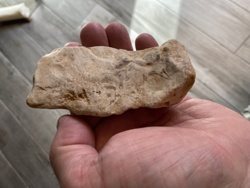
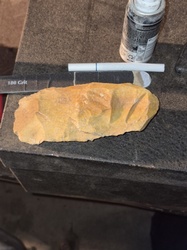
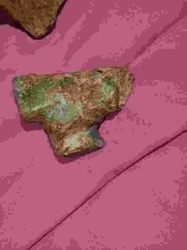
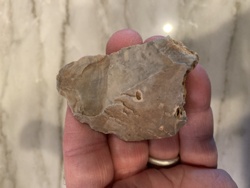
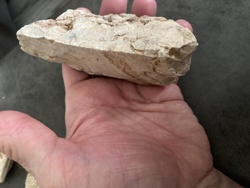
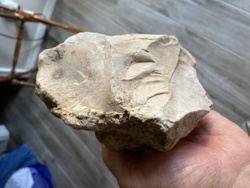
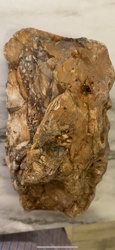
This item is an elongated, wedge-shaped object made of a dense, grainy lithic material, appearing to be an indigenous lithic tool such as a celt, scraper, or hand-axe fragment. Physically, it measures several inches in length, tapering from a broad, rounded proximal end down to a narrower, relatively pointed distal end. The material has a light tan to beige coloration with visible granular texture consistent with a hardstone like quartzite or a weathered sandstone. The surface exhibits a rough, pecked, and ground finish rather than sharp pressure-flaked edges, suggesting a ground-stone manufacturing process typical of various Neolithic or Formative-era cultures. Condition-wise, the object displays significant weathering and surface degradation, likely from prolonged burial or exposure to the elements. There is a notable dark discoloration on the upper right edge, which could be mineral staining, organic residue, or a Different lithic inclusion within the parent stone. The edges are blunted and show signs of percussion wear and possible ancient fractures, particularly at the widest point. No maker's marks or modern alterations are visible, giving it an authentic, aged patina that suggests it dates back several centuries, if not millennia. The quality of craftsmanship is functional, focused on achieving a specific ergonomic weight and shape for utilitarian tasks such as woodworking or digging.
Estimated Value

$150 - $300

Basic Information

Category

Archaeological Artifacts & Lithics

Appraised On

March 28, 2026

Estimated Value

$150 - $300

Item Description

This item is an elongated, wedge-shaped object made of a dense, grainy lithic material, appearing to be an indigenous lithic tool such as a celt, scraper, or hand-axe fragment. Physically, it measures several inches in length, tapering from a broad, rounded proximal end down to a narrower, relatively pointed distal end. The material has a light tan to beige coloration with visible granular texture consistent with a hardstone like quartzite or a weathered sandstone. The surface exhibits a rough, pecked, and ground finish rather than sharp pressure-flaked edges, suggesting a ground-stone manufacturing process typical of various Neolithic or Formative-era cultures. Condition-wise, the object displays significant weathering and surface degradation, likely from prolonged burial or exposure to the elements. There is a notable dark discoloration on the upper right edge, which could be mineral staining, organic residue, or a Different lithic inclusion within the parent stone. The edges are blunted and show signs of percussion wear and possible ancient fractures, particularly at the widest point. No maker's marks or modern alterations are visible, giving it an authentic, aged patina that suggests it dates back several centuries, if not millennia. The quality of craftsmanship is functional, focused on achieving a specific ergonomic weight and shape for utilitarian tasks such as woodworking or digging.
Get Your Items Appraised

Instant estimates of your treasures with AI-powered instant appraisals

Browse More Appraisals