Vintage Cut Glass Salt Shaker with Silver-Toned Metal Top
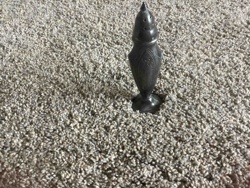
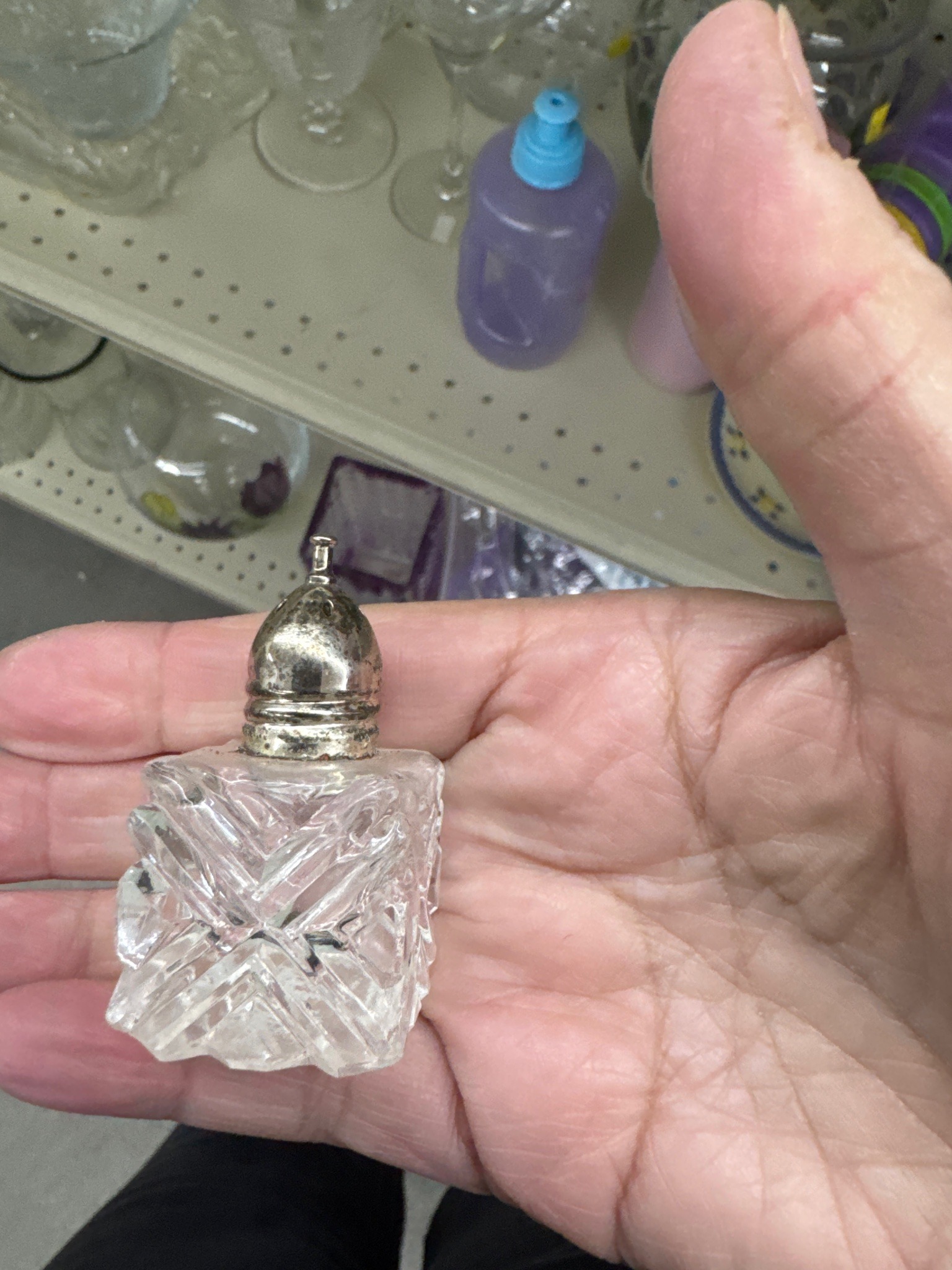
This is a vintage miniature salt shaker held in a palm for scale, measuring approximately 1.5 to 2 inches in height. The body is constructed from clear, heavy-duty leaded glass or crystal, featuring a deep 'hobstar' or geometric cross-hatch cut pattern that provides high light refraction and a tactile grip. The base is square-shaped, tapering slightly upward toward the neck. The collar and screw-on domed lid are made of a silver-toned metal, likely sterling silver or silver-plated brass, which exhibits significant tarnish and dark grey patina consistent with age and oxidation. The cap is circular with multiple small perforations at the apex for dispensing and is topped with a small decorative finial. In terms of condition, there are visible surface scratches and minor flea-bite chips on the sharp edges of the glass cuts, which is common for utilitarian tableware of this era. The metal top shows signs of minor denting and wear to the finish. This piece likely dates from the early to mid-20th century, possibly the American Brilliant Period or a later Depression-era revival style. The craftsmanship suggests a mass-produced but high-quality tabletop accessory typical of established glass manufacturers like Heisey or Fostoria.
AI-Generated Appraisal Disclaimer
Estimated Value
$15.00 - $25.00
Basic Information
Category
Antique Tableware and Kitchenware
Appraised On
April 25, 2026
Estimated Value
$15.00 - $25.00
Item Description
This is a vintage miniature salt shaker held in a palm for scale, measuring approximately 1.5 to 2 inches in height. The body is constructed from clear, heavy-duty leaded glass or crystal, featuring a deep 'hobstar' or geometric cross-hatch cut pattern that provides high light refraction and a tactile grip. The base is square-shaped, tapering slightly upward toward the neck. The collar and screw-on domed lid are made of a silver-toned metal, likely sterling silver or silver-plated brass, which exhibits significant tarnish and dark grey patina consistent with age and oxidation. The cap is circular with multiple small perforations at the apex for dispensing and is topped with a small decorative finial. In terms of condition, there are visible surface scratches and minor flea-bite chips on the sharp edges of the glass cuts, which is common for utilitarian tableware of this era. The metal top shows signs of minor denting and wear to the finish. This piece likely dates from the early to mid-20th century, possibly the American Brilliant Period or a later Depression-era revival style. The craftsmanship suggests a mass-produced but high-quality tabletop accessory typical of established glass manufacturers like Heisey or Fostoria.
Get Your Items Appraised
Instant estimates of your treasures with AI-powered instant appraisals