Stone Hand Axe / Bifacial Preform
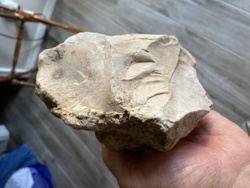
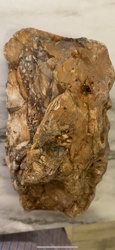
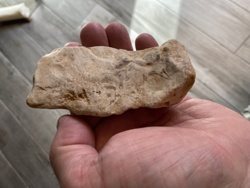
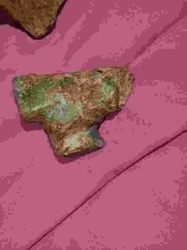
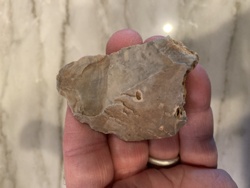
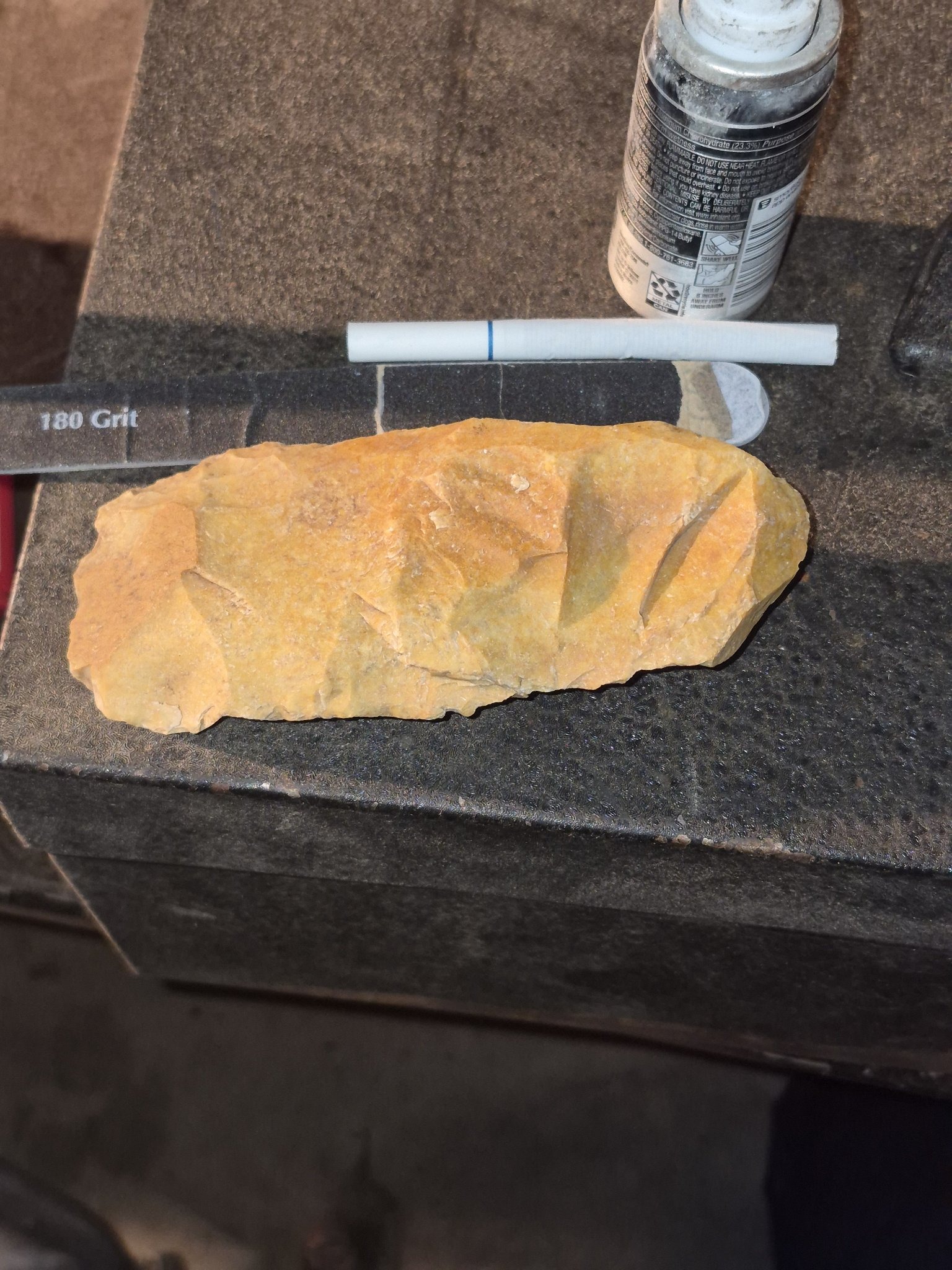
This and hand-held lithic tool, likely a bifacial preform or a completed hand axe, is crafted from a yellow-ochre to tan colored cryptocrystalline silicious stone, such as chert or jasper. The object measures approximately five to six inches in length based on adjacent reference items like the cigarette and sandpaper bar. The piece exhibits significant percussion flaking across both faces, resulting in large, shallow flake scars and a relatively thick midsection. The edges are irregularly worked with some secondary pressure flaking visible along the lower margins, though they remain somewhat jagged. The surface displays a matte, waxy luster and significant patination consistent with long-term environmental exposure. There are visible impact fractures and minor step fractures near the distal end, likely from the reduction process or ancient use-wear. No modern tool marks or manufacturer signatures are present, suggesting prehistoric origin. The craftsmanship is functional rather than highly refined, indicative of an early-stage tool or an expedient utility axe often associated with archaic or paleolithic lithic traditions. The overall condition is remarkably intact with no signs of modern breakage, preserving the original morphology of the knapped stone.
AI-Generated Appraisal Disclaimer
Estimated Value
$150-$250
Basic Information
Category
Archaeological Artifacts / Lithics
Appraised On
May 9, 2026
Estimated Value
$150-$250
Additional Details Provided By Owner
User Provided Information
hand axe
Item Description
This and hand-held lithic tool, likely a bifacial preform or a completed hand axe, is crafted from a yellow-ochre to tan colored cryptocrystalline silicious stone, such as chert or jasper. The object measures approximately five to six inches in length based on adjacent reference items like the cigarette and sandpaper bar. The piece exhibits significant percussion flaking across both faces, resulting in large, shallow flake scars and a relatively thick midsection. The edges are irregularly worked with some secondary pressure flaking visible along the lower margins, though they remain somewhat jagged. The surface displays a matte, waxy luster and significant patination consistent with long-term environmental exposure. There are visible impact fractures and minor step fractures near the distal end, likely from the reduction process or ancient use-wear. No modern tool marks or manufacturer signatures are present, suggesting prehistoric origin. The craftsmanship is functional rather than highly refined, indicative of an early-stage tool or an expedient utility axe often associated with archaic or paleolithic lithic traditions. The overall condition is remarkably intact with no signs of modern breakage, preserving the original morphology of the knapped stone.

Get Your Items Appraised
Instant estimates of your treasures with AI-powered instant appraisals