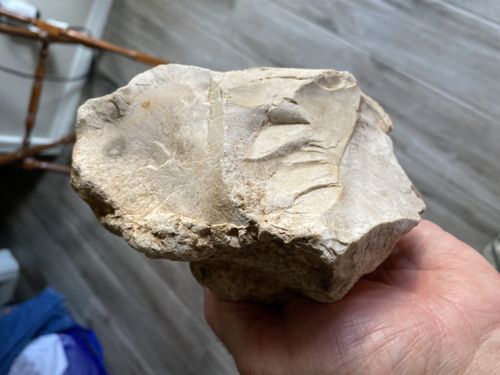
Middle Paleolithic Style Chert Lithic Tool
Archaeological Artifacts / Lithics

Middle Paleolithic Style Chert Lithic Tool

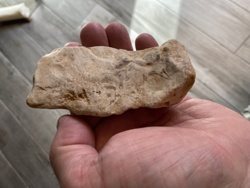
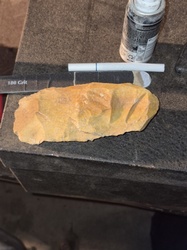
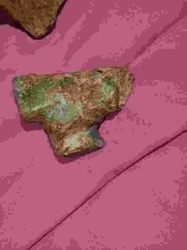
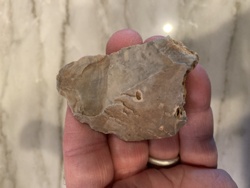
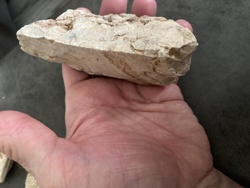
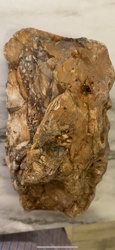
This item is a lithic specimen measuring approximately 5 inches by 3 inches, consistent with the proportions of a worked stone tool. It is composed of chert, a microcrystalline sedimentary rock common in North American lithic industries. The object displays a light tan to buff coloration with a matte, weathered surface texture. Observation of the edges reveals flake scars and percussion ripples, which are indicative of bulbous conchoidal fractures typical of flintknapping or intentional reduction. One side features more pronounced step-fractures and concave depressions, which the provider identifies as 'portable rock art' representing a face. The piece exhibits a heavy patina and rounded edges, suggesting significant environmental exposure and post-depositional wear. While the provider suggests a Middle Paleolithic origin, an archaeological assessment would note that this classification primarily applies to Old World hominid cultures; in the context of Guthrie, Oklahoma, such a tool would typically be associated with much later Paleo-Indian or Archaic periods. The 'face' features are subjective and may be the result of natural geofact processes or fortuitous flaking during the tool-making process rather than intentional figurative carving. The lack of fresh scars indicates that the modifications are ancient.

Estimated Value

$40-75

Basic Information

Category

Archaeological Artifacts / Lithics

Appraised On

February 20, 2026

Estimated Value

$40-75

Additional Details Provided By Owner

User Provided Information

Middle Paleolithic chert hand axe scraper portable rock art face found in Guthrie OK 5" x 3"

Item Description

This item is a lithic specimen measuring approximately 5 inches by 3 inches, consistent with the proportions of a worked stone tool. It is composed of chert, a microcrystalline sedimentary rock common in North American lithic industries. The object displays a light tan to buff coloration with a matte, weathered surface texture. Observation of the edges reveals flake scars and percussion ripples, which are indicative of bulbous conchoidal fractures typical of flintknapping or intentional reduction. One side features more pronounced step-fractures and concave depressions, which the provider identifies as 'portable rock art' representing a face. The piece exhibits a heavy patina and rounded edges, suggesting significant environmental exposure and post-depositional wear. While the provider suggests a Middle Paleolithic origin, an archaeological assessment would note that this classification primarily applies to Old World hominid cultures; in the context of Guthrie, Oklahoma, such a tool would typically be associated with much later Paleo-Indian or Archaic periods. The 'face' features are subjective and may be the result of natural geofact processes or fortuitous flaking during the tool-making process rather than intentional figurative carving. The lack of fresh scars indicates that the modifications are ancient.
Get Your Items Appraised

Instant estimates of your treasures with AI-powered instant appraisals

Browse More Appraisals