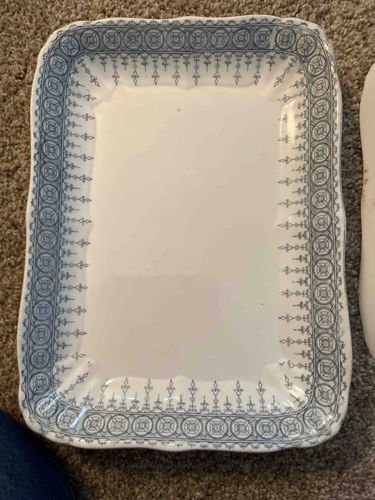
Victorian Era Blue Transferware Rectangular Serving Platter
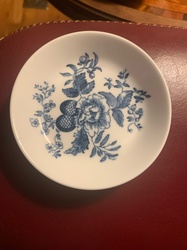
This is a rectangular ceramic serving platter featuring a distinct scalloped rim and deep-well construction typical of late 19th-century Victorian tableware. The piece is crafted from white ironstone or semi-porcelain, finished with a crisp underglaze blue transfer-printed border. The decorative motif consists of a geometric interlocking circular chain rim, accented by a descending fringe of stylized fleur-de-lis or pendant spearhead patterns that extend toward the center of the well. The corners of the piece are subtly pinched or indented, characteristic of the 'Aesthetic Movement' style which prioritized balanced, geometric line work. In terms of condition, the glaze appears bright with a high-gloss finish, though there are visible manufacturing flecks and several small dark pinhead-sized spots (iron spots) within the central well, which are common in antique kiln-fired ceramics. No major cracks or chips are immediately apparent on the upper surface, though slight crazing (fine network of cracks in the glaze) may be present upon closer inspection, consistent with an item of this age. The craftsmanship indicates a mass-produced but high-quality English or American pottery manufacture from approximately 1880-1900. While no maker's mark is visible from the top, the pattern's precision suggests a reputable firm like J. & G. Meakin or Johnson Brothers.
AI-Generated Appraisal Disclaimer
Estimated Value
$45 - $75
Basic Information
Category
Antique Ceramics / Tableware
Appraised On
January 24, 2026
Estimated Value
$45 - $75
Item Description
This is a rectangular ceramic serving platter featuring a distinct scalloped rim and deep-well construction typical of late 19th-century Victorian tableware. The piece is crafted from white ironstone or semi-porcelain, finished with a crisp underglaze blue transfer-printed border. The decorative motif consists of a geometric interlocking circular chain rim, accented by a descending fringe of stylized fleur-de-lis or pendant spearhead patterns that extend toward the center of the well. The corners of the piece are subtly pinched or indented, characteristic of the 'Aesthetic Movement' style which prioritized balanced, geometric line work. In terms of condition, the glaze appears bright with a high-gloss finish, though there are visible manufacturing flecks and several small dark pinhead-sized spots (iron spots) within the central well, which are common in antique kiln-fired ceramics. No major cracks or chips are immediately apparent on the upper surface, though slight crazing (fine network of cracks in the glaze) may be present upon closer inspection, consistent with an item of this age. The craftsmanship indicates a mass-produced but high-quality English or American pottery manufacture from approximately 1880-1900. While no maker's mark is visible from the top, the pattern's precision suggests a reputable firm like J. & G. Meakin or Johnson Brothers.
Related Tags
Explore similar items and categories:
Get Your Items Appraised
Instant estimates of your treasures with AI-powered instant appraisals