AI Appraisal Estimate

AI-generated estimates · not official valuations

From the user

What was submitted

Photo and notes provided by the user — not generated by AI

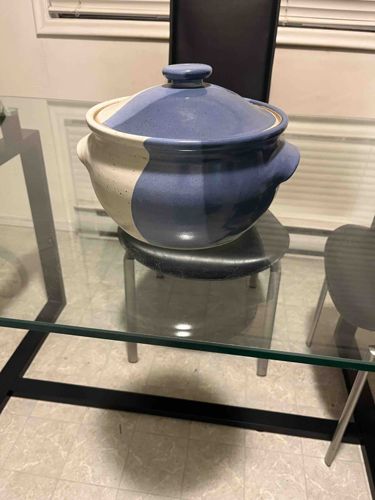
Submitted item photo
Submitted photo · May 28, 2026

User's notes

No additional notes provided.

AI analysis below

AI appraisal

AI analysis & estimate

AI-Generated · Verify before acting

Everything below is generated by AI for informational purposes only. AI can make mistakes — the AI may misidentify items or misattribute them (artist, maker, brand, designer, origin, era). This is not an official valuation and should not be used for insurance, sale, tax, estate, legal, or lending purposes — or any decision requiring a certified appraisal. It is not an authoritative claim about any person, brand, or rights holder — do not share or rely on it as a factual statement about a third party. Always consult qualified professionals before making financial decisions.

Read the full disclaimer

AI Identification

·Not independently authenticated·Verify before acting

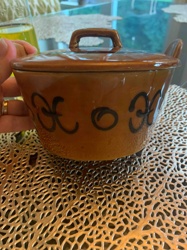
Two-Tone Ceramic Lidded Casserole Dish

Cookware/Serveware

AI Estimated Value

·Not an official valuation·Verify before acting

$80-150

As of May 28, 2026

AI Item Analysis

·AI can make mistakes·Verify before acting
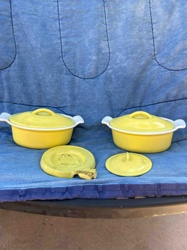
This item is a ceramic lidded casserole dish, likely handmade or studio pottery, characterized by its distinctive two-tone glazing. The primary colors are a speckled off-white or cream on one half and a speckled medium blue on the other, creating a striking vertical division around the body of the pot. The glaze appears to have a matte or satin finish rather than a high gloss, with small speckles evident throughout both colored sections, suggesting a rustic or artisanal aesthetic. The pot features a rounded, somewhat squat body with integrated handles on opposite sides, designed for easy lifting. The lid is domed and fits snugly over the opening, topped with a small, rounded knob for convenient removal. The craftsmanship appears solid, with no visible chips, cracks, or significant wear, indicating it is either well-preserved or relatively new. There are no discernible maker's marks or signatures visible in the provided image. The style suggests it could be a piece of modern studio pottery or from a contemporary artisan, possibly dating from the late 20th century to the present day. Its sturdy construction and functional design indicate it is intended for baking, slow cooking, or serving, embodying a blend of utility and decorative appeal.
AI Appraisal Report

·AI can make mistakes·Verify before acting
I have carefully examined the provided image of this Two-Tone Ceramic Lidded Casserole Dish. Visually, the piece appears to be in excellent condition, showing no chips, cracks, or significant wear. The two-tone speckled off-white/cream and medium blue glazing is aesthetically pleasing and seems well-executed, with a desirable matte or satin finish. The integrated handles and domed lid with a knob contribute to its functional design. Authenticity, based solely on the image, points to it being studio pottery or a contemporary artisanal piece, likely late 20th century to present. The lack of visible maker's marks or signatures prevents definitive attribution without further information. In-person examination would allow me to assess the pottery's weight, the tactile quality of the glaze, the precise nature of any firing defects (which often indicate specific studios or methods), and a thorough search for subtle marks. Provenance documentation, such as receipts or exhibition records, would be crucial for verifying origin and artist. Scientific testing of the clay body or glazes could potentially narrow down its geographical or historical origin, especially if specific clay types or glaze compositions were unique to certain pottery traditions or workshops. Market conditions for artisan cookware and serveware are generally stable, with a consistent demand for unique, well-crafted pieces. Comparable items from known studio potters or high-quality contemporary ceramists in similar condition typically range from $75 to $200. While this piece is attractive and functional, its unsigned nature and lack of definitive provenance limit its top-tier market value. It is not rare in the sense of being a unique historical artifact, but its individual craftsmanship provides appeal. The primary factors impacting its value are its excellent condition and appealing design, balanced by the anonymous maker. Should it be definitively attributed to a renowned potter, the value would significantly increase.

Get your items appraised

Instant estimates of your treasures with AI-powered appraisals

Browse More Appraisals