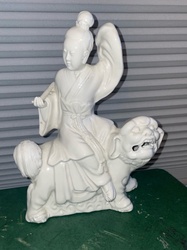
Blanc de Chine Manjushri Bodhisattva Figure on Lion
This is a monochrome white porcelain figurine, likely Blanc de Chine (Dehua ware), depicting the Bodhisattva Manjushri (known as Wenshu in Chinese) seated atop a stylized guardian lion or ferociously expressions 'Shi'. The figure is characterized by a creamy, high-gloss white glaze that flows evenly over the detailed slip-cast or hand-molded body. The Bodhisattva is dressed in flowing traditional robes with a serene facial expression and a top-knot (ushnisha). The lion mount features a textured mane and a snarling open mouth, which is a classic iconographic representation. The construction displays a medium scale with an integrated rectangular base featuring low-relief scrollwork designs. The craftsmanship is indicative of mid-20th-century decorative production, though it follows traditional Ming and Qing dynasty stylistic archetypes. Some subtle irregularities in the glaze along the base and minor dark spots (iron spots) are visible, which may occur during the firing process. The condition appears fair with no major structural cracks visible in the photo, though the gloss indicates a well-preserved surface. There are no visible maker's marks from this angle, but the porous nature of the base suggests a hollow-built interior common in porcelain slip-casting.
AI-Generated Appraisal Disclaimer
Estimated Value
$450.00 - $700.00
Basic Information
Category
Asian Decorative Arts - Porcelain Figurines
Appraised On
January 9, 2026
Estimated Value
$450.00 - $700.00
Item Description
This is a monochrome white porcelain figurine, likely Blanc de Chine (Dehua ware), depicting the Bodhisattva Manjushri (known as Wenshu in Chinese) seated atop a stylized guardian lion or ferociously expressions 'Shi'. The figure is characterized by a creamy, high-gloss white glaze that flows evenly over the detailed slip-cast or hand-molded body. The Bodhisattva is dressed in flowing traditional robes with a serene facial expression and a top-knot (ushnisha). The lion mount features a textured mane and a snarling open mouth, which is a classic iconographic representation. The construction displays a medium scale with an integrated rectangular base featuring low-relief scrollwork designs. The craftsmanship is indicative of mid-20th-century decorative production, though it follows traditional Ming and Qing dynasty stylistic archetypes. Some subtle irregularities in the glaze along the base and minor dark spots (iron spots) are visible, which may occur during the firing process. The condition appears fair with no major structural cracks visible in the photo, though the gloss indicates a well-preserved surface. There are no visible maker's marks from this angle, but the porous nature of the base suggests a hollow-built interior common in porcelain slip-casting.
Get Your Items Appraised
Instant estimates of your treasures with AI-powered instant appraisals