AI estimate as of October 17, 2025 · verify with a professional before acting
AI-Generated · Verify before acting
Everything on this page is generated by AI for informational purposes only. AI can make mistakes — the AI may misidentify items or misattribute them (artist, maker, brand, designer, origin, era). This is not an official valuation and should not be used for insurance, sale, tax, estate, legal, or lending purposes — or any decision requiring a certified appraisal. It is not an authoritative claim about any person, brand, or rights holder — do not share or rely on it as a factual statement about a third party. Always consult qualified professionals before making financial decisions.
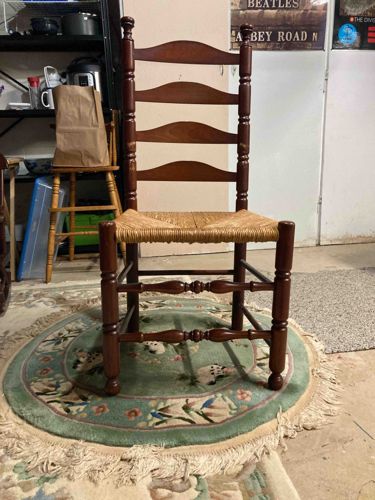
This is a vintage or antique ladderback chair, characterized by its tall backrest constructed from five horizontal, curved slats, often referred to as 'ladders'. The chair is crafted from wood, likely a hardwood given its dark brown, rich stain with a semi-gloss finish, possibly cherry, mahogany, or a stained maple/oak. The front and back legs are turned, featuring bulbous and ring-turned sections, which is a common decorative element in traditional furniture. The top of each back post is capped with a prominent turned finial. The seat is a woven rush or cane material, exhibiting a distinctive crisscross pattern with natural, light brown fibers, indicating it is either original to the chair or a well-executed replacement in a traditional style. The chair's construction appears to be doweled or mortise-and-tenon, a testament to its potentially solid craftsmanship. Underneath the seat, there are stretchers connecting the legs for stability, which are also turned, echoing the decorative style of the legs. The overall condition shows some expected wear and tear, including minor abrasions or scuffs on the wooden frame, consistent with age and use. There are no immediately visible signs of major damage, repairs, or significant wear on the rush seat itself. The chair presents a classic, rustic, or Early American aesthetic, suggesting an estimated age from the mid-20th century or earlier, though without specific maker's marks, pinpointing an exact date is challenging. Its durable construction and traditional design indicate functional and aesthetic quality, suitable for a country, farmhouse, or traditional interior. The turned elements and ladderback design are hallmarks of a comfortable and timeless chair silhouette.
AI Appraisal Report
I have examined the provided image of this Ladderback Chair with Rush Seat. Based on my visual assessment, the chair appears to be a vintage or antique piece, likely dating from the mid-20th century or earlier, judging by its traditional design elements and construction. The dark-stained wood, possibly cherry, mahogany, or a similar hardwood, exhibits a semi-gloss finish. The five curved ladder slats, turned legs, and prominent finials are consistent with classic Early American or country aesthetics. The rush seat shows a well-executed crisscross pattern and appears to be in good condition, suggesting it is either original or a sympathetic, high-quality replacement.
Condition-wise, the chair shows expected wear and tear, including minor abrasions and scuffs on the wooden frame, commensurate with its age and use. I don't observe any significant structural damage, major repairs, or excessive wear to the rush seat from the image. The turned stretchers connecting the legs enhance stability and echo the decorative style.
In terms of market conditions, ladderback chairs with rush seats are relatively common in the vintage furniture market. While desirable for their classic charm and functionality, they are not typically rare, which impacts their top-tier value. Demand is steady for well-preserved examples fitting farmhouse, rustic, or traditional decor.
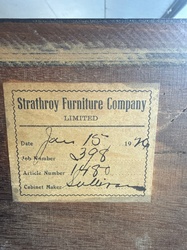
Factors impacting value include the solid craftsmanship, classic design, and apparent good, functional condition. If the rush seat were extensively damaged or the frame had significant structural issues, the value would be considerably lower. Without specific maker's marks, provenance documentation, or scientific wood analysis, pinpointing an exact date or manufacturer is impossible from images alone. An in-person examination would allow me to test structural integrity, confirm wood species, and closely inspect for repairs or hidden damage, which could slightly adjust this appraisal. I would also look for any subtle indications of age or origin that might not be visible in photographs. Given these considerations, I estimate an appraisal value of $150-$250.