Prehistoric Hand Axe Lithic Tool
Prehistoric Artifacts / Stone Tools

Prehistoric Hand Axe Lithic Tool

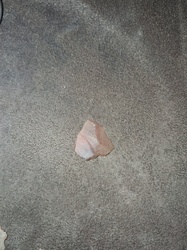
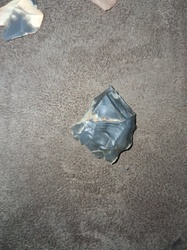
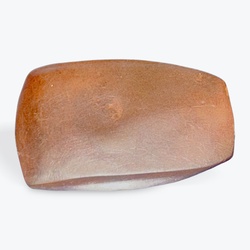
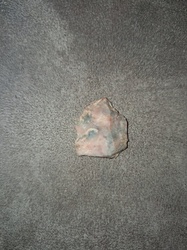
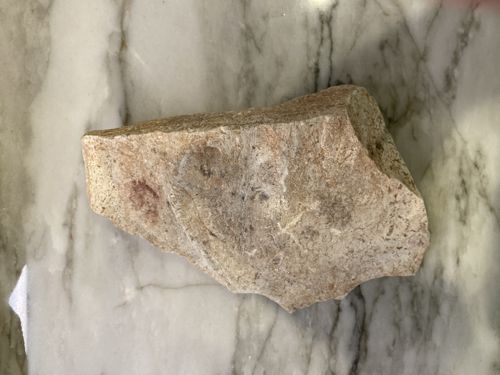
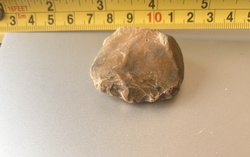
This is a hand-sized lithic tool, commonly referred to as a hand axe or chopper, discovered in Guthrie, Oklahoma. Measuring approximately 5.5 inches by 4 inches, the item is constructed from a coarse-grained siliceous stone, likely a variety of local chert or quartzite. The color palette consists of earthy tan, beige, and light brown tones, with a notable reddish-pink oxidation patch on the left side, which may indicate mineral staining from the burial environment. The tool exhibits intentional percussion flaking along one primary edge to create a sharpened bifacial working surface. One side of the stone retains a flatter, more natural surface, providing an ergonomic grip area for the palm. The overall condition shows significant weathering and a heavy desert-varnish or mineral patina consistent with long-term exposure and age. There are minor chips along the working edge that appear to be a mix of prehistoric use-wear and natural post-depositional abrasion. This artifact represents an example of prehistoric utilitarian craftsmanship, likely from the Paleo-Indian or Archaic period, designed for chopping, scraping, or butchering tasks. The lack of refined pressure flaking suggests it is a core tool rather than a finished projectile point.
Estimated Value

$150 - $250

Basic Information

Category

Prehistoric Artifacts / Stone Tools

Appraised On

February 18, 2026

Estimated Value

$150 - $250

Additional Details Provided By Owner

User Provided Information

Prehistoric hand axe stone tool found in Guthrie, OK measuring 5.5" x 4"

Item Description

This is a hand-sized lithic tool, commonly referred to as a hand axe or chopper, discovered in Guthrie, Oklahoma. Measuring approximately 5.5 inches by 4 inches, the item is constructed from a coarse-grained siliceous stone, likely a variety of local chert or quartzite. The color palette consists of earthy tan, beige, and light brown tones, with a notable reddish-pink oxidation patch on the left side, which may indicate mineral staining from the burial environment. The tool exhibits intentional percussion flaking along one primary edge to create a sharpened bifacial working surface. One side of the stone retains a flatter, more natural surface, providing an ergonomic grip area for the palm. The overall condition shows significant weathering and a heavy desert-varnish or mineral patina consistent with long-term exposure and age. There are minor chips along the working edge that appear to be a mix of prehistoric use-wear and natural post-depositional abrasion. This artifact represents an example of prehistoric utilitarian craftsmanship, likely from the Paleo-Indian or Archaic period, designed for chopping, scraping, or butchering tasks. The lack of refined pressure flaking suggests it is a core tool rather than a finished projectile point.
Get Your Items Appraised

Instant estimates of your treasures with AI-powered instant appraisals

Browse More Appraisals