Athenian Owl Tetradrachm Style Cast Replica
Numismatics / Reproductions & Replicas

Athenian Owl Tetradrachm Style Cast Replica

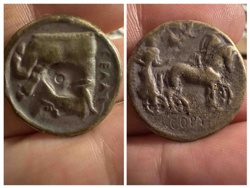
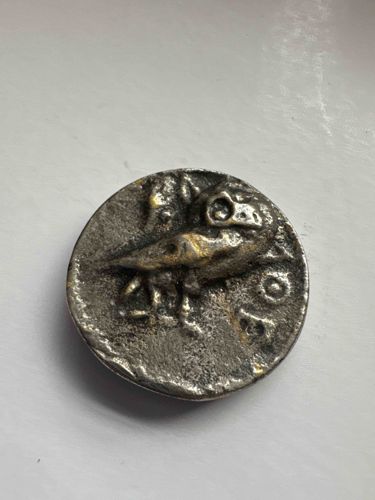
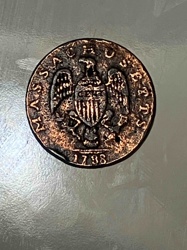
This item is a circular metallic object designed to resemble a classical Athenian silver tetradrachm (often called an 'Owl coin'). It measures approximately 15-20mm in diameter. The obverse features a high-relief standing owl, the emblem of the goddess Athena, positioned beside an olive sprig and a crescent moon. Greek lettering 'AΘE' is visible on the right field. The piece is constructed from a non-precious base metal, appearing silvery with significant areas of brassy or golden-toned metal showing through where the plating has worn away. The surface texture is highly granular, pitted, and uneven, which is a classic indicator of a modern sand or centrifugal casting process rather than authentic ancient striking. Notably, the edges lack the distinctive hammer-and-chisel marks found on genuine coins from the 5th century BC. The condition is poor from a numismatic perspective, showing heavy artificial patina, surface oxidation, and wear on the high points of the owl's head and wing, revealing the underlying yellow-toned core metal. It lacks the sharp detail and flow lines of a hand-struck original, suggesting it is a tourist souvenir or a modern reproduction likely produced in the late 20th century.
Estimated Value

$5.00 - $15.00

Basic Information

Category

Numismatics / Reproductions & Replicas

Appraised On

February 13, 2026

Estimated Value

$5.00 - $15.00

Item Description

This item is a circular metallic object designed to resemble a classical Athenian silver tetradrachm (often called an 'Owl coin'). It measures approximately 15-20mm in diameter. The obverse features a high-relief standing owl, the emblem of the goddess Athena, positioned beside an olive sprig and a crescent moon. Greek lettering 'AΘE' is visible on the right field. The piece is constructed from a non-precious base metal, appearing silvery with significant areas of brassy or golden-toned metal showing through where the plating has worn away. The surface texture is highly granular, pitted, and uneven, which is a classic indicator of a modern sand or centrifugal casting process rather than authentic ancient striking. Notably, the edges lack the distinctive hammer-and-chisel marks found on genuine coins from the 5th century BC. The condition is poor from a numismatic perspective, showing heavy artificial patina, surface oxidation, and wear on the high points of the owl's head and wing, revealing the underlying yellow-toned core metal. It lacks the sharp detail and flow lines of a hand-struck original, suggesting it is a tourist souvenir or a modern reproduction likely produced in the late 20th century.
Get Your Items Appraised

Instant estimates of your treasures with AI-powered instant appraisals

Browse More Appraisals