Marigold Carnival Glass Pedestal Compote Bowl
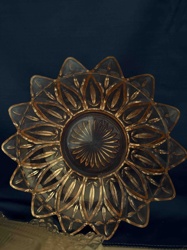
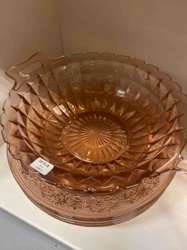
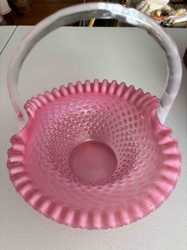
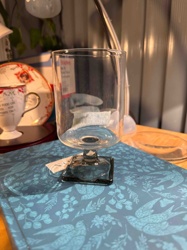
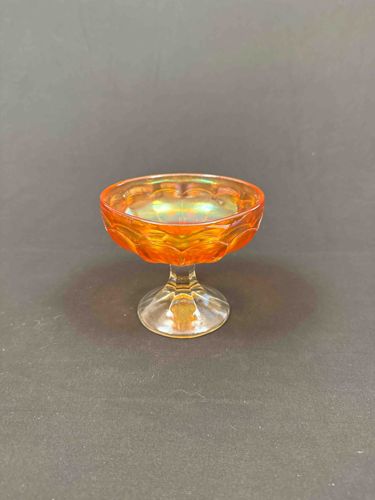
This is a vintage pedestal compote bowl fashioned from pressed glass featuring a vibrant marigold iridescent finish, commonly known as carnival glass. The vessel consists of a shallow, wide basin with a scalloped or tiered petal-like pattern around the exterior, resting on a faceted stem that flares into a circular conical base. The color exhibits a rich orange-gold hue with a characteristic metallic, rainbow-like iridescence on the interior surface, which creates shimmering highlights of green and yellow under direct light. The piece appears to be made from a two-part mold process, typical of early to mid-20th-century American manufacturers such as Fenton, Northwood, or Imperial Glass. Its style is indicative of the Depression era, likely dating between 1920 and 1950. The condition appears to be excellent with no visible chips, cracks, or significant loss to the iridized coating, though faint shelf wear on the bottom of the base is common for pieces of this age. The craftsmanship is high-quality for mass-produced pressed glass, showing crisp articulation in the molded patterns.

AI-Generated Appraisal Disclaimer
Estimated Value
$25 - $45
Basic Information
Category
Vintage Glassware / Collectibles
Appraised On
January 19, 2026
Estimated Value
$25 - $45
Item Description
This is a vintage pedestal compote bowl fashioned from pressed glass featuring a vibrant marigold iridescent finish, commonly known as carnival glass. The vessel consists of a shallow, wide basin with a scalloped or tiered petal-like pattern around the exterior, resting on a faceted stem that flares into a circular conical base. The color exhibits a rich orange-gold hue with a characteristic metallic, rainbow-like iridescence on the interior surface, which creates shimmering highlights of green and yellow under direct light. The piece appears to be made from a two-part mold process, typical of early to mid-20th-century American manufacturers such as Fenton, Northwood, or Imperial Glass. Its style is indicative of the Depression era, likely dating between 1920 and 1950. The condition appears to be excellent with no visible chips, cracks, or significant loss to the iridized coating, though faint shelf wear on the bottom of the base is common for pieces of this age. The craftsmanship is high-quality for mass-produced pressed glass, showing crisp articulation in the molded patterns.
Related Tags
Get Your Items Appraised
Instant estimates of your treasures with AI-powered instant appraisals