Southwestern Native American Style Polychrome Pottery Vase
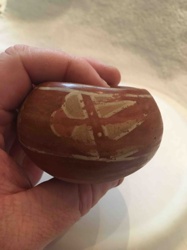
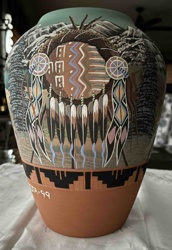
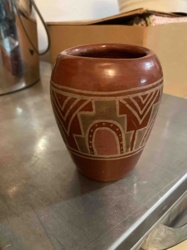
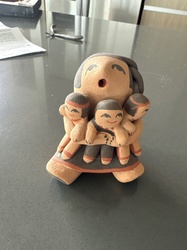
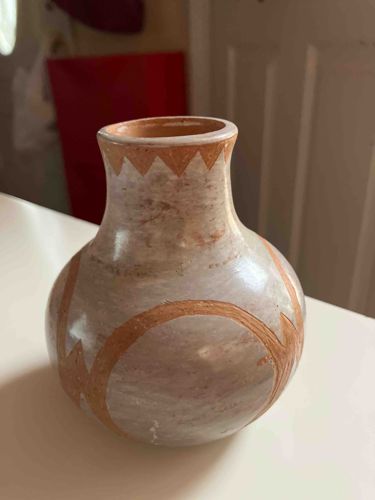
This item is a handcrafted ceramic vase, likely of Southwestern Native American origin or inspired by that tradition. It features a bulbous central body that tapers into a flared neck. The piece is constructed from a reddish-brown earthenware clay, which is visible in the design elements and the interior. The exterior is coated in a light-colored, mottled white-to-tan slip that shows significant variations in tone and texture, suggesting a hand-applied finish. The decorative motifs include a saw-tooth or chevron band encircling the rim and large, arched or semi-circular geometric patterns on the body, all executed by scraping or sgraffito techniques to reveal the underlying terracotta clay. The condition appears fair to good for its age, with visible surface abrasions, minor scuffs, and areas of discoloration or fading in the slip that contribute to a natural patina. There are no immediate signs of significant structural cracks or chips visible from this angle. The piece lacks a visible signature in this view, suggesting it may be a folk art item or a mid-20th-century souvenir piece. The craftsmanship is rustic, emphasizing traditional hand-coiling and earth-tone aesthetics over high-gloss commercial finishes.
AI-Generated Appraisal Disclaimer
Estimated Value
$150 - $250
Basic Information
Category
Collectibles / Native American Pottery
Appraised On
January 9, 2026
Estimated Value
$150 - $250
Item Description
This item is a handcrafted ceramic vase, likely of Southwestern Native American origin or inspired by that tradition. It features a bulbous central body that tapers into a flared neck. The piece is constructed from a reddish-brown earthenware clay, which is visible in the design elements and the interior. The exterior is coated in a light-colored, mottled white-to-tan slip that shows significant variations in tone and texture, suggesting a hand-applied finish. The decorative motifs include a saw-tooth or chevron band encircling the rim and large, arched or semi-circular geometric patterns on the body, all executed by scraping or sgraffito techniques to reveal the underlying terracotta clay. The condition appears fair to good for its age, with visible surface abrasions, minor scuffs, and areas of discoloration or fading in the slip that contribute to a natural patina. There are no immediate signs of significant structural cracks or chips visible from this angle. The piece lacks a visible signature in this view, suggesting it may be a folk art item or a mid-20th-century souvenir piece. The craftsmanship is rustic, emphasizing traditional hand-coiling and earth-tone aesthetics over high-gloss commercial finishes.
Get Your Items Appraised
Instant estimates of your treasures with AI-powered instant appraisals