Lithic Geofact or Potential Core Fragment
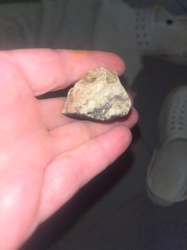
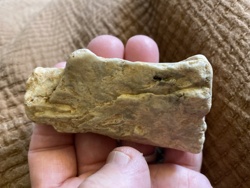
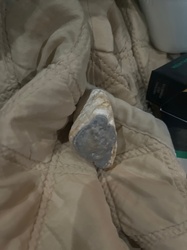
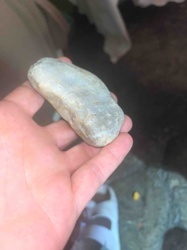
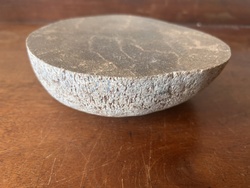
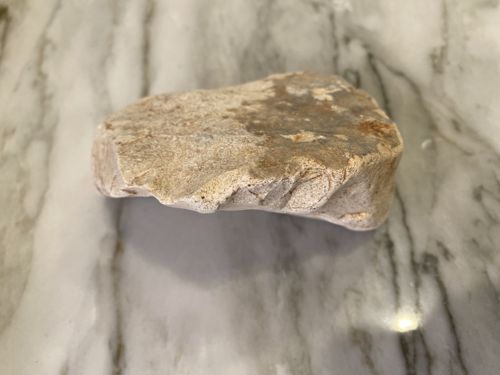
This item is a stone specimen with a complex, irregular geometry. It is composed of a fine-grained, light-colored sedimentary or metamorphic lithic material, possibly a type of chert, flint, or highly weathered limestone common to the Oklahoma region. Its color palette features various shades of beige, cream, and tan, with darker grayish-brown mineral staining or patina on the upper dorsal surface. The specimen exhibits several fractures along its edges; however, these fractures lack the precise diagnostic characteristics of intentional human percussion, such as clear bulbs of applied force, concentric ripples, or systemic retouch. Instead, the edges appear battered and worn, consistent with natural geological processes, such as stream rolling or freeze-thaw cycles. The overall shape is roughly tabular with a thick, blunt back and a tapered, jagged lower edge. There are no discernible maker's marks, signatures, or unambiguous 'flake scars' that would definitively categorize this as a 'Stone Age' hand axe or intentional prehistoric tool. The condition is raw and weathered, showing significant environmental erosion and surface pitting. From an archaeological perspective, this specimen is most likely a 'geofact'—a natural stone that mimics the look of a tool—or at best, a very crude core fragment that was discarded early in the reductive process. Its value as a formal artifact is limited by the absence of clear anthropogenic traits.
AI-Generated Appraisal Disclaimer
Estimated Value
$5 - $15
Basic Information
Category
Geological Specimen / Possible Lithic Debitage
Appraised On
February 18, 2026
Estimated Value
$5 - $15
Additional Details Provided By Owner
User Provided Information
Stone age hand axe prospect found in Guthrie OK
Item Description
This item is a stone specimen with a complex, irregular geometry. It is composed of a fine-grained, light-colored sedimentary or metamorphic lithic material, possibly a type of chert, flint, or highly weathered limestone common to the Oklahoma region. Its color palette features various shades of beige, cream, and tan, with darker grayish-brown mineral staining or patina on the upper dorsal surface. The specimen exhibits several fractures along its edges; however, these fractures lack the precise diagnostic characteristics of intentional human percussion, such as clear bulbs of applied force, concentric ripples, or systemic retouch. Instead, the edges appear battered and worn, consistent with natural geological processes, such as stream rolling or freeze-thaw cycles. The overall shape is roughly tabular with a thick, blunt back and a tapered, jagged lower edge. There are no discernible maker's marks, signatures, or unambiguous 'flake scars' that would definitively categorize this as a 'Stone Age' hand axe or intentional prehistoric tool. The condition is raw and weathered, showing significant environmental erosion and surface pitting. From an archaeological perspective, this specimen is most likely a 'geofact'—a natural stone that mimics the look of a tool—or at best, a very crude core fragment that was discarded early in the reductive process. Its value as a formal artifact is limited by the absence of clear anthropogenic traits.
Get Your Items Appraised
Instant estimates of your treasures with AI-powered instant appraisals