AI Appraisal Estimate

AI-generated estimates · not official valuations

From the user

What was submitted

Photo and notes provided by the user — not generated by AI

Submitted item photo
Submitted photo · June 23, 2026

User's notes

No additional notes provided.

AI analysis below

AI appraisal

AI analysis & estimate

AI-Generated · Verify before acting

Everything below is generated by AI for informational purposes only. AI can make mistakes — the AI may misidentify items or misattribute them (artist, maker, brand, designer, origin, era). This is not an official valuation and should not be used for insurance, sale, tax, estate, legal, or lending purposes — or any decision requiring a certified appraisal. It is not an authoritative claim about any person, brand, or rights holder — do not share or rely on it as a factual statement about a third party. Always consult qualified professionals before making financial decisions.

Read the full disclaimer

AI Identification

·Not independently authenticated·Verify before acting

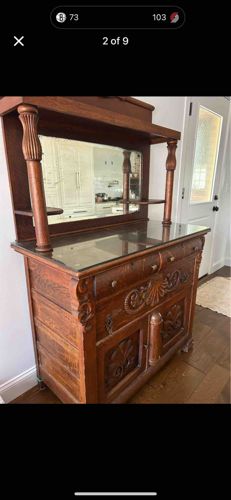
American Quarter-Sawn Oak Victorian Sideboard with Mirrored Buffet

Antique Furniture

AI Estimated Value

·Not an official valuation·Verify before acting

$1,200 - $1,800

As of June 23, 2026

AI Item Analysis

·AI can make mistakes·Verify before acting
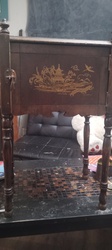
This is a late Victorian-era (circa 1890-1910) sideboard or buffet, constructed primarily from quarter-sawn white oak, showcasing a prominent 'tiger oak' grain pattern. The piece features a two-tiered superstructure supported by turned and fluted columns. The upper section contains a beveled rectangular mirror and two small side galleries. The lower cabinet section consists of two upper drawers with rounded fronts and wooden pull knobs, situated above a central decorative frieze and two lower cabinet doors. The craftsmanship is characterized by ornate relief carvings, including shell motifs and scrolling acanthus leaves on the drawer and door faces. The sides exhibit a paneled construction common for the period. A protective glass top has been added to the main surface. The wood maintains a medium-dark honey oak finish with a visible patina. Condition-wise, the piece appears well-preserved with some minor surface scratches and darkening of the finish consistent with age. There is no visible sign of structural repair from this angle, though the glass top is a modern addition to protect the wood surface.
AI Appraisal Report

·AI can make mistakes·Verify before acting
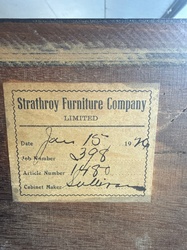
I have conducted a visual examination of this late Victorian American sideboard (c. 1890-1910). The item is a high-quality example of the 'Golden Oak' period, specifically utilizing premium quarter-sawn white oak. The 'tiger oak' medullary rays are exceptionally well-defined, suggesting high-grade lumber selection. The shell and acanthus relief carvings are consistent with mass-produced but high-end furniture manufacturers from centers like Grand Rapids, Michigan. The beveled mirror appears original, and the integration of turned columns shows a transition from Victorian ornate styles to early 20th-century sensibilities. The condition appears remarkably well-preserved. The presence of a custom-cut glass top suggests the owners prioritized preservation, protecting the surface from the water rings and staining common in this form. The patina is deep and rich, indicating the original finish has not been aggressively stripped but rather maintained. However, market demand for heavy oak furniture is currently moderate compared to mid-century modern trends, which caps the valuation. Comparables for similar mirrored buffets with tiger oak grain consistently fall in the $1,000 to $2,000 range at regional auction houses and antique dealers. Limitations: My assessment is based solely on the provided visual description. I cannot verify the integrity of the joinery (e.g., dovetail construction on drawers), the presence of maker's marks, or potential repairs to the back panel or internal shelves. A full authentication would require an in-person inspection to examine the hardware screws and drawer bottoms for circular saw marks or modern plywood. Documentation of provenance or an original manufacturer’s tag would be necessary to increase the valuation toward the upper end of the estimate.

Get your items appraised

Instant estimates of your treasures with AI-powered appraisals

Browse More Appraisals