AI Appraisal Estimate

AI-generated estimates · not official valuations

From the user

What was submitted

Photo and notes provided by the user — not generated by AI

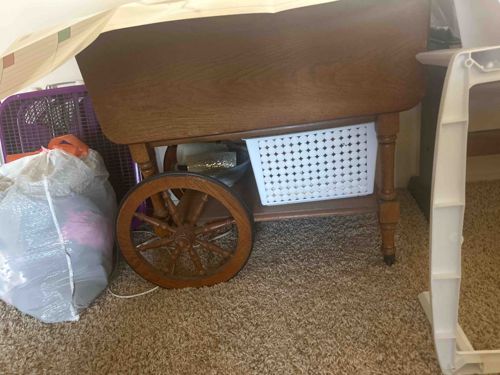
Submitted item photo
Submitted photo · June 3, 2026

User's notes

No additional notes provided.

AI analysis below

AI appraisal

AI analysis & estimate

AI-Generated · Verify before acting

Everything below is generated by AI for informational purposes only. AI can make mistakes — the AI may misidentify items or misattribute them (artist, maker, brand, designer, origin, era). This is not an official valuation and should not be used for insurance, sale, tax, estate, legal, or lending purposes — or any decision requiring a certified appraisal. It is not an authoritative claim about any person, brand, or rights holder — do not share or rely on it as a factual statement about a third party. Always consult qualified professionals before making financial decisions.

Read the full disclaimer

AI Identification

·Not independently authenticated·Verify before acting

Colonial Style Drop-Leaf Tea Cart

Antique & Vintage Furniture

AI Estimated Value

·Not an official valuation·Verify before acting

$150 - $350

As of June 3, 2026

AI Item Analysis

·AI can make mistakes·Verify before acting
This is a mid-20th-century Colonial Revival style drop-leaf tea cart, likely manufactured in the United States between 1940 and 1970. The piece is constructed from solid wood with a honey-toned cherry or maple finish. It features a rectangular top with two rounded drop-leaf sides that expand the serving surface. The undercarriage includes a lower storage shelf and is supported by four legs: two large wagon-style spoke wheels at the rear and two smaller swivel casters on turned legs at the front. The large wooden wheels feature multiple spokes and a central hub, mimicking traditional horse-drawn carriage aesthetics. The turned legs exhibit classic spindle-work typical of Early American furniture reproductions. Regarding condition, the wood shows a consistent aged patina with some visible surface scuffs and minor finish wear along the edges of the drop leaves. The wheels appear intact, though the rubber or metal treads often found on such pieces are not clearly identifiable. No prominent maker's marks are visible in the photograph, but the craftsmanship reflects mass-market high-quality furniture production from the mid-century era. This piece serves as both a functional serving station and a decorative accent representative of mid-century traditionalist home design.
AI Appraisal Report

·AI can make mistakes·Verify before acting
Based on my visual examination of this Colonial Revival drop-leaf tea cart, I have assessed it as a mid-20th-century reproduction, likely produced by a prominent American manufacturer such as Ethan Allen or Cushman. The piece exhibits characteristic high-quality mass-market construction using solid cherry or maple. The finish remains in generally good condition, though the visible scuffing and finish wear on the drop-leaf edges—typical of frequent use—slightly detracts from its retail potential. The joinery and turned spindles are consistent with the 1940–1970 era. The market for mid-century traditionalist furniture is currently soft, as buyer preferences have shifted toward minimalist ‘Mid-Century Modern’ (MCM) aesthetics. Consequently, while functional and charming, these carts are no longer considered high-demand 'statement' pieces. Comparables at regional auctions and online marketplaces typically settle in the $150 to $350 range, depending on the vibrancy of the local antique market. Key value factors include the presence of the original handle (noted) and the integrity of the large spoke wheels. A significant limitation of this remote appraisal is the inability to verify the wood's structural integrity or identify stamped maker's marks under the frame. To provide a definitive valuation, I would need to inspect the underside for branding, check for warping in the drop-leaf hinges, and verify if the wheels have their original rubber gaskets. Definitive authentication would require physical inspection of the joinery (dovetails vs. staples) to confirm the manufacturing date.

Get your items appraised

Instant estimates of your treasures with AI-powered appraisals

Browse More Appraisals