1857 Flying Eagle Cent
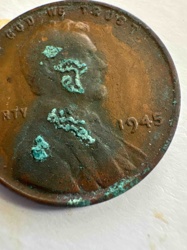
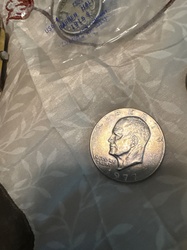
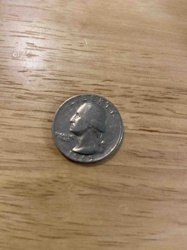
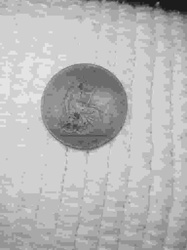
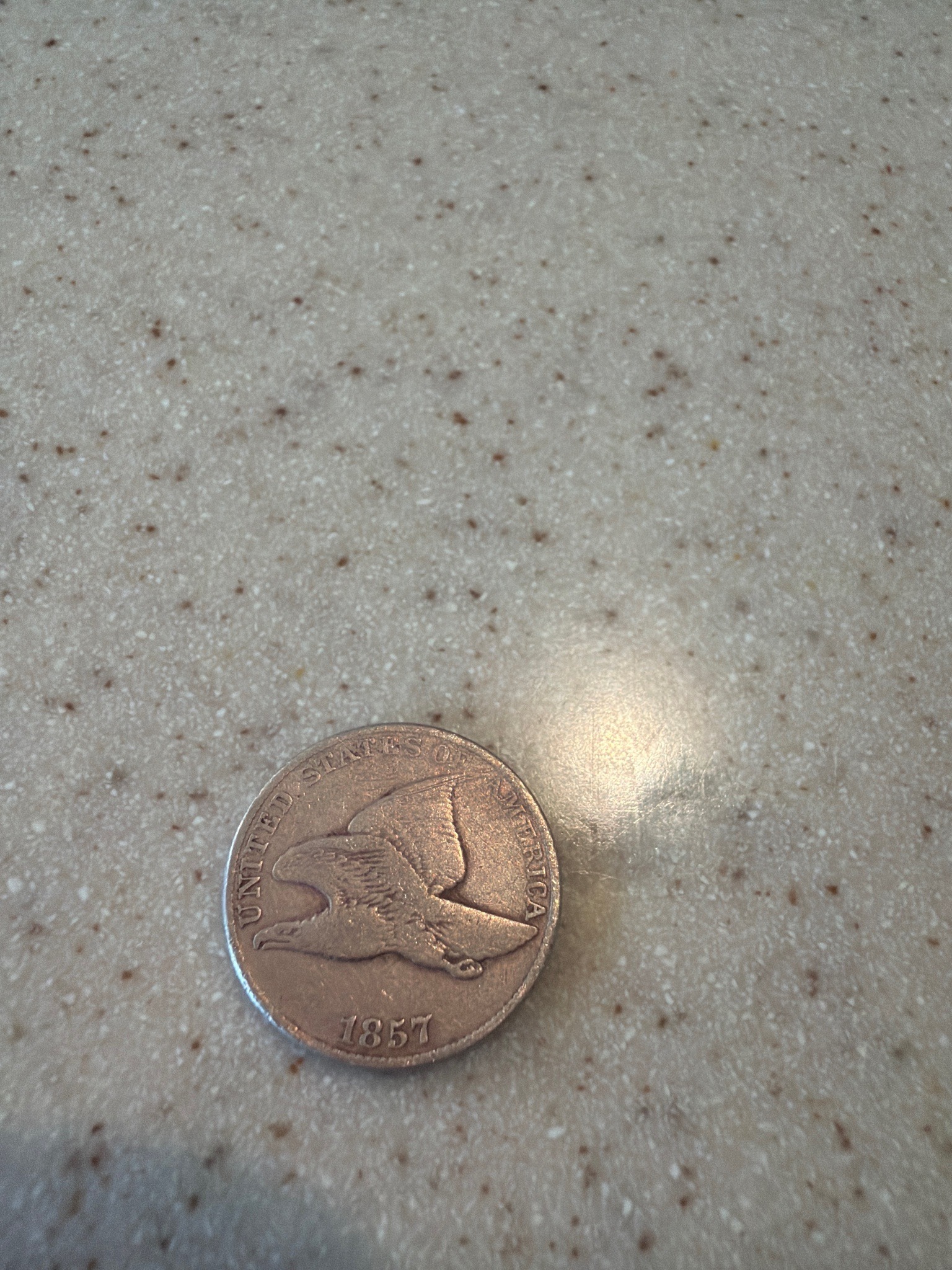
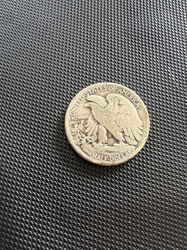
This is a United States one-cent coin known as the Flying Eagle Cent, dated 1857. This specific coin features an obverse design by James B. Longacre, depicting an eagle in flight facing left, surrounded by the legend 'UNITED STATES OF AMERICA' with the date '1857' centered at the bottom. The coin is composed of 88% copper and 12% nickel, giving it a characteristic pale, whitish-copper or light tan appearance compared to pure copper coins. It has a diameter of approximately 19mm with a plain edge. In terms of condition, the coin shows significant signs of honest circulation wear, consistent with a 'Good' to 'Very Good' grade. The high points of the eagle's wings and breast are flattened, and the tail feathers lack fine detail. The lettering and date remain legible but show softening at the edges. There is a visible brownish-red patina and some minor surface abrasions or 'bag marks' across the fields. No major gouges, holes, or bent edges are present, suggesting it has been well-preserved for its age. This short-lived series (1856-1858) represents the U.S. Mint's first transition from the large copper cent to the smaller, modern-sized cent.
AI-Generated Appraisal Disclaimer
Estimated Value
$45 - $65
Basic Information
Category
Numismatics / US Coins
Appraised On
April 29, 2026
Estimated Value
$45 - $65
Item Description
This is a United States one-cent coin known as the Flying Eagle Cent, dated 1857. This specific coin features an obverse design by James B. Longacre, depicting an eagle in flight facing left, surrounded by the legend 'UNITED STATES OF AMERICA' with the date '1857' centered at the bottom. The coin is composed of 88% copper and 12% nickel, giving it a characteristic pale, whitish-copper or light tan appearance compared to pure copper coins. It has a diameter of approximately 19mm with a plain edge. In terms of condition, the coin shows significant signs of honest circulation wear, consistent with a 'Good' to 'Very Good' grade. The high points of the eagle's wings and breast are flattened, and the tail feathers lack fine detail. The lettering and date remain legible but show softening at the edges. There is a visible brownish-red patina and some minor surface abrasions or 'bag marks' across the fields. No major gouges, holes, or bent edges are present, suggesting it has been well-preserved for its age. This short-lived series (1856-1858) represents the U.S. Mint's first transition from the large copper cent to the smaller, modern-sized cent.
Related Tags
Get Your Items Appraised
Instant estimates of your treasures with AI-powered instant appraisals