AI estimate as of November 22, 2025 · verify with a professional before acting
AI-Generated · Verify before acting
Everything on this page is generated by AI for informational purposes only. AI can make mistakes — the AI may misidentify items or misattribute them (artist, maker, brand, designer, origin, era). This is not an official valuation and should not be used for insurance, sale, tax, estate, legal, or lending purposes — or any decision requiring a certified appraisal. It is not an authoritative claim about any person, brand, or rights holder — do not share or rely on it as a factual statement about a third party. Always consult qualified professionals before making financial decisions.
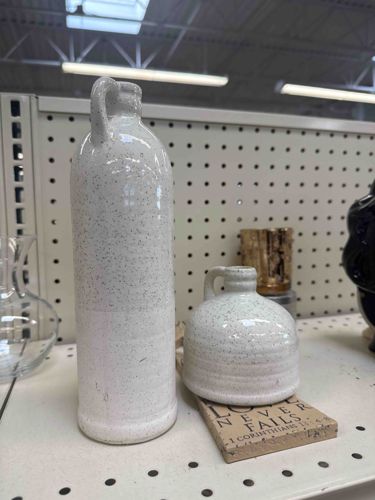
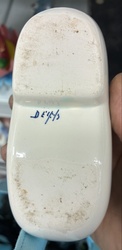
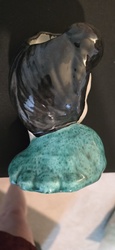
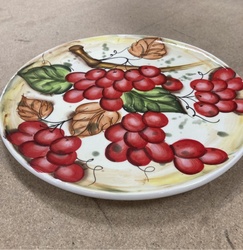
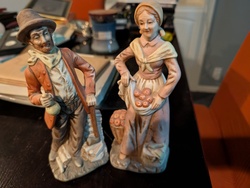
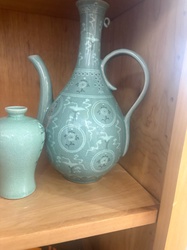
This image displays a set of two ceramic vessels, likely decorative bottles or small jugs, characterized by a uniform light off-white or cream speckled glaze. The larger vessel is tall and cylindrical with a gently tapering neck leading to a narrow mouth and a small, functional-looking handle attached at the upper neck/shoulder. Its body is smooth and unadorned, suggesting a minimalist or rustic aesthetic. The smaller vessel is much more squat and rounded, resembling a miniature jug or pot-bellied bottle, also featuring a small handle near its narrow opening. Both items share the same speckled glaze finish, which consists of tiny dark brown or black flecks distributed evenly across the lighter base color, adding texture and visual interest to the otherwise simple forms. The glaze appears glossy, reflecting light and indicating a well-fired finish. No distinct manufacturing marks, signatures, or stamps are visible from the provided images, making it difficult to ascertain the exact maker or origin. The construction appears sturdy, and the handles are integrated smoothly into the body. The ceramic material suggests durability. There are no immediately apparent cracks, chips, or significant damage, though minor scuffs or dirt from being displayed on a retail shelf are possible. The overall style points towards modern rustic, farmhouse, or perhaps contemporary pottery, likely produced within the last few decades. The items could serve as decorative accents, small vases, or part of a tabletop display.
AI Appraisal Report
Based on my visual examination of the provided image, this set of two glazed ceramic bottles/jugs appears to be in excellent condition. I observe no visible chips, cracks, or significant damage, which suggests careful handling. The integrated handles appear sturdy, and the speckled glaze is uniform and glossy, indicating a quality finish. Authenticity in terms of maker or origin is difficult to ascertain from images alone, as no visible marks or signatures are present. Without physical inspection, I cannot confirm the exact type of ceramic body or glaze composition, nor can I rule out undetectable hairline cracks or repairs.
From a market perspective, these items fit well within the contemporary rustic, farmhouse, or modern accent decor categories. Similar new decorative ceramic sets, often mass-produced, retail for modest prices. While aesthetically pleasing, the absence of distinguishing artist marks, unique design elements, or provenance documentation limits their value as collectible art pottery. They are primarily decorative objects for home staging or functional use as small vases. Demand for such items is consistent but not high-end, driven by current interior design trends rather than rarity or historical significance. Therefore, their value is modest.
Factors impacting value positively include their good condition and appealing, versatile design. Negatively, the lack of identified maker, age, and potential mass-production status keep the value relatively low. For full authentication and to ascertain potential artisan origins, a physical inspection would be crucial. This would allow for examination of the base for any hidden marks, assessment of the ceramic body's quality, and tactile evaluation of the glaze and construction. Without this, and any accompanying provenance, these pieces are valued primarily for their decorative appeal.