Turquoise Glass Pebble or Marble
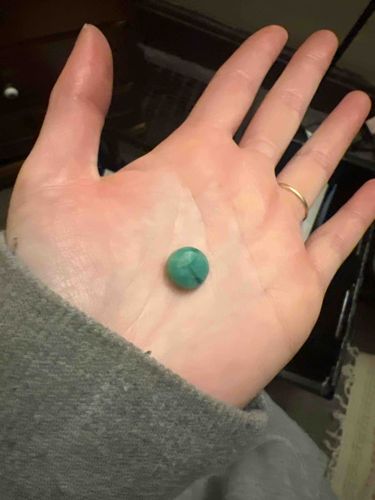
This item is a small, spherical object resembling a marble or a polished decorative glass stone, approximately 10-15mm in diameter. It possesses a vibrant, translucent teal or turquoise color palette with visible internal marbling. A notable feature is a dark, diagonal streaking that cuts through the center, suggesting either a mineralization vein if natural or a swirl of darker pigment if manufactured glass. The surface appears smooth with a slight satin sheen rather than a high-gloss finish, which could indicate light tumbling or natural wear. There are no prominent maker’s marks, signatures, or stamps visible. The condition appears stable, though the irregular internal line could represent a stress fracture or a natural inclusion. This specimen likely dates from the late 20th century to present day. The quality of the color suggests it was intended for aesthetic use, possibly in jewelry making, mosaic work, or as a decorative vase filler. Its uniform shape indicates mass production rather than a unique hand-crafted artistic origin.
AI-Generated Appraisal Disclaimer
Estimated Value
$0.50 - $2.00
Basic Information
Category
Collectibles / Decorative Glass
Appraised On
January 10, 2026
Estimated Value
$0.50 - $2.00
Item Description
This item is a small, spherical object resembling a marble or a polished decorative glass stone, approximately 10-15mm in diameter. It possesses a vibrant, translucent teal or turquoise color palette with visible internal marbling. A notable feature is a dark, diagonal streaking that cuts through the center, suggesting either a mineralization vein if natural or a swirl of darker pigment if manufactured glass. The surface appears smooth with a slight satin sheen rather than a high-gloss finish, which could indicate light tumbling or natural wear. There are no prominent maker’s marks, signatures, or stamps visible. The condition appears stable, though the irregular internal line could represent a stress fracture or a natural inclusion. This specimen likely dates from the late 20th century to present day. The quality of the color suggests it was intended for aesthetic use, possibly in jewelry making, mosaic work, or as a decorative vase filler. Its uniform shape indicates mass production rather than a unique hand-crafted artistic origin.
Get Your Items Appraised
Instant estimates of your treasures with AI-powered instant appraisals