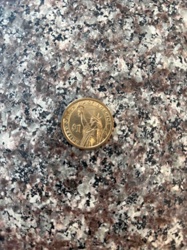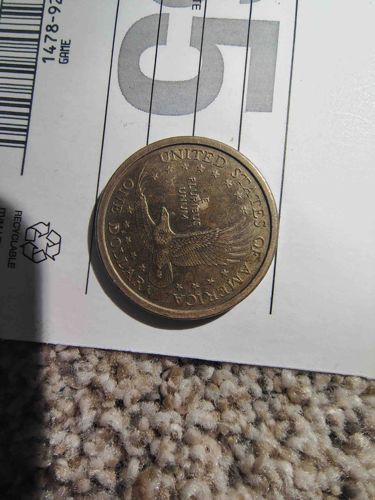
Sacagawea Dollar Coin (Reverse)
Numismatics / Currency

Sacagawea Dollar Coin (Reverse)

This is a United States Sacagawea Dollar coin, which typically measures 26.5 mm in diameter, 2.0 mm in thickness, and weighs approximately 8.1 grams. The coin features a manganese-brass composition (copper core with manganese-brass cladding), giving it a distinctive golden-yellow hue. The reverse side shown depicts a soaring bald eagle designed by Thomas D. Rogers, surrounded by 17 stars representing the states in the Union at the time of the Louisiana Purchase. The inscriptions read 'UNITED STATES OF AMERICA', 'ONE DOLLAR', and 'E PLURIBUS UNUM'. The coin exhibits significant circulation wear, characterized by a dull, mottled patina and overall darkening of the original golden luster. Visible impacts on the rim and surface abrasions suggest regular handling. These coins were first minted in 2000, and given the eagle design and wear, this is likely an early issue intended for general circulation. The feathered detailing on the eagle's wings shows moderate flattening due to friction, and the overall condition lacks the mint luster of uncirculated specimens.
Estimated Value

$1.00

Basic Information

Category

Numismatics / Currency

Appraised On

January 2, 2026

Estimated Value

$1.00

Item Description

This is a United States Sacagawea Dollar coin, which typically measures 26.5 mm in diameter, 2.0 mm in thickness, and weighs approximately 8.1 grams. The coin features a manganese-brass composition (copper core with manganese-brass cladding), giving it a distinctive golden-yellow hue. The reverse side shown depicts a soaring bald eagle designed by Thomas D. Rogers, surrounded by 17 stars representing the states in the Union at the time of the Louisiana Purchase. The inscriptions read 'UNITED STATES OF AMERICA', 'ONE DOLLAR', and 'E PLURIBUS UNUM'. The coin exhibits significant circulation wear, characterized by a dull, mottled patina and overall darkening of the original golden luster. Visible impacts on the rim and surface abrasions suggest regular handling. These coins were first minted in 2000, and given the eagle design and wear, this is likely an early issue intended for general circulation. The feathered detailing on the eagle's wings shows moderate flattening due to friction, and the overall condition lacks the mint luster of uncirculated specimens.
Get Your Items Appraised

Instant estimates of your treasures with AI-powered instant appraisals

Browse More Appraisals