Abstract Mineralized Sculpture
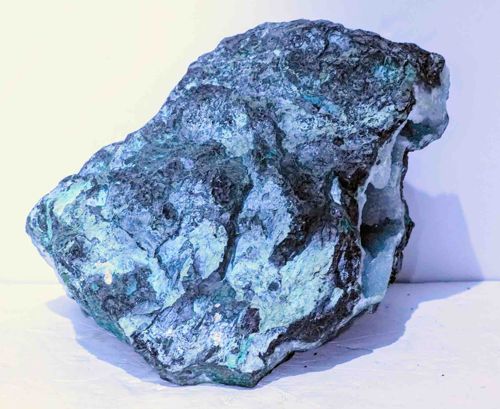
This mid-to-late 20th-century abstract sculpture is an organic, boulder-like form that appears to be composed of either natural mineral rock or a meticulously textured composite meant to simulate a raw geological specimen. The piece is characterized by a rich, multi-tonal palette of cerulean blue, turquoise, and deep indigo, punctuated by dark, almost black secondary mineral inclusions and shimmering crystalline segments. Its surface is highly irregular and rugged, featuring deep fissures, jagged ridges, and a prominent hollow cavernous opening on the right side that reveals a translucent, pale interior—possibly quartz or calcite. The construction suggests a focus on the 'found object' aesthetic or processed mineral art common in the Modernist era. No artist's signature or maker's mark is visible in the photograph, contributing to its enigmatic, untitled status. The condition shows natural-looking erosion and sharp edges consistent with raw stone, with a notable 'patina' of surface dust within the crevices. The overall craftsmanship suggests a high level of selection or finishing to highlight the interplay between the cool blue exterior and the internal void, making it a striking example of geological abstraction.
AI-Generated Appraisal Disclaimer
Estimated Value
$400 - $800
Basic Information
Category
Fine Art / Sculpture
Appraised On
March 23, 2026
Estimated Value
$400 - $800
Additional Details Provided By Owner
User Provided Information
Unknown artist, untitled sculpture
Item Description
This mid-to-late 20th-century abstract sculpture is an organic, boulder-like form that appears to be composed of either natural mineral rock or a meticulously textured composite meant to simulate a raw geological specimen. The piece is characterized by a rich, multi-tonal palette of cerulean blue, turquoise, and deep indigo, punctuated by dark, almost black secondary mineral inclusions and shimmering crystalline segments. Its surface is highly irregular and rugged, featuring deep fissures, jagged ridges, and a prominent hollow cavernous opening on the right side that reveals a translucent, pale interior—possibly quartz or calcite. The construction suggests a focus on the 'found object' aesthetic or processed mineral art common in the Modernist era. No artist's signature or maker's mark is visible in the photograph, contributing to its enigmatic, untitled status. The condition shows natural-looking erosion and sharp edges consistent with raw stone, with a notable 'patina' of surface dust within the crevices. The overall craftsmanship suggests a high level of selection or finishing to highlight the interplay between the cool blue exterior and the internal void, making it a striking example of geological abstraction.
Related Tags
Get Your Items Appraised
Instant estimates of your treasures with AI-powered instant appraisals