Japanese Hariko Paper Mache Tiger (Hariko no Tora)
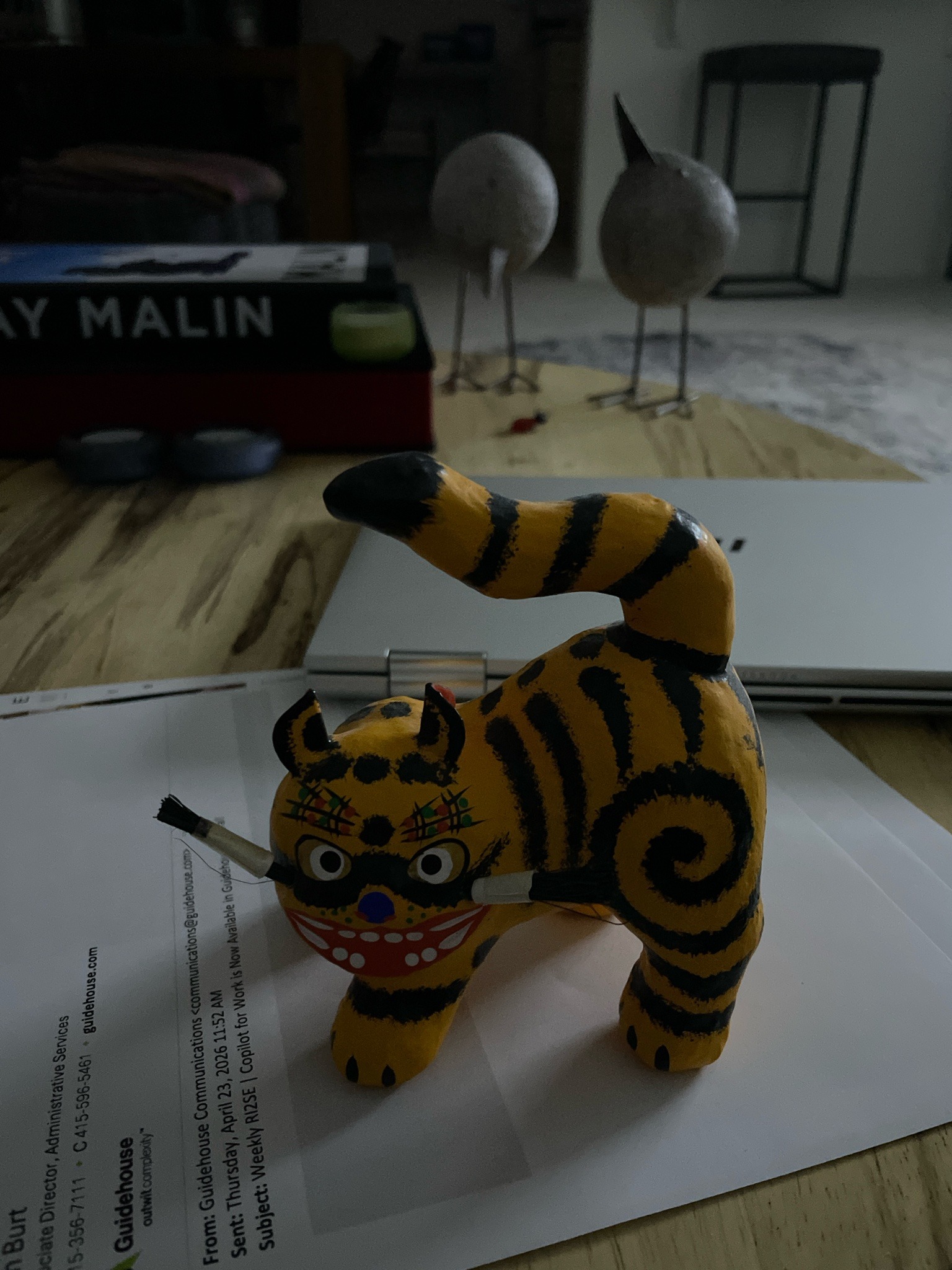
This item is a traditional Japanese Hariko no Tora, or paper mache tiger, commonly associated with the Boy's Day festival (Tango no Sekku) for its symbolism of strength and health. This specific piece is a small-to-medium-sized folk art figurine, constructed using the traditional 'hariko' method of layering paper or pulp over a mold. It features a bright ochre or mustard-yellow base color accented by hand-painted black stripes that spiral toward the hindquarters. The face is stylized with go-fun-white eyes, a wide red grin showing white teeth, and multicolored decorative markings on the forehead in green and red. A prominent feature is the application of black bristles for whiskers, fixed to the sides of the face. The tail is elegantly curved upward over the back. The overall construction appears solid with a matte, slightly textured surface finish indicative of handcrafted paper art. There are no major visible repairs or structural damages, though some minor paint thinning or natural wear in line with its age may be present. This style of folk toy originated in the Edo period, though this specific piece likely dates to the mid-to-late 20th century as a decorative souvenir or commemorative gift. The craftsmanship is of good quality, showing characteristic naive charm and artisanal consistency.

AI-Generated Appraisal Disclaimer
Estimated Value
$45.00 - $75.00
Basic Information
Category
Asian Art / Folk Art Collectibles
Appraised On
April 29, 2026
Estimated Value
$45.00 - $75.00
Item Description
This item is a traditional Japanese Hariko no Tora, or paper mache tiger, commonly associated with the Boy's Day festival (Tango no Sekku) for its symbolism of strength and health. This specific piece is a small-to-medium-sized folk art figurine, constructed using the traditional 'hariko' method of layering paper or pulp over a mold. It features a bright ochre or mustard-yellow base color accented by hand-painted black stripes that spiral toward the hindquarters. The face is stylized with go-fun-white eyes, a wide red grin showing white teeth, and multicolored decorative markings on the forehead in green and red. A prominent feature is the application of black bristles for whiskers, fixed to the sides of the face. The tail is elegantly curved upward over the back. The overall construction appears solid with a matte, slightly textured surface finish indicative of handcrafted paper art. There are no major visible repairs or structural damages, though some minor paint thinning or natural wear in line with its age may be present. This style of folk toy originated in the Edo period, though this specific piece likely dates to the mid-to-late 20th century as a decorative souvenir or commemorative gift. The craftsmanship is of good quality, showing characteristic naive charm and artisanal consistency.
Related Tags
Get Your Items Appraised
Instant estimates of your treasures with AI-powered instant appraisals