AI Appraisal Estimate

AI-generated estimates · not official valuations

From the user

What was submitted

Photo and notes provided by the user — not generated by AI

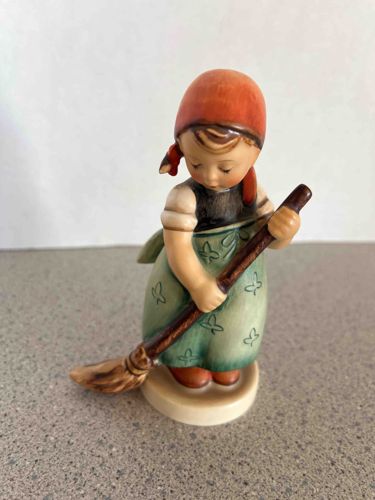
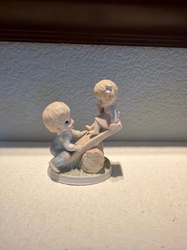
Submitted item photo
Submitted photo · June 10, 2026

User's notes

No additional notes provided.

AI analysis below

AI appraisal

AI analysis & estimate

AI-Generated · Verify before acting

Everything below is generated by AI for informational purposes only. AI can make mistakes — the AI may misidentify items or misattribute them (artist, maker, brand, designer, origin, era). This is not an official valuation and should not be used for insurance, sale, tax, estate, legal, or lending purposes — or any decision requiring a certified appraisal. It is not an authoritative claim about any person, brand, or rights holder — do not share or rely on it as a factual statement about a third party. Always consult qualified professionals before making financial decisions.

Read the full disclaimer

AI Identification

·Not independently authenticated·Verify before acting

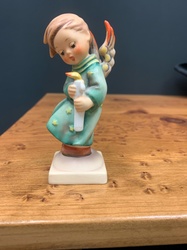
Goebel Hummel Figurine 'Helping Mother' (M.I. Hummel #110/0)

Collectibles - Porcelain Figurines

AI Estimated Value

·Not an official valuation·Verify before acting

$45.00 - $75.00

As of June 10, 2026

AI Item Analysis

·AI can make mistakes·Verify before acting
This is a genuine Goebel Hummel porcelain figurine titled 'Helping Mother' (also known as 'Let's Help' or 'The Little Sweeper'), originally modeled by master sculptor Reinhold Unger in 1938. The piece depicts a young girl diligently sweeping with a broom, dressed in traditional Bavarian country attire including a burnt-orange headscarf, a dark brown vest over a cream-colored blouse, and a soft green apron adorned with small dark floral sprigs. The figurine stands approximately 4 inches tall on a circular cream-colored base. The craftsmanship is indicative of mid-20th-century German porcelain production, featuring the characteristic matte finish and hand-painted earthen tones associated with Sister Maria Innocentia Hummel's sketches. The facial details are delicately rendered with downcast eyes, capturing a sense of focused innocence. Notable features include the textured detail of the broom bristles and the sculpted ribbons of the headscarf tied at the back. Condition-wise, the figurine appears well-preserved with no visible chips, cracks, or professional repairs. There is no evidence of significant 'crazing' (fine cracks in the glaze) often seen in older Hummels, though a slight age-related patina is present. While the bottom mark is not visible in this angle, the style and coloration suggest a production period likely between the TMK-3 (Small Bee) and TMK-6 (Missing Bee) eras (roughly 1960-1990).
AI Appraisal Report

·AI can make mistakes·Verify before acting
Based on my visual examination of this 'Helping Mother' (HUM 110/0) figurine, I find it to be a genuine mid-to-late 20th-century Goebel production. The hand-painted execution aligns with Master Sculptor Reinhold Unger's 1938 design, featuring the characteristic matte glaze and soft, earthen palette synonymous with Sister Maria Innocentia Hummel’s original sketches. The application of the burnt-orange headscarf and the precision of the facial features suggest a production period likely falling within the TMK-5 (Last Bee) or TMK-6 eras. The condition appears Excellent; the absence of visible crazing, chips, or surface abrasions significantly helps retain its secondary market appeal. Currently, the market for Hummels is heavily saturated. While 'Helping Mother' is a classic and beloved motif, the 110/0 size was produced in high volumes, making it common rather than a rarity. Similar examples currently fetch between $40 and $80 at auction and through secondary dealers. The value is capped by the high supply and a generational shift in collector demand for traditional German porcelain. Limitations of this appraisal include the inability to inspect the underside for specific trademark stamps (TMK) and factory-incised numbers, which are essential for precise dating. My assessment of the absence of repairs is based on visual surface continuity; however, professional restorations can sometimes be invisible to the naked eye under standard lighting. A full authentication would require an in-person examination under UV (Blacklight) to detect hidden adhesives or overpainting, a tactile inspection of the glaze's texture, and verification of the trademark to confirm the exact production window.

Get your items appraised

Instant estimates of your treasures with AI-powered appraisals

Browse More Appraisals