Italian Majolica Double-Spouted Cruet
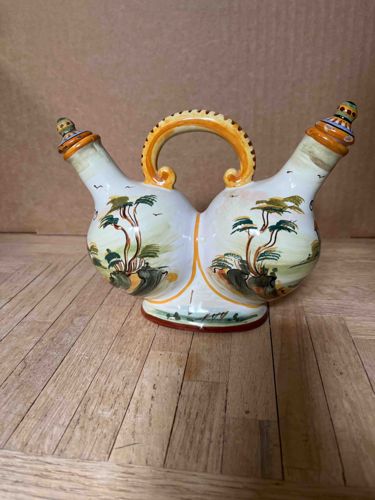
This is a vintage Italian majolica glazed ceramic oil and vinegar cruet, featuring a distinctive double-lobed body with dual angled spouts and a central ring-style handle. The piece is hand-painted in a traditional landscape motif, showcasing stylized green and brown cypress-like trees and small birds against a creamy white or off-white ground. The construction utilizes a tin-glazed earthenware process typical of Mediterranean pottery. The handle and spouts are accented with vibrant mustard yellow and terracotta orange scrolls and geometric bands. Each spout is fitted with a matching decorative ceramic stopper, which appears intact. The craftsmanship suggests a mid-20th-century origin, likely from a well-known ceramic region such as Deruta or Castelli. While the overall glaze remains glossy and the colors vibrant, there is a visible small linear scratch or surface mark near the central base area. No major chips or cracks are immediately evident in the primary view, though minor kiln stilt marks or pinholes typical of hand-fired ceramics may be present upon closer inspection. The base is finished with a simple green and brown landscape line, resting on an unglazed or dark-rimmed foot.
AI-Generated Appraisal Disclaimer
Estimated Value
$125 - $175
Basic Information
Category
Antique and Vintage Ceramics
Appraised On
February 11, 2026
Estimated Value
$125 - $175
Item Description
This is a vintage Italian majolica glazed ceramic oil and vinegar cruet, featuring a distinctive double-lobed body with dual angled spouts and a central ring-style handle. The piece is hand-painted in a traditional landscape motif, showcasing stylized green and brown cypress-like trees and small birds against a creamy white or off-white ground. The construction utilizes a tin-glazed earthenware process typical of Mediterranean pottery. The handle and spouts are accented with vibrant mustard yellow and terracotta orange scrolls and geometric bands. Each spout is fitted with a matching decorative ceramic stopper, which appears intact. The craftsmanship suggests a mid-20th-century origin, likely from a well-known ceramic region such as Deruta or Castelli. While the overall glaze remains glossy and the colors vibrant, there is a visible small linear scratch or surface mark near the central base area. No major chips or cracks are immediately evident in the primary view, though minor kiln stilt marks or pinholes typical of hand-fired ceramics may be present upon closer inspection. The base is finished with a simple green and brown landscape line, resting on an unglazed or dark-rimmed foot.
Related Tags
Get Your Items Appraised
Instant estimates of your treasures with AI-powered instant appraisals