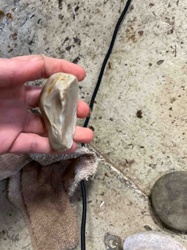
Lower Paleolithic Acheulean Style Chert Chopper Pebble Tool
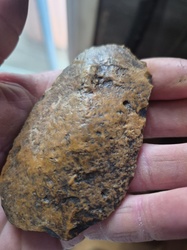
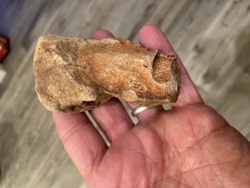
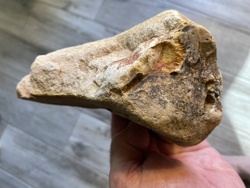
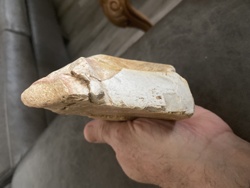
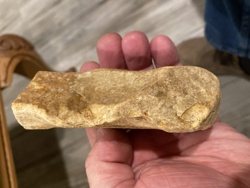
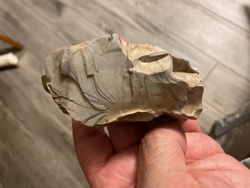
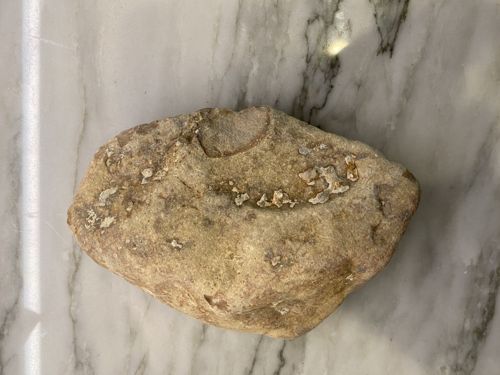
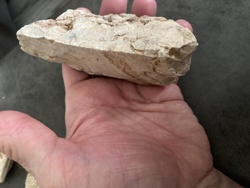
This specimen is a large lithic artifact measuring 6.25 inches by 5 inches, identified as a chopper or pebble tool. Composed of chert, the item exhibits an earthy, tan to light brown coloration with visible mineral inclusions and a textured, matte surface. The construction is characterized by selective unifacial or bifacial flaking along one margin to create a sharpened working edge, while the remainder of the stone retains its natural smooth cortex for a comfortable hand grip. The surface displays significant natural weathering and a developed patina consistent with a specimen of extreme age, possibly dating to the Lower Paleolithic period. Notable features include several deep concavities and impact scars along the perimeter, suggesting intentional knapping. In terms of condition, the artifact shows heavy rounding and erosion, likely from environmental exposure or water transport, which has softened the original sharp edges of the flake scars. There are visible white mineral deposits across the face of the stone. While the item is described as Acheulean and found in Guthrie, Oklahoma, it is important to note that the Acheulean industry is primarily associated with Afro-Eurasian Homo erectus; therefore, this North American find represents a significant typology for regional lithic analysis, or a naturally occurring geofact that mimics anthropogenic flaking. The craftsmanship reflects early stone-age technology where functionality was prioritized over aesthetic symmetry.
AI-Generated Appraisal Disclaimer
Estimated Value
$40 - $85
Basic Information
Category
Archaeological Artifacts / Lithic Tools
Appraised On
March 19, 2026
Estimated Value
$40 - $85
Additional Details Provided By Owner
User Provided Information
Lower Paleolithic Acheulean chert chopper pebble tool found in Guthrie, OK measuring 6.25" x 5"
Item Description
This specimen is a large lithic artifact measuring 6.25 inches by 5 inches, identified as a chopper or pebble tool. Composed of chert, the item exhibits an earthy, tan to light brown coloration with visible mineral inclusions and a textured, matte surface. The construction is characterized by selective unifacial or bifacial flaking along one margin to create a sharpened working edge, while the remainder of the stone retains its natural smooth cortex for a comfortable hand grip. The surface displays significant natural weathering and a developed patina consistent with a specimen of extreme age, possibly dating to the Lower Paleolithic period. Notable features include several deep concavities and impact scars along the perimeter, suggesting intentional knapping. In terms of condition, the artifact shows heavy rounding and erosion, likely from environmental exposure or water transport, which has softened the original sharp edges of the flake scars. There are visible white mineral deposits across the face of the stone. While the item is described as Acheulean and found in Guthrie, Oklahoma, it is important to note that the Acheulean industry is primarily associated with Afro-Eurasian Homo erectus; therefore, this North American find represents a significant typology for regional lithic analysis, or a naturally occurring geofact that mimics anthropogenic flaking. The craftsmanship reflects early stone-age technology where functionality was prioritized over aesthetic symmetry.
Get Your Items Appraised
Instant estimates of your treasures with AI-powered instant appraisals