Acoma Pueblo Polychrome Pottery Olla
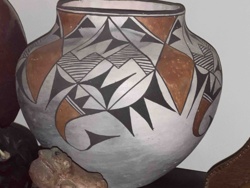
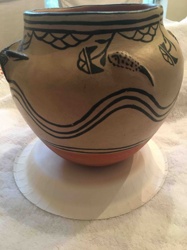
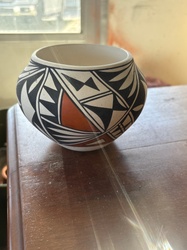
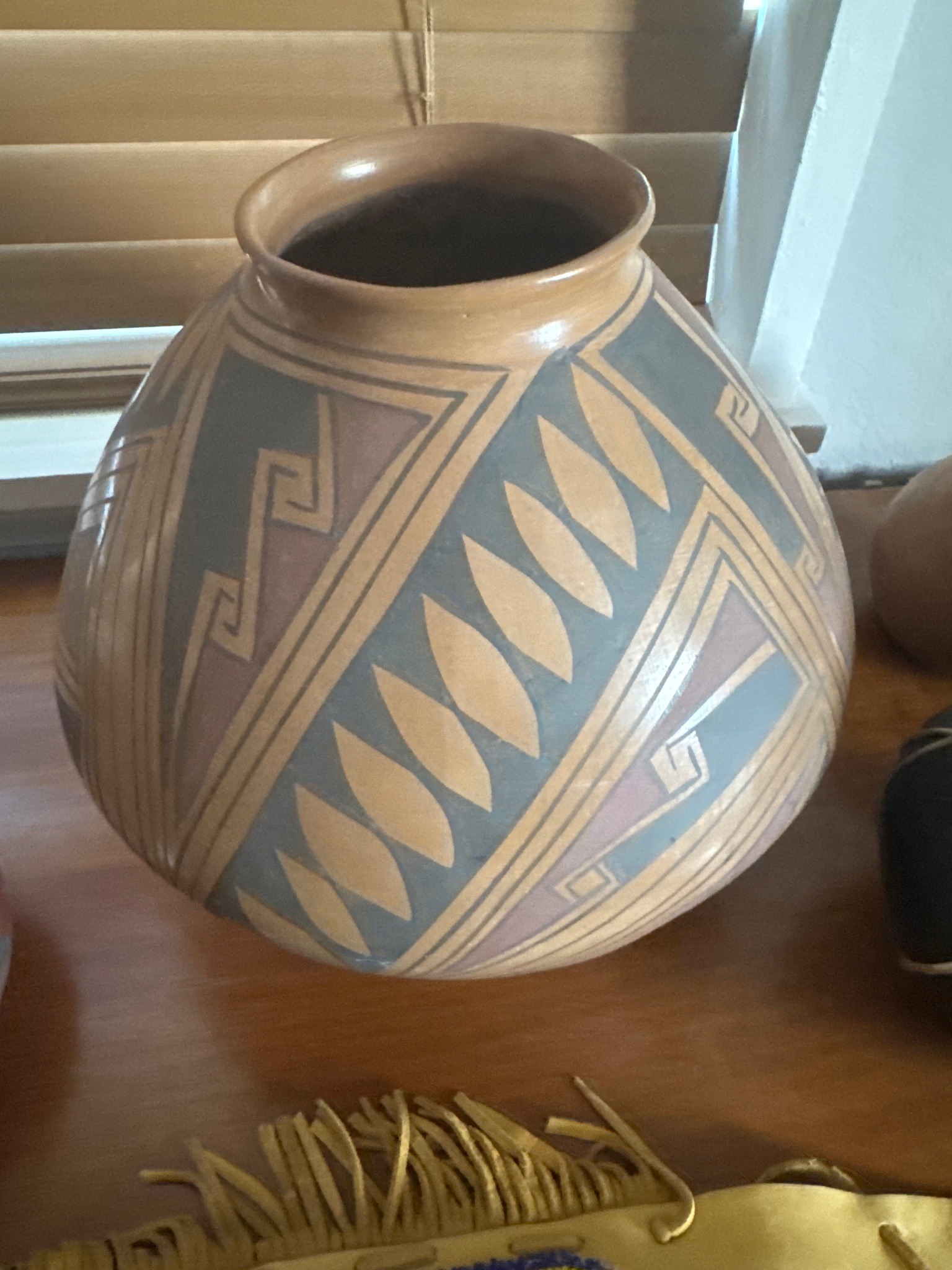
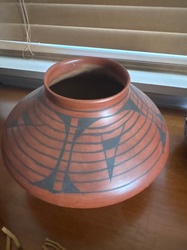
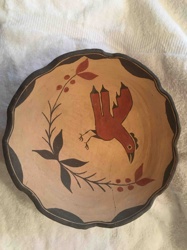
This is a large, hand-coiled ceramic vessel, traditionally known as an olla, likely originating from the Acoma Pueblo in New Mexico. The piece exhibits a classic globular form with a tapered neck and a slightly flared rim. It is constructed from natural clay and features a white to buff-colored slip background. The exterior surface is meticulously hand-painted with a complex polychrome design utilizing mineral pigments in shades of black/charcoal, sienna, and earth reds. The geometric patterns include traditional motifs such as zigzag lightning bolts, feathered steps, and a central band of seed or leaf-like almond shapes. The craftsmanship is high, evidenced by the thin walls characteristic of Acoma pottery and the precision of the line work. The vessel shows a smooth, stone-polished finish. Condition-wise, the piece appears to be in very good vintage condition with no visible cracks or major chips, though there is a soft, natural patina and minor surface scuffing consistent with age. This style is reflective of the mid-to-late 20th century Southwest Native American artistic tradition, showing a mastery of traditional firing and slip-painting techniques.
AI-Generated Appraisal Disclaimer
Estimated Value
$2,500 - $3,500
Basic Information
Category
Native American Art & Ceramics
Appraised On
May 11, 2026
Estimated Value
$2,500 - $3,500
Item Description
This is a large, hand-coiled ceramic vessel, traditionally known as an olla, likely originating from the Acoma Pueblo in New Mexico. The piece exhibits a classic globular form with a tapered neck and a slightly flared rim. It is constructed from natural clay and features a white to buff-colored slip background. The exterior surface is meticulously hand-painted with a complex polychrome design utilizing mineral pigments in shades of black/charcoal, sienna, and earth reds. The geometric patterns include traditional motifs such as zigzag lightning bolts, feathered steps, and a central band of seed or leaf-like almond shapes. The craftsmanship is high, evidenced by the thin walls characteristic of Acoma pottery and the precision of the line work. The vessel shows a smooth, stone-polished finish. Condition-wise, the piece appears to be in very good vintage condition with no visible cracks or major chips, though there is a soft, natural patina and minor surface scuffing consistent with age. This style is reflective of the mid-to-late 20th century Southwest Native American artistic tradition, showing a mastery of traditional firing and slip-painting techniques.
Get Your Items Appraised
Instant estimates of your treasures with AI-powered instant appraisals