AI estimate as of June 27, 2025 · verify with a professional before acting
AI-Generated · Verify before acting
Everything on this page is generated by AI for informational purposes only. AI can make mistakes — the AI may misidentify items or misattribute them (artist, maker, brand, designer, origin, era). This is not an official valuation and should not be used for insurance, sale, tax, estate, legal, or lending purposes — or any decision requiring a certified appraisal. It is not an authoritative claim about any person, brand, or rights holder — do not share or rely on it as a factual statement about a third party. Always consult qualified professionals before making financial decisions.
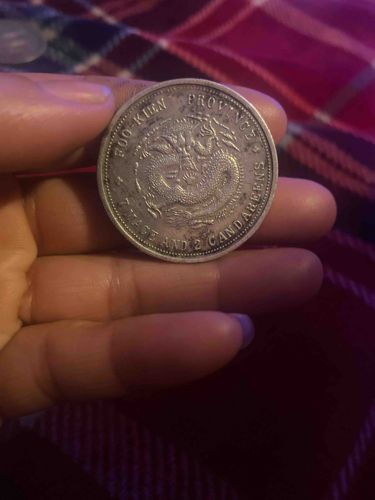
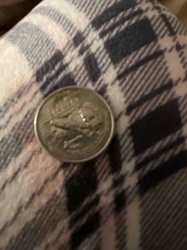
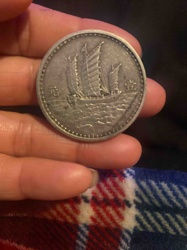
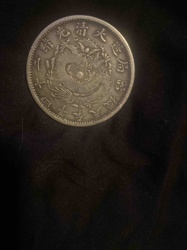
The item is a round, metallic coin, appearing to be made of silver or a silver-toned alloy. Its approximate size is consistent with a traditional Chinese silver dollar (typically around 39mm in diameter and weighing 27 grams). The visible side (obverse) features a finely detailed, coiled imperial dragon as the central motif, a common symbol on Chinese coinage from the late Qing Dynasty. The dragon is depicted with scales, prominent claws, and is possibly chasing a flaming pearl, though fine details are somewhat obscured by wear. Surrounding the dragon, along the outer rim, are English inscriptions: "FOO-KIEN PROVINCE" at the top and "7 MACE AND 2 CANDAREEVS" at the bottom, indicating its origin from Fujian province and its denomination, equivalent to a Chinese dollar. The rim of the coin is adorned with a beaded pattern which is largely intact. The coin exhibits moderate circulation wear, evident in the softening of the higher points of the dragon design and the lettering. An overall grayish patina is present, consistent with aged silver, along with some darker toning in recessed areas, suggesting environmental exposure. No significant damage such as deep scratches, dents, or repairs are immediately apparent on this side. These coins were minted in Foo-Kien (Fujian) Province, China, during the late Qing Dynasty, generally between 1895 and 1909 under Emperor Guangxu. The craftsmanship, though showing age, suggests an official mint issue, important for trade during that period.
AI Appraisal Report
Having examined the provided description of your Foo-Kien Province 7 Mace 2 Candareens Silver Dragon Dollar, I can offer the following professional appraisal.
Based on the detailed description, the coin appears to be an authentic example from the late Qing Dynasty. Its characteristics, including the coiled imperial dragon, "FOO-KIEN PROVINCE" and "7 MACE AND 2 CANDAREEVS" inscriptions, and beaded rim, are consistent with known genuine issues. The coin exhibits moderate circulation wear, suggesting a grade in the Fine (F) to Very Fine (VF) range, with softening of high points and overall grayish patina. The absence of significant damage like deep scratches or repairs is a positive factor.
The numismatic market for Chinese imperial coinage, particularly Dragon Dollars, remains robust, driven by strong international demand. Foo-Kien Province issues are scarcer than many other provincial mints, contributing to their appeal. While not exceedingly rare, their historical significance and distinctive design ensure consistent collector interest. Comparable sales of similar circulated examples typically fall in the mid-to-high hundreds of dollars.
The primary factor affecting this coin's value is its circulated condition. Higher-grade examples command significantly greater premiums. No specific year or variant information was provided, which could slightly alter value.
It is paramount to state that this appraisal is based solely on the provided textual description. A definitive authenticity verification and more precise grading would necessitate a direct, in-person examination. This would allow for a thorough inspection of the coin's weight, diameter, edge, strike details, and overall eye appeal, as well as the use of magnification to detect subtle signs of counterfeiting, tooling, or environmental damage. High-resolution images of both obverse and reverse, along with provenance, would also be highly beneficial for a more comprehensive assessment.