Large Ancestral Terracotta Olla
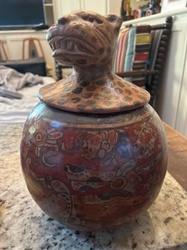
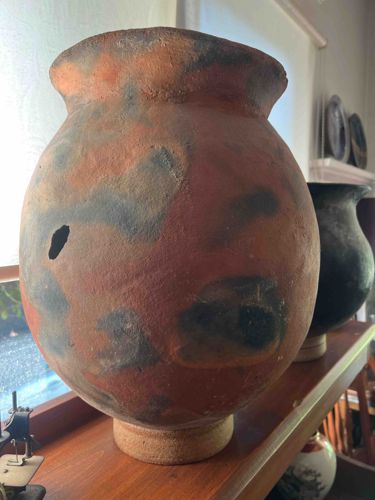
This is a large, hand-built ceramic olla, likely of North American Indigenous or Pre-Columbian origin, characterized by a bulbous, globular body and a short, flared neck with a slightly irregular rim. The vessel is crafted from a coarse, earth-toned terracotta clay showing a variegated surface of iron-oxide reds, deep oranges, and smoky grey or black fire clouds. These dark patches are indicative of a traditional pit-firing process where organic fuel came into direct contact with the vessel’s surface. The piece sits upon a separate, non-integral ring base for display support. Notable physical features include a prominent puncture or 'kill hole' on the left side of the mid-body, which can historically signify ritual use or burial preparation. The surface texture is matte and somewhat granular, lacking a vitrified glaze, which points to early ceramic technology. Visible condition issues include significant archaeological wear, surface abrasions, pitting, and the aforementioned structural hole. There are no visible maker's marks or signatures, which is consistent with its utilitarian or ceremonial tribal origin. The craftsmanship exhibits a sophisticated sense of form and volume despite the primitive firing techniques, estimated to be centuries old based on the weathering and patina.
AI-Generated Appraisal Disclaimer
Estimated Value
$1,200 - $1,800
Basic Information
Category
Archaeological Ceramics / Ethnographic Art
Appraised On
March 15, 2026
Estimated Value
$1,200 - $1,800
Item Description
This is a large, hand-built ceramic olla, likely of North American Indigenous or Pre-Columbian origin, characterized by a bulbous, globular body and a short, flared neck with a slightly irregular rim. The vessel is crafted from a coarse, earth-toned terracotta clay showing a variegated surface of iron-oxide reds, deep oranges, and smoky grey or black fire clouds. These dark patches are indicative of a traditional pit-firing process where organic fuel came into direct contact with the vessel’s surface. The piece sits upon a separate, non-integral ring base for display support. Notable physical features include a prominent puncture or 'kill hole' on the left side of the mid-body, which can historically signify ritual use or burial preparation. The surface texture is matte and somewhat granular, lacking a vitrified glaze, which points to early ceramic technology. Visible condition issues include significant archaeological wear, surface abrasions, pitting, and the aforementioned structural hole. There are no visible maker's marks or signatures, which is consistent with its utilitarian or ceremonial tribal origin. The craftsmanship exhibits a sophisticated sense of form and volume despite the primitive firing techniques, estimated to be centuries old based on the weathering and patina.
Related Tags
Get Your Items Appraised
Instant estimates of your treasures with AI-powered instant appraisals