AI Appraisal Estimate

AI-generated estimates · not official valuations

From the user

What was submitted

Photo and notes provided by the user — not generated by AI

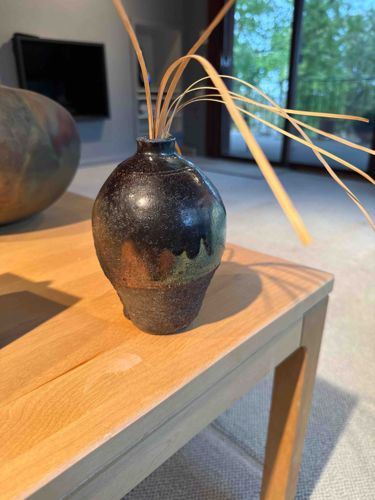
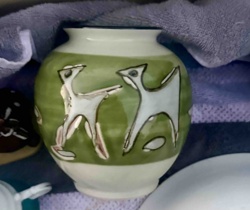
Submitted item photo
Submitted photo · June 15, 2026

User's notes

O’Hara Raku no lead

AI analysis below

AI appraisal

AI analysis & estimate

AI-Generated · Verify before acting

Everything below is generated by AI for informational purposes only. AI can make mistakes — the AI may misidentify items or misattribute them (artist, maker, brand, designer, origin, era). This is not an official valuation and should not be used for insurance, sale, tax, estate, legal, or lending purposes — or any decision requiring a certified appraisal. It is not an authoritative claim about any person, brand, or rights holder — do not share or rely on it as a factual statement about a third party. Always consult qualified professionals before making financial decisions.

Note

This analysis also relies on unverified notes provided by the user, which may be incomplete or inaccurate and could affect the result.

Read the full disclaimer

AI Identification

·Not independently authenticated·Verify before acting

O'Hara Raku-Fired Art Pottery Vase

Art Pottery Vase

AI Estimated Value

·Not an official valuation·Verify before acting

$150-250

As of June 15, 2026

AI Item Analysis

·AI can make mistakes·Verify before acting
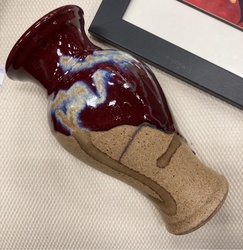
This is a small, hand-crafted art pottery vase, likely created using a raku firing technique, as indicated by the 'Raku' context. The vase features a bulbous body with a slightly tapered, unglazed base, rising to a narrower neck and a small, flaring rim. The primary color is a dark, almost black, glossy glaze that has developed a rich, textured surface with subtle variations. Drips of a lighter, brownish-green glaze are visible around the upper half, flowing downwards over the darker base glaze, creating an organic, artistic effect characteristic of raku firing, where glazes react dramatically to post-firing reduction. The unglazed lower portion reveals the raw, reddish-brown clay body, which appears somewhat coarse. The surface shows some slight irregularities and imperfections, which are typical of handmade pottery and especially common in raku, contributing to its unique character rather than detracting from its appeal. The overall impression is rustic yet sophisticated, showcasing the spontaneous beauty of the raku process. The vase is small, suitable for a single stem or a sparse arrangement, as seen with the dried reeds currently placed within it. Given the context 'O’Hara Raku no lead', it suggests the artist is O'Hara and that the piece is lead-free.
AI Appraisal Report

·AI can make mistakes·Verify before acting
Upon examining the provided image of the O'Hara Raku-Fired Art Pottery Vase, I find it to be in excellent condition. There are no visible chips, cracks, or significant abrasions. The 'imperfections' noted, such as surface irregularities and glaze variations, are inherent to the raku firing process and contribute to its artistic character, rather than indicating damage. The attribution to 'O'Hara' and the 'no lead' notation strongly suggest the artist, and the style is consistent with contemporary studio pottery raku work. However, without a clear signature or artist's mark visible in the image, or accompanying provenance documentation, I cannot definitively authenticate O'Hara as the maker. An in-person examination would be necessary to locate and verify any artist's mark. Market conditions for studio art pottery, particularly raku, are generally stable, with demand driven by collectors appreciating unique, handcrafted pieces. Comparables for unsigned or unattributed studio raku vases of this size and aesthetic typically fall within the $100-$300 range. Signed or well-documented pieces by recognized artists would command higher values. This piece's visual appeal, characterized by the dramatic interaction of glazes and the rustic charm of raku, enhances its desirability. Its small size, while limiting its practical use, also makes it a versatile decorative item. The 'no lead' designation is a positive factor for modern collectors concerned with health and environmental standards. The primary limitation to a higher valuation is the absence of clear authentication of the artist from the image alone. Full authentication would require a physical inspection to check for signatures, as well as potential provenance documentation from the owner or seller. Without this, the value is based on the aesthetic quality and general market for unsigned studio raku.

Get your items appraised

Instant estimates of your treasures with AI-powered appraisals

Browse More Appraisals