Worked Lithic Projectile Point
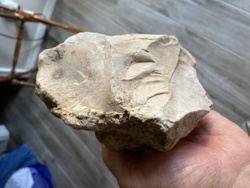
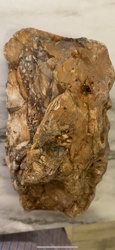
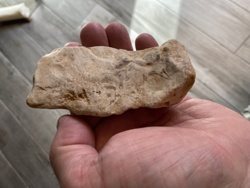
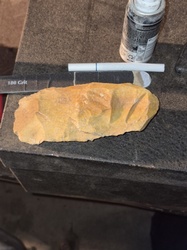
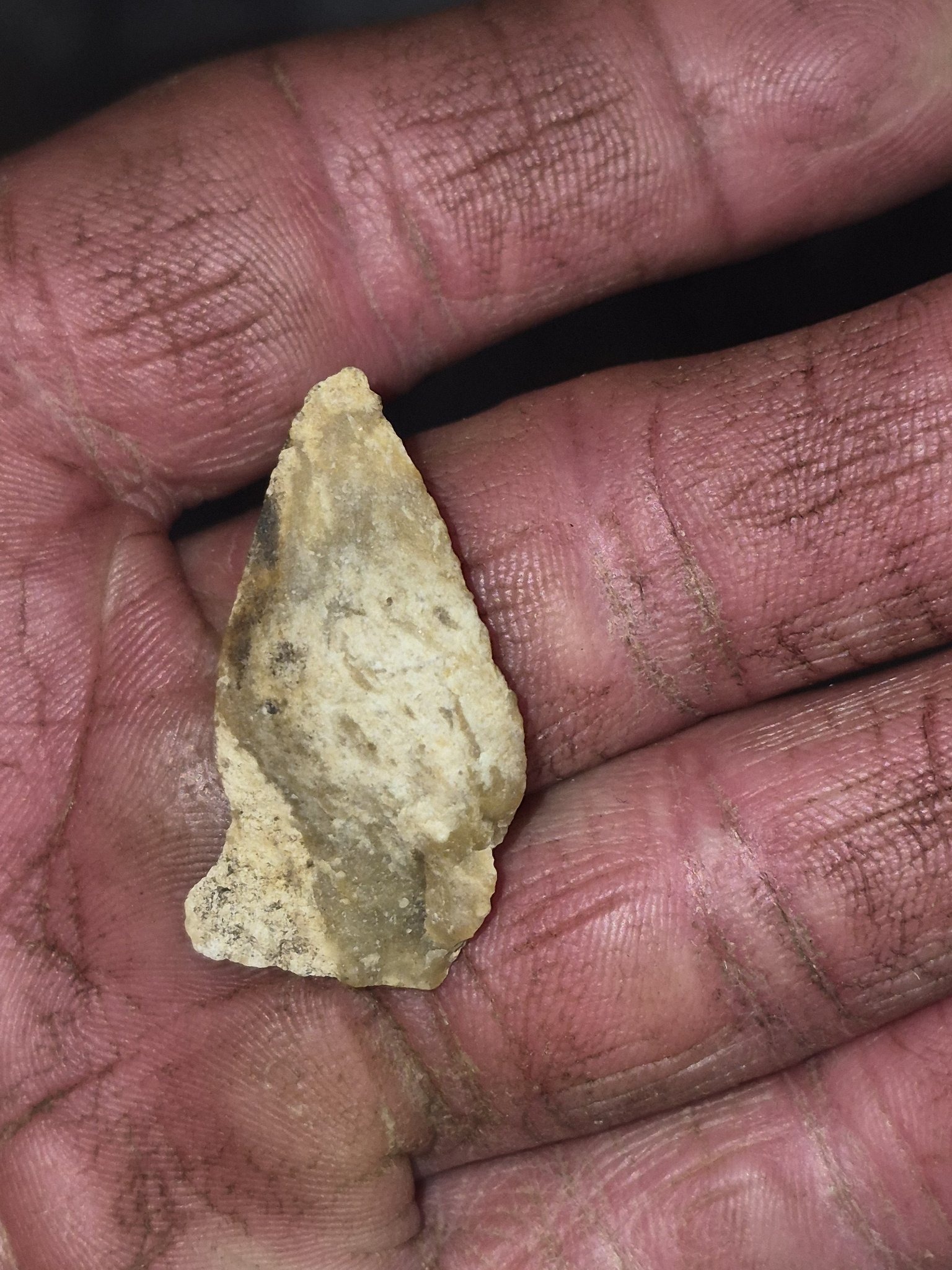
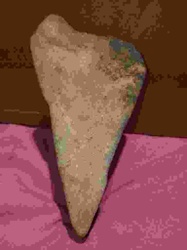
This item is a worked stone projectile point, commonly referred to as an arrowhead, held within a human hand for scale. The specimen measures approximately 1.5 inches in length and is crafted from a light-colored, translucent to opaque chert or quartzite material features subtle banding and mottled inclusions of grey and tan. The object displays characteristic bifacial pressure flaking along its edges, resulting in a somewhat irregular triangular or sub-lanceolate profile. The tip remains relatively sharp, though the base appears broken or snap-fractured, which is a common diagnostic indicator of use-wear or impact during its functional lifespan. The surface exhibits a natural patina consistent with long-term environmental exposure, including embedded mineral staining and slight rounding of the flake scars. There are no modern maker's marks, indicating an ancient origin likely belonging to the Archaic or Woodland periods of North American lithic technology, though specific typology is difficult without the base intact. The craftsmanship suggests a functional utilitarian tool rather than a prestige object, showing clear percussion scars and refined edge-retouching intended for piercing. Condition issues are limited to the aforementioned basal fracture and minor peripheral chipping, which are typical for found archaeological lithics.
AI-Generated Appraisal Disclaimer
Estimated Value
$15 - $35
Basic Information
Category
Archaeological Artifacts / Lithics
Appraised On
May 11, 2026
Estimated Value
$15 - $35
Item Description
This item is a worked stone projectile point, commonly referred to as an arrowhead, held within a human hand for scale. The specimen measures approximately 1.5 inches in length and is crafted from a light-colored, translucent to opaque chert or quartzite material features subtle banding and mottled inclusions of grey and tan. The object displays characteristic bifacial pressure flaking along its edges, resulting in a somewhat irregular triangular or sub-lanceolate profile. The tip remains relatively sharp, though the base appears broken or snap-fractured, which is a common diagnostic indicator of use-wear or impact during its functional lifespan. The surface exhibits a natural patina consistent with long-term environmental exposure, including embedded mineral staining and slight rounding of the flake scars. There are no modern maker's marks, indicating an ancient origin likely belonging to the Archaic or Woodland periods of North American lithic technology, though specific typology is difficult without the base intact. The craftsmanship suggests a functional utilitarian tool rather than a prestige object, showing clear percussion scars and refined edge-retouching intended for piercing. Condition issues are limited to the aforementioned basal fracture and minor peripheral chipping, which are typical for found archaeological lithics.
Related Tags
Get Your Items Appraised
Instant estimates of your treasures with AI-powered instant appraisals