AI Appraisal Estimate

AI-generated estimates · not official valuations

From the user

What was submitted

Photo and notes provided by the user — not generated by AI

Submitted item photo
Submitted photo · June 4, 2026

User's notes

Coins

AI analysis below

AI appraisal

AI analysis & estimate

AI-Generated · Verify before acting

Everything below is generated by AI for informational purposes only. AI can make mistakes — the AI may misidentify items or misattribute them (artist, maker, brand, designer, origin, era). This is not an official valuation and should not be used for insurance, sale, tax, estate, legal, or lending purposes — or any decision requiring a certified appraisal. It is not an authoritative claim about any person, brand, or rights holder — do not share or rely on it as a factual statement about a third party. Always consult qualified professionals before making financial decisions.

Note

This analysis also relies on unverified notes provided by the user, which may be incomplete or inaccurate and could affect the result.

Read the full disclaimer

AI Identification

·Not independently authenticated·Verify before acting

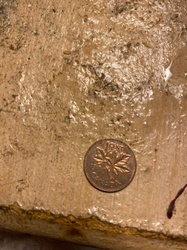
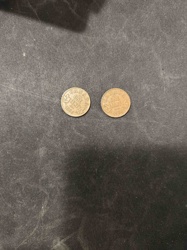
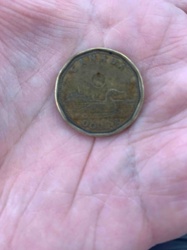
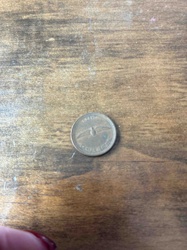
Lot of Six Canadian Large Cents (King George V Era)

Numismatics / Canadian Currency

AI Estimated Value

·Not an official valuation·Verify before acting

$12.00 - $18.00

As of June 4, 2026

AI Item Analysis

·AI can make mistakes·Verify before acting
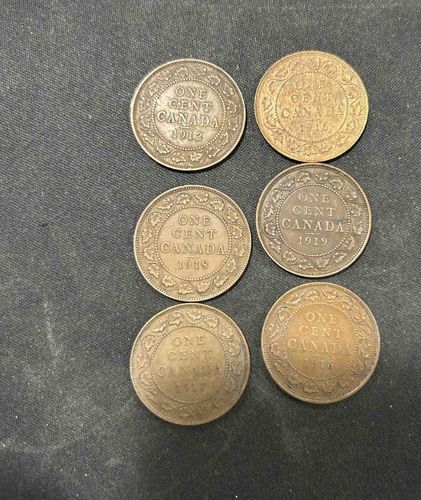
This lot consists of six early 20th-century Canadian one-cent coins, commonly referred to as 'Large Cents' due to their 25.4 mm diameter and 5.67-gram weight. The collection specifically features dates ranging from 1912 to 1919. These coins were minted by the Royal Canadian Mint in Ottawa and are composed of approximately 95% copper, 4% tin, and 1% zinc. Each reverse side displays a distinctive continuous wreath of 16 maple leaves encircling the central denomination text 'ONE CENT CANADA' and the specific year of mintage. The craftsmanship reflects the classic Edwardian-style engraver's work, specifically the designs by Sir E.B. MacKennal. Physically, the coins exhibit a varied range of aged patinas, shifting from deep chocolate browns to lighter brassy tones. The condition appears to range from 'Very Good' to 'Fine' on the numismatic scale. Visible wear is present on the high points of the maple leaves and the raised lettering. The 1912 specimen shows significant darkening and some potential surface verdigris or oxidation, while others like the 1913 and 1918 show more distinct detail in the leaf veins. There are minor rim nicks and typical surface scratches consistent with circulation and bulk storage. All lettering remains legible. No significant post-mint damage (PMD) like holes or major gouges are immediately apparent, though the coins show the expected natural oxidation of copper circulating for over a century.

AI Appraisal Report

·AI can make mistakes·Verify before acting
Based on my examination of this lot of six George V Canadian Large Cents dating from 1912 to 1919, I have assessed the collection as being in mixed circulated condition, ranging from 'Very Good' (VG-8) to 'Fine' (F-12). The 1912 specimen displays heavy oxidation and surface verdigris which negatively impacts its individual aesthetic, while the 1913 and 1918 examples retain better-defined leaf veins and rim integrity. These coins represent the final years of the Canadian large cent before the transition to the small cent in 1920. While historically significant, these specific dates were minted in high quantities (averaging 5 to 13 million annually), making them common in the current numismatic market. Comparable lots typically realize between $2.00 and $3.00 per coin at retail. The value is driven primarily by the copper content and their status as entry-level collectibles rather than rarity. I have verified the design motifs against known Royal Canadian Mint dies from the MacKennal era; however, a digital evaluation cannot confirm metallic composition or detect sophisticated cleaned surfaces. A physical inspection using a 10x loupe and precision weighing would be required to rule out environmental corrosion versus active PVC damage and to confirm the absence of 'altered' surfaces that occasionally affect copper value. No rare varieties, such as the 1911 'Godless' cent, are present in this specific year range to command a premium.

Get your items appraised

Instant estimates of your treasures with AI-powered appraisals

Browse More Appraisals