AI Appraisal Estimate

AI-generated estimates · not official valuations

From the user

What was submitted

Photo and notes provided by the user — not generated by AI

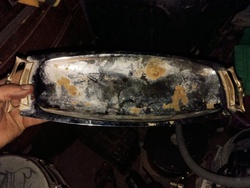
Submitted item photo
Submitted photo · June 6, 2026

User's notes

No additional notes provided.

AI analysis below

AI appraisal

AI analysis & estimate

AI-Generated · Verify before acting

Everything below is generated by AI for informational purposes only. AI can make mistakes — the AI may misidentify items or misattribute them (artist, maker, brand, designer, origin, era). This is not an official valuation and should not be used for insurance, sale, tax, estate, legal, or lending purposes — or any decision requiring a certified appraisal. It is not an authoritative claim about any person, brand, or rights holder — do not share or rely on it as a factual statement about a third party. Always consult qualified professionals before making financial decisions.

Read the full disclaimer

AI Identification

·Not independently authenticated·Verify before acting

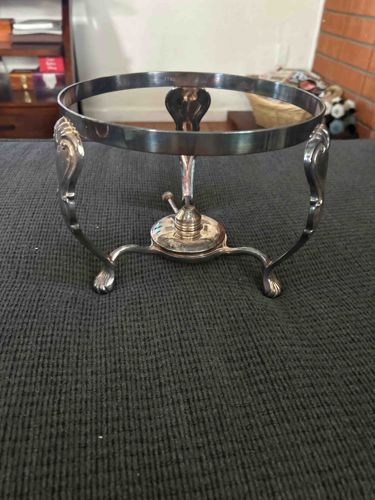
Silver-Plated Chafing Dish Stand with Burner Fitting

Dining Ware

AI Estimated Value

·Not an official valuation·Verify before acting

$75 - $150

As of June 6, 2026

AI Item Analysis

·AI can make mistakes·Verify before acting
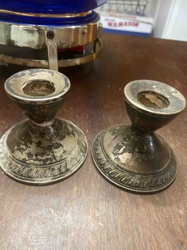
This is a vintage silver-plated chafing dish stand, designed to hold a dish or bowl over a heat source to keep food warm. It appears to be constructed from a metal, most likely silver-plated, given its tarnished appearance and characteristic luster, although solid silver cannot be ruled out without further inspection. The stand features a circular ring at the top, intended to cradle a serving dish, supported by three elegantly curved legs. Each leg is topped with an ornate foliate or rocaille-style decorative element where it connects to the ring, suggesting a late 19th to early 20th-century aesthetic, possibly Victorian or Edwardian. The legs transition into a graceful scroll design before terminating in small, rounded feet. At the center of the base, there's a fitting for a single burner, likely an alcohol or Sterno burner, which would provide the heat. The central burner column rises from a tri-lobed base that mirrors the three-leg design. The metal shows significant signs of tarnish, particularly in the crevices of the decorative elements and around the base, indicating its age and material. There are also visible scratches and scuffs on the flat surfaces of the ring and legs, consistent with regular use and handling over time. Despite the tarnish and surface wear, the overall structure appears sturdy and intact, with no obvious major damage like dents or bends. The craftsmanship suggests a manufactured item, possibly from a reputable silver plate company of its era, though no maker's marks are discernible from the image. The combination of its functional design and decorative elements points to an item used for formal dining or entertaining.
AI Appraisal Report

·AI can make mistakes·Verify before acting
I have examined the provided image of this vintage chafing dish stand with burner fitting. Based on its appearance, it is a silver-plated piece, likely from the late 19th to early 20th century (Victorian/Edwardian era), given its ornate foliate decoration and overall design aesthetic. This type of piece was common for formal dining. Its condition is consistent with age and use, showing significant tarnish and surface scratches/scuffs, but no major structural damage like dents or bends appears evident. The overall integrity seems good. Market-wise, silver-plated chafing stands are moderately desired, though not as highly sought after as solid sterling silver pieces. Comparables for similar silver-plated stands in this condition typically range from $75 to $150. Factors impacting this valuation include the visible tarnish, which detracts slightly but can be addressed with cleaning, and the lack of a complete chafing dish. Demand for these items is steady among collectors of vintage dining ware and those looking for unique entertaining pieces. Limitations regarding authenticity: While I can confidently assess its probable age and silver-plated nature from the image, definitive authentication (e.g., confirming it's not sterling silver) requires a physical examination to check for maker's marks, hallmarks, or undertake a specific gravity test. Provenance documentation could also provide valuable history. Without physical inspection, I cannot rule out the possibility of it being solid silver, though its appearance strongly suggests plating.

Get your items appraised

Instant estimates of your treasures with AI-powered appraisals

Browse More Appraisals