Tunbridge Ware Dome-Top Tea Caddy or Jewelry Box
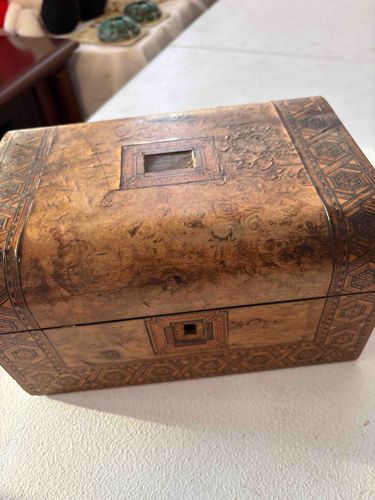
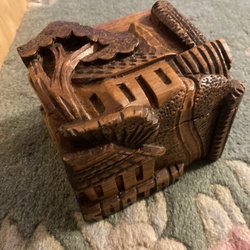
This is a Victorian-era Tunbridge Ware box featuring a distinctive dome-top (casket-style) lid. The exterior is decorated with highly figured bird's-eye maple veneer as the primary field, characterized by dense, swirling grain patterns. It is framed by intricate tessellated micromosaic bands, a hallmark of Tunbridge Wells craftsmanship, featuring geometric hexagonal and floral repeat patterns in variegated natural woods. The top is centered with a rectangular inlay that likely originally held a small mother-of-pearl or bone nameplate, which appears missing or damaged. The front panel includes a square escutcheon with matching mosaic borders around a small keyhole, though the key is not present. Regarding condition, the piece shows significant signs of age including surface cracking (crazing) to the finish, minor losses to the veneer edges, and several small chips in the mosaic banding on the lower right corner and lid shoulders. There is a visible dark patina and some staining to the wood consistent with mid-to-late 19th-century origin. The craftsmanship reflects the labor-intensive mosaic technique popularized by makers such as Thomas Barton or the Nye family, though no signature is visible on the exterior.
AI-Generated Appraisal Disclaimer
Estimated Value
$450 - $650
Basic Information
Category
Antique Woodenware / Decorative Arts
Appraised On
December 19, 2025
Estimated Value
$450 - $650
Item Description
This is a Victorian-era Tunbridge Ware box featuring a distinctive dome-top (casket-style) lid. The exterior is decorated with highly figured bird's-eye maple veneer as the primary field, characterized by dense, swirling grain patterns. It is framed by intricate tessellated micromosaic bands, a hallmark of Tunbridge Wells craftsmanship, featuring geometric hexagonal and floral repeat patterns in variegated natural woods. The top is centered with a rectangular inlay that likely originally held a small mother-of-pearl or bone nameplate, which appears missing or damaged. The front panel includes a square escutcheon with matching mosaic borders around a small keyhole, though the key is not present. Regarding condition, the piece shows significant signs of age including surface cracking (crazing) to the finish, minor losses to the veneer edges, and several small chips in the mosaic banding on the lower right corner and lid shoulders. There is a visible dark patina and some staining to the wood consistent with mid-to-late 19th-century origin. The craftsmanship reflects the labor-intensive mosaic technique popularized by makers such as Thomas Barton or the Nye family, though no signature is visible on the exterior.
Get Your Items Appraised
Instant estimates of your treasures with AI-powered instant appraisals