Paleolithic Chert Hand Axe Scraper Tool
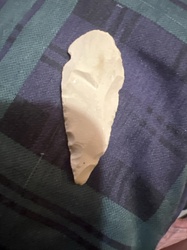
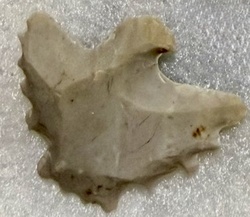
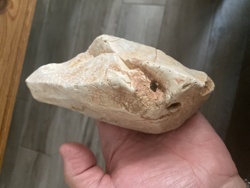
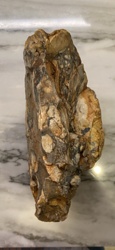
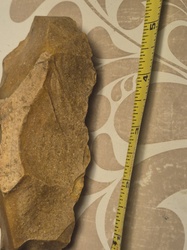
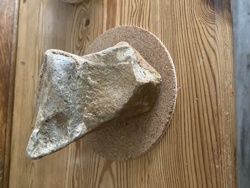
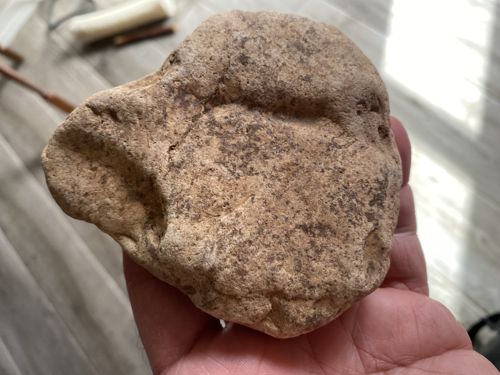
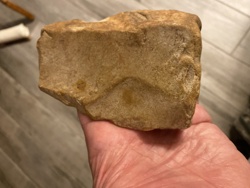
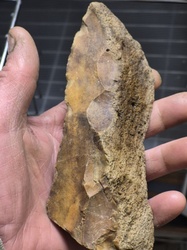
This artifact is a Paleolithic-style handheld lithic tool, identified as a hand axe or scraper, measuring approximately 4 inches by 3.5 inches. The piece is constructed from chert, exhibiting a rugged, earthen palette of tan and ochre with significant dark brown speckling across its weathered surface. Physically, it features an asymmetrical, teardrop-like silhouette designed to fit comfortably within the palm of a human hand. The tool shows evidence of intentional percussion flaking along the edges to create a functional cutting or scraping surface. Notable features include a prominent indentation on one side, which likely served as a thumb rest for increased grip and leverage during use. The condition reflects its extreme age, with heavily patinated surfaces and softened edges resulting from long-term environmental exposure and soil immersion. While no maker's marks are present—consistent with prehistoric tools—the craftsmanship is evident in the strategic removal of flakes to balance weight and utility. The tool likely dates to the Upper or Middle Paleolithic period, representing early human technological advancement. The overall quality of the chert is dense, and the presence of mineral deposits adds to its character as a genuine prehistoric implement.
AI-Generated Appraisal Disclaimer
Estimated Value
$150-$250
Basic Information
Category
Prehistoric Artifacts / Antiquities
Appraised On
February 19, 2026
Estimated Value
$150-$250
Additional Details Provided By Owner
User Provided Information
Paleolithic chert hand axe scraper tool 4" x 3.5
Item Description
This artifact is a Paleolithic-style handheld lithic tool, identified as a hand axe or scraper, measuring approximately 4 inches by 3.5 inches. The piece is constructed from chert, exhibiting a rugged, earthen palette of tan and ochre with significant dark brown speckling across its weathered surface. Physically, it features an asymmetrical, teardrop-like silhouette designed to fit comfortably within the palm of a human hand. The tool shows evidence of intentional percussion flaking along the edges to create a functional cutting or scraping surface. Notable features include a prominent indentation on one side, which likely served as a thumb rest for increased grip and leverage during use. The condition reflects its extreme age, with heavily patinated surfaces and softened edges resulting from long-term environmental exposure and soil immersion. While no maker's marks are present—consistent with prehistoric tools—the craftsmanship is evident in the strategic removal of flakes to balance weight and utility. The tool likely dates to the Upper or Middle Paleolithic period, representing early human technological advancement. The overall quality of the chert is dense, and the presence of mineral deposits adds to its character as a genuine prehistoric implement.
Related Tags
Get Your Items Appraised
Instant estimates of your treasures with AI-powered instant appraisals