Petrified Wood Paleolithic Lithic Tool and Effigy
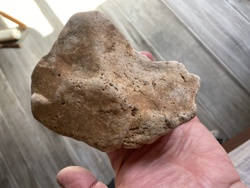
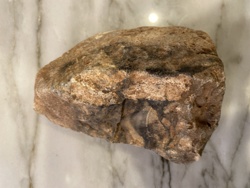
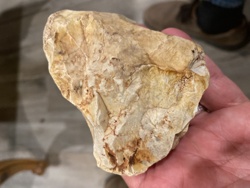
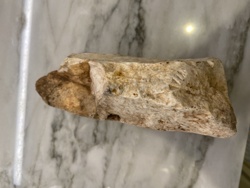
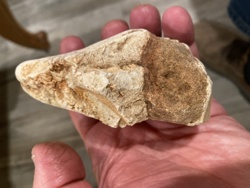
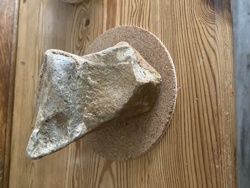
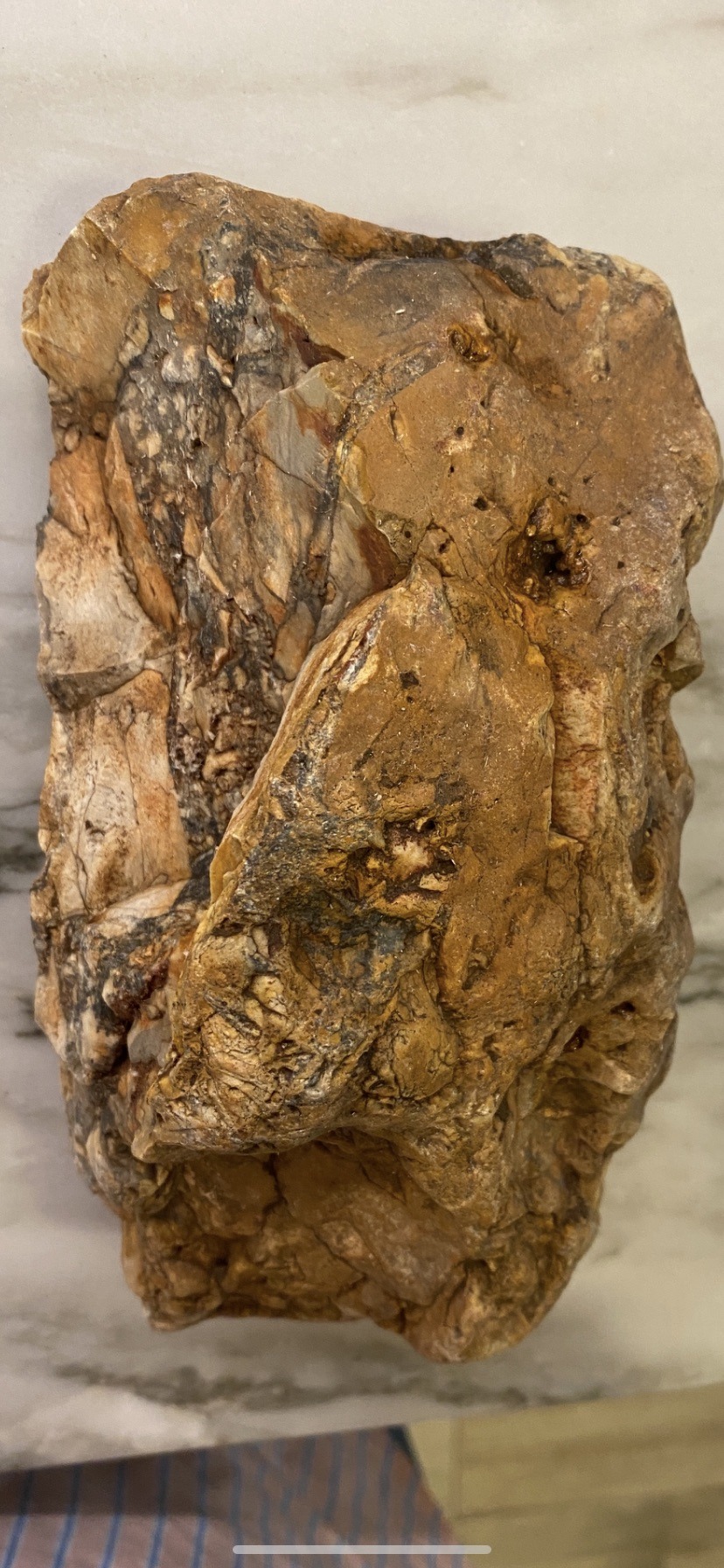
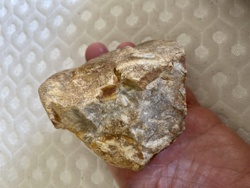
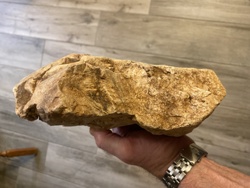
This is a significant lithic specimen measuring approximately 8 inches by 5 inches, identified as a Paleolithic biface tool crafted from petrified wood. The item exhibits a range of earth tones including ochre, burnt sienna, and cream, consistent with the mineral replacement patterns found in fossilized wood from the Guthrie, Oklahoma region. The physical construction shows evidence of intentional flaking and percussion bulb remnants along the margins, characteristic of a hand axe or scraping tool. The texture is highly varied, with certain areas displaying a smooth, waxy patina indicative of long-term environmental exposure and ancient handle usage. Notable features include a prominent central ridge and facets that suggest a dual-purpose as 'portable rock art' or an effigy, with topographical features resembling Zoomorphic or Anthropomorphic forms. The condition is reflective of its extreme age; there are no modern mechanical fractures, only ancient wear patterns, mineral staining, and a heavy desert-varnish-like patina. The craftsmanship displays a primitive but deliberate understanding of the material's grain, utilizing the inherent hardness of the silicified wood to create durable edges. This specimen represents a transition between basic utility and symbolic representation in early lithic technology.
AI-Generated Appraisal Disclaimer
Estimated Value
$400.00 - $650.00
Basic Information
Category
Archaeological Artifact / Prehistoric Lithic Tool
Appraised On
May 2, 2026
Estimated Value
$400.00 - $650.00
Additional Details Provided By Owner
User Provided Information
Petrified wood beautiful Paleolithic bi face hand axe scraper/ portable rock art effigy found in Guthrie, OK measuring 8" x 5"
Item Description
This is a significant lithic specimen measuring approximately 8 inches by 5 inches, identified as a Paleolithic biface tool crafted from petrified wood. The item exhibits a range of earth tones including ochre, burnt sienna, and cream, consistent with the mineral replacement patterns found in fossilized wood from the Guthrie, Oklahoma region. The physical construction shows evidence of intentional flaking and percussion bulb remnants along the margins, characteristic of a hand axe or scraping tool. The texture is highly varied, with certain areas displaying a smooth, waxy patina indicative of long-term environmental exposure and ancient handle usage. Notable features include a prominent central ridge and facets that suggest a dual-purpose as 'portable rock art' or an effigy, with topographical features resembling Zoomorphic or Anthropomorphic forms. The condition is reflective of its extreme age; there are no modern mechanical fractures, only ancient wear patterns, mineral staining, and a heavy desert-varnish-like patina. The craftsmanship displays a primitive but deliberate understanding of the material's grain, utilizing the inherent hardness of the silicified wood to create durable edges. This specimen represents a transition between basic utility and symbolic representation in early lithic technology.
Related Tags
Explore similar items and categories:
Get Your Items Appraised
Instant estimates of your treasures with AI-powered instant appraisals