Anglo-Indian Carved Wood and Brass-Clad Wall Cabinet
Home Decor / Antique Furniture

Anglo-Indian Carved Wood and Brass-Clad Wall Cabinet

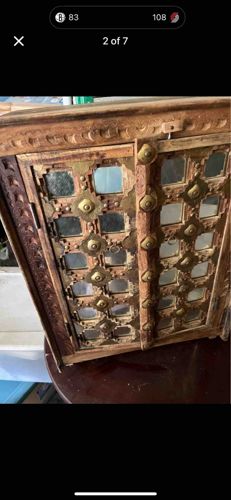
This is a wall-mounted decorative cabinet crafted in the Anglo-Indian or Rajasthani style, likely originating from Northern India. The piece is constructed from medium-toned hardwood, possibly sheesham or mango wood, featuring two ornate doors. The doors are designed with a grid-like lattice frame, inset with individual small panes of glass or mirror. The exterior is heavily embellished with embossed brass plates and decorative brass bosses (studs) at the intersections of the woodwork, characteristic of traditional Jharokha or Haveli architectural styles. The frame includes hand-carved decorative molding with scalloped patterns along the top and floral/geometric patterns along the side stiles. The wood shows a dry, aged patina with significant grain visibility. Condition indicates heavy wear and age, including darkening or 'silvering' loss on the mirrors, oxidation/tarnish on the brass elements, and some gaps in the joinery. One prominent feature is the wooden sliding latch at the top center. The craftsmanship is rustic and handmade rather than industrial, suggesting a mid-to-late 20th-century manufacture intended for the global decorative arts market based on traditional designs. While no maker's mark is visible, the style of the metalwork and hinges is typical of provincial Indian workshop production.

Estimated Value

$450 - $650

Basic Information

Category

Home Decor / Antique Furniture

Appraised On

March 24, 2026

Estimated Value

$450 - $650

Item Description

This is a wall-mounted decorative cabinet crafted in the Anglo-Indian or Rajasthani style, likely originating from Northern India. The piece is constructed from medium-toned hardwood, possibly sheesham or mango wood, featuring two ornate doors. The doors are designed with a grid-like lattice frame, inset with individual small panes of glass or mirror. The exterior is heavily embellished with embossed brass plates and decorative brass bosses (studs) at the intersections of the woodwork, characteristic of traditional Jharokha or Haveli architectural styles. The frame includes hand-carved decorative molding with scalloped patterns along the top and floral/geometric patterns along the side stiles. The wood shows a dry, aged patina with significant grain visibility. Condition indicates heavy wear and age, including darkening or 'silvering' loss on the mirrors, oxidation/tarnish on the brass elements, and some gaps in the joinery. One prominent feature is the wooden sliding latch at the top center. The craftsmanship is rustic and handmade rather than industrial, suggesting a mid-to-late 20th-century manufacture intended for the global decorative arts market based on traditional designs. While no maker's mark is visible, the style of the metalwork and hinges is typical of provincial Indian workshop production.
Get Your Items Appraised

Instant estimates of your treasures with AI-powered instant appraisals

Browse More Appraisals