AI Appraisal Estimate

AI-generated estimates · not official valuations

From the user

What was submitted

Photo and notes provided by the user — not generated by AI

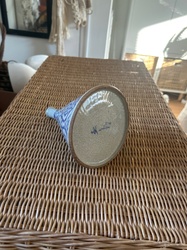
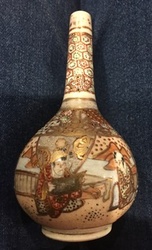
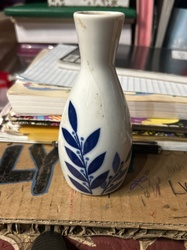
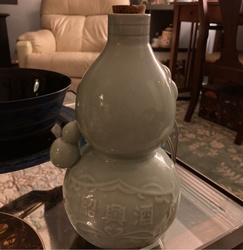
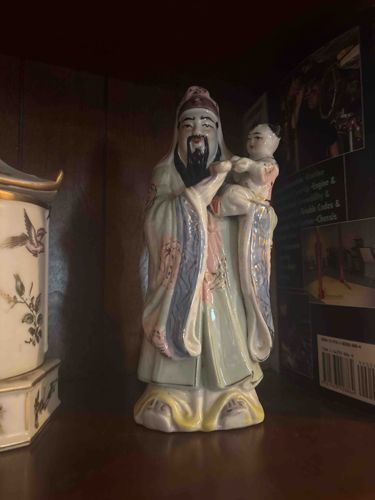
Submitted item photo
Submitted photo · June 22, 2026

User's notes

No additional notes provided.

AI analysis below

AI appraisal

AI analysis & estimate

AI-Generated · Verify before acting

Everything below is generated by AI for informational purposes only. AI can make mistakes — the AI may misidentify items or misattribute them (artist, maker, brand, designer, origin, era). This is not an official valuation and should not be used for insurance, sale, tax, estate, legal, or lending purposes — or any decision requiring a certified appraisal. It is not an authoritative claim about any person, brand, or rights holder — do not share or rely on it as a factual statement about a third party. Always consult qualified professionals before making financial decisions.

Read the full disclaimer

AI Identification

·Not independently authenticated·Verify before acting

Chinese Porcelain Lu Star (Luxing) Figurine

Asian Art and Antiques / Ceramics

AI Estimated Value

·Not an official valuation·Verify before acting

$150-$250

As of June 22, 2026

AI Item Analysis

·AI can make mistakes·Verify before acting
This is a polychrome porcelain figurine representing Lu (Luxing), one of the Sanxing (Three Star Gods) in Chinese folk religion, specifically symbolizing status, prosperity, and the blessing of children. The figure is depicted as a dignified mandarin holding a young male child, which is a traditional iconographic variant of the Lu deity. The piece is constructed of mold-formed porcelain with a translucent vitreous glaze. The color palette features a 'famille rose' influence, with soft celadon green, pale pink, and lavender glazes decorating the flowing robes. The deity's facial features include a traditional long black beard and a scholar's cap. The child is dressed in complementary tones, held in the deity's left arm. The item appears to be of mid-to-late 20th-century manufacture, likely a vintage export piece from the Republic period through the 1970s. The glaze displays a healthy sheen with no immediate signs of chips, cracks, or heavy crazing visible in the photograph, though some minor kiln soot spots or firing irregularities may be present on the surface. The craftsmanship shows standard commercial quality for decorative export ware, with hand-painted accents over the base glazes. While no maker's mark is visible from this angle, typical examples from this era often feature a stamped 'MADE IN CHINA' mark or a wax export seal on the unglazed base.
AI Appraisal Report

·AI can make mistakes·Verify before acting
I have carefully examined the visual characteristics of this polychrome porcelain figurine of Lu (Luxing). Based on my analysis, the piece is a mid-20th-century export-grade ceramic, likely produced in Jingdezhen during the late Republic period or early People's Republic era (c. 1950s–1970s). The glaze palette and modeling are consistent with 'famille rose' decorative wares intended for the international market. The condition appears structurally sound with no visible hairlines or major losses, though typical kiln soot and minor surface firing flaws are noted. The market for 20th-century Chinese export porcelain remains stable but saturated. While the Sanxing (Three Stars) are popular motifs, this item is a commercial production rather than an Imperial or high-artist piece, which limits its rarity. Values are primarily driven by interior design appeal and the presence of the other two figures (Fu and Shou) in the set; as a single figure, the value is slightly diminished. Comparables for standalone Lu figures of this scale and period routinely hammer between $100 and $300 at specialized Asian art auctions. Note: This appraisal is based strictly on photographic evidence. Without a physical inspection, I cannot verify the presence of a 'Made in China' stamp or wax seal on the unglazed footrim, which would confirm its export origin. A full authentication would require an in-person assessment of the paste texture, weight, and microscopic examination of the glaze bubbles to rule out modern mass-produced replicas. Provenance documentation, such as original import receipts, would further support the dating and valuation.

Get your items appraised

Instant estimates of your treasures with AI-powered appraisals

Browse More Appraisals