Lower Paleolithic Chert Biface Hand Axe Scraper
Archaeological Artifacts / Prehistoric Stone Tools

Lower Paleolithic Chert Biface Hand Axe Scraper

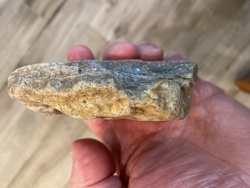
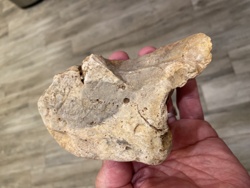
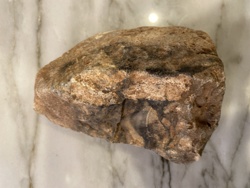
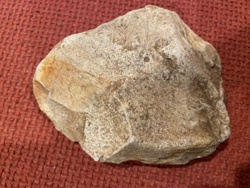
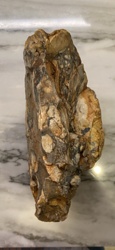
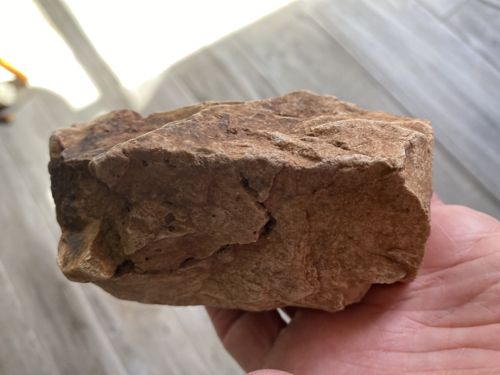
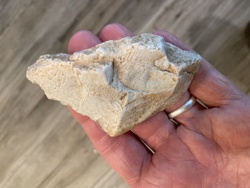
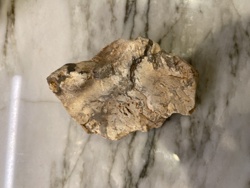
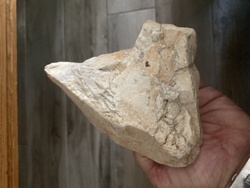
This specimen is a lithic artifact measuring approximately 5 inches in length and 2.25 inches in width, identified as a biface hand axe or scraper tool. It is crafted from a non-homogeneous chert common to the Oklahoma region (Guthrie area). The tool exhibits a distinct reddish-brown to tan coloration, likely resulting from mineral staining and long-term environmental exposure. The physical construction shows evidence of intentional percussion flaking on both sides (bifacial), creating a tapered, wedge-like geometry intended for heavy-duty cutting, chopping, or scraping tasks. The texture is gritty and matte, characteristic of weathered cryptocrystalline silicates. Notable features include multiple flake scars and a prominent ridge along the length, suggesting a utilitarian design for grip and leverage. The condition reflects its age, showing significant smoothing of the edges via natural chemical and physical weathering (patination), and there are visible micro-fractures and surface pitting consistent with geological deposition. While it lacks maker's marks, the technology points to a Lower Paleolithic tradition, though contextual verification of North American Lower Paleolithic sites is rare, making the specific age and cultural affiliation significant points for further study. The craftsmanship is rudimentary but functional, illustrating the early technological adaptation of available stone resources into versatile survival implements.
Estimated Value

$150 - $350

Basic Information

Category

Archaeological Artifacts / Prehistoric Stone Tools

Appraised On

February 19, 2026

Estimated Value

$150 - $350

Additional Details Provided By Owner

User Provided Information

Lower Paleolithic chert Bi face hand axe scraper tool found in Guthrie OK 5" x 2.25"

Item Description

This specimen is a lithic artifact measuring approximately 5 inches in length and 2.25 inches in width, identified as a biface hand axe or scraper tool. It is crafted from a non-homogeneous chert common to the Oklahoma region (Guthrie area). The tool exhibits a distinct reddish-brown to tan coloration, likely resulting from mineral staining and long-term environmental exposure. The physical construction shows evidence of intentional percussion flaking on both sides (bifacial), creating a tapered, wedge-like geometry intended for heavy-duty cutting, chopping, or scraping tasks. The texture is gritty and matte, characteristic of weathered cryptocrystalline silicates. Notable features include multiple flake scars and a prominent ridge along the length, suggesting a utilitarian design for grip and leverage. The condition reflects its age, showing significant smoothing of the edges via natural chemical and physical weathering (patination), and there are visible micro-fractures and surface pitting consistent with geological deposition. While it lacks maker's marks, the technology points to a Lower Paleolithic tradition, though contextual verification of North American Lower Paleolithic sites is rare, making the specific age and cultural affiliation significant points for further study. The craftsmanship is rudimentary but functional, illustrating the early technological adaptation of available stone resources into versatile survival implements.
Get Your Items Appraised

Instant estimates of your treasures with AI-powered instant appraisals

Browse More Appraisals