AI Appraisal Estimate

AI-generated estimates · not official valuations

From the user

What was submitted

Photo and notes provided by the user — not generated by AI

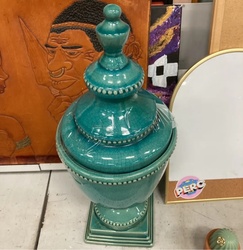
Submitted item photo
Submitted photo · May 25, 2026

User's notes

No additional notes provided.

AI analysis below

AI appraisal

AI analysis & estimate

AI-Generated · Verify before acting

Everything below is generated by AI for informational purposes only. AI can make mistakes — the AI may misidentify items or misattribute them (artist, maker, brand, designer, origin, era). This is not an official valuation and should not be used for insurance, sale, tax, estate, legal, or lending purposes — or any decision requiring a certified appraisal. It is not an authoritative claim about any person, brand, or rights holder — do not share or rely on it as a factual statement about a third party. Always consult qualified professionals before making financial decisions.

Read the full disclaimer

AI Identification

·Not independently authenticated·Verify before acting

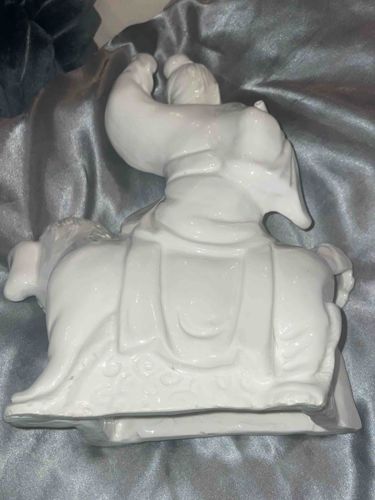
Blanc de Chine Porcelain Figurine of Laozi on a Water Buffalo

Chinese Ceramics and Decorative Arts

AI Estimated Value

·Not an official valuation·Verify before acting

$150 - $250

As of May 25, 2026

AI Item Analysis

·AI can make mistakes·Verify before acting
This is a white glazed porcelain figurine, likely manufactured in the Blanc de Chine (Dehua) style, depicting a traditional Chinese figure - possibly the philosopher Laozi or a boy - riding atop a water buffalo. The piece is characterized by a creamy, high-gloss white glaze that covers the entire surface of the ceramic. The sculpture shows a figure positioned mid-ride with one arm raised and flowing robes, suggesting movement. The water buffalo is depicted in a reclining or steady pose, with a saddle cloth draped over its back featuring simple recessed borders. The base appears to represent rocky or uneven terrain with subtle circular indentations. From this rear perspective, the craftsmanship shows soft, rounded modeling typical of mid-20th-century reproductions of classical Dehua ware rather than the crisp, sharp detailing of 17th or 18th-century originals. Condition-wise, the glaze shows significant pitting and pinholes (crawling), which may indicate a less-than-perfect firing process. There is visible wear and slight discoloration along the bottom edge where the piece meets the surface, suggesting some age, though the lack of a visible mark from this angle makes precise dating difficult. The overall style is consistent with decorative Chinoiserie exports produced in China or Japan during the mid-to-late 20th century.
AI Appraisal Report

·AI can make mistakes·Verify before acting
I have carefully examined the visual characteristics of this Blanc de Chine porcelain figurine. The piece features the creamy, high-gloss white glaze characteristic of Dehua-style (Blanc de Chine) ceramics, depicting Laozi atop a water buffalo. Based on the soft, rounded modeling and the somewhat clumsy execution of the figure’s features, I estimate this to be a mid-to-late 20th-century decorative export rather than a Ming or early Qing dynasty original. The presence of significant glaze pitting, crawling, and pinholes suggests a lower-quality firing process typical of secondary-market commercial production. The underside wear is consistent with a few decades of shelf life rather than centuries of age. While the subject matter is popular in Chinoiserie collections, the market for 20th-century reproductions is currently saturated, keeping the value at a decorative level. Similar mass-market Dehua figures of this era frequently sell at estate auctions within this price range. Authenticity cannot be definitively confirmed via imagery alone. A physical inspection would be required to examine the paste at the unglazed foot rim, check for internal mold lines, and search for 'He Chaozong' or period-accurate impressed marks. To elevate this piece to a higher valuation tier, provenance documentation predating 1950 or thermoluminescence (TL) testing to verify firing age would be necessary. Without these, the item is appraised as a decorative 20th-century ceramic.

Get your items appraised

Instant estimates of your treasures with AI-powered appraisals

Browse More Appraisals