Glazed Terracotta Dual-Handled Amphora Vase
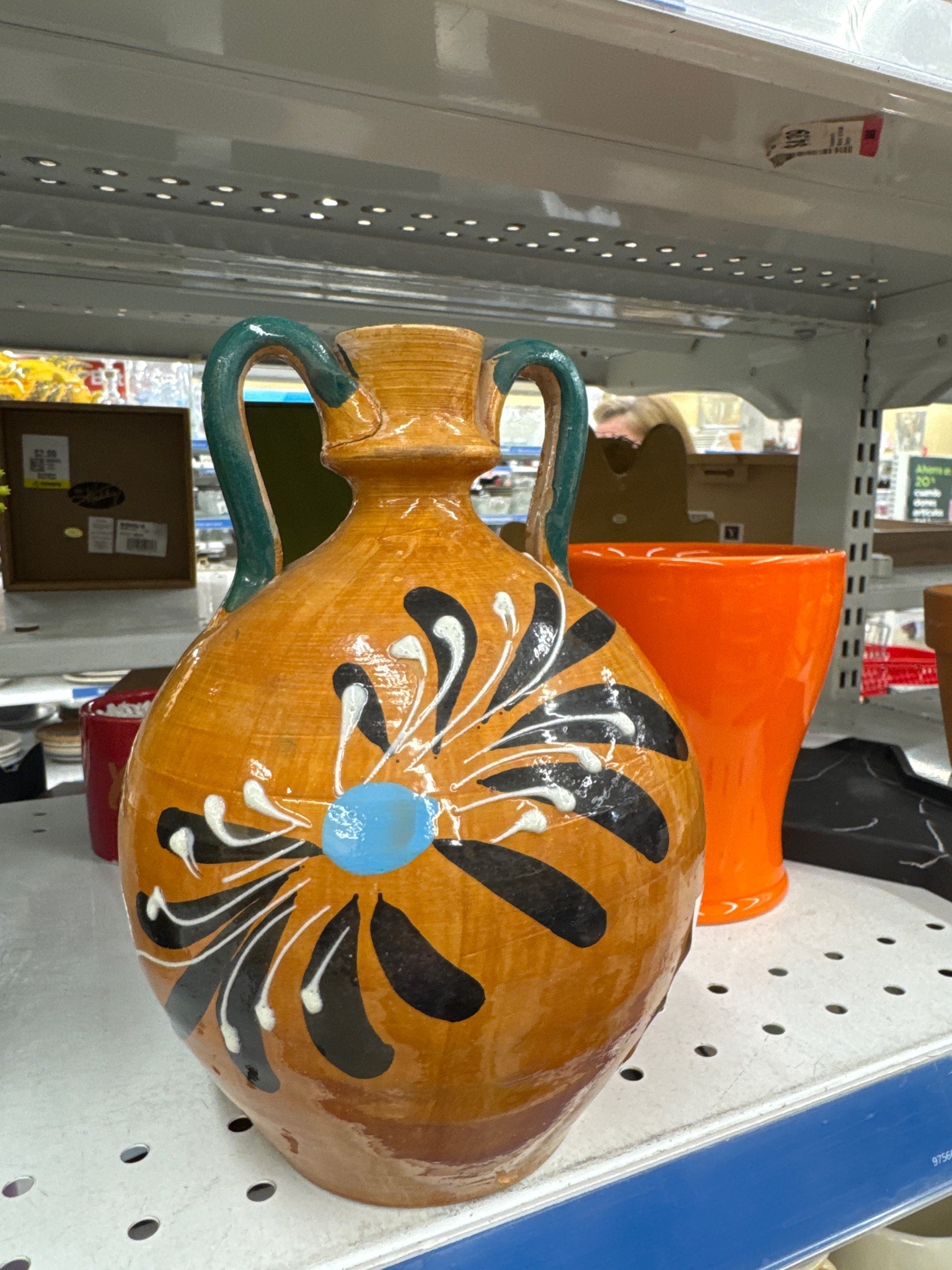
This item is a decorative terracotta amphora-style vase, likely of Mediterranean or Mexican folk-art origin, possibly mid-to-late 20th century. The vessel features a bulbous pear-shaped body tapering to a narrow neck with a flared rim, flanked by two arching handles in a contrasting teal-green glaze. The primary body is finished in a warm amber or honey-gold lead-type glaze. It is decorated with a hand-painted abstract floral or sunburst motif on the front, consisting of black and white slip-trailed strokes radiating from a sky-blue central dot. Notable condition issues include a prominent horizontal crack or repair around the neck where it meets the handle, as well as multiple small chips and abrasions revealing the red earthenware clay body beneath the glaze. The glaze shows signs of age-related crazing and a glossy, slightly uneven application characteristic of artisanal pottery. The bottom edge displays significant shelf wear and several larger chips to the ceramic base. There are no visible maker's marks or signatures on the front, suggesting a mass-produced or regional workshop item intended for the tourist or decorative market.
AI-Generated Appraisal Disclaimer
Estimated Value
$45.00 - $65.00
Basic Information
Category
Art & Collectible Pottery
Appraised On
May 11, 2026
Estimated Value
$45.00 - $65.00
Item Description
This item is a decorative terracotta amphora-style vase, likely of Mediterranean or Mexican folk-art origin, possibly mid-to-late 20th century. The vessel features a bulbous pear-shaped body tapering to a narrow neck with a flared rim, flanked by two arching handles in a contrasting teal-green glaze. The primary body is finished in a warm amber or honey-gold lead-type glaze. It is decorated with a hand-painted abstract floral or sunburst motif on the front, consisting of black and white slip-trailed strokes radiating from a sky-blue central dot. Notable condition issues include a prominent horizontal crack or repair around the neck where it meets the handle, as well as multiple small chips and abrasions revealing the red earthenware clay body beneath the glaze. The glaze shows signs of age-related crazing and a glossy, slightly uneven application characteristic of artisanal pottery. The bottom edge displays significant shelf wear and several larger chips to the ceramic base. There are no visible maker's marks or signatures on the front, suggesting a mass-produced or regional workshop item intended for the tourist or decorative market.
Get Your Items Appraised
Instant estimates of your treasures with AI-powered instant appraisals