Lithic Flint Scraper Tool
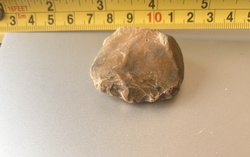
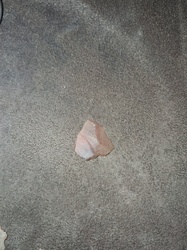
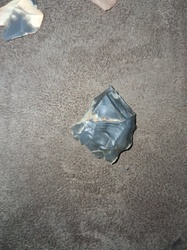
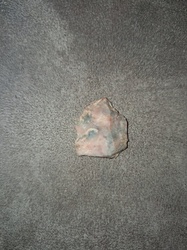
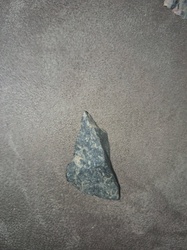
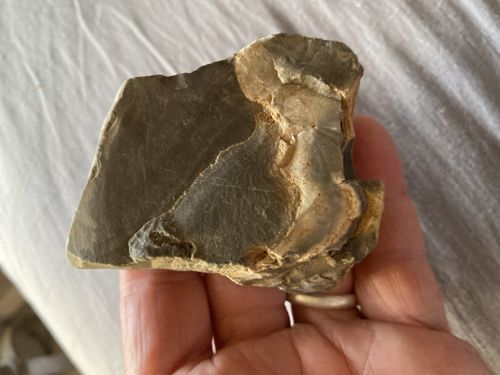
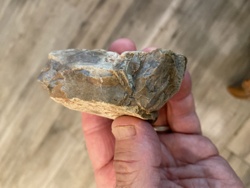
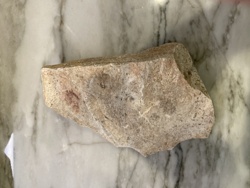
This artifact is a lithic scraper tool, commonly associated with North American prehistoric cultures. Measuring approximately 2.25 by 2.25 inches, the item is crafted from a high-quality, fine-grained flint or chert. Its coloration exhibits a range of earthy tones, featuring a dominant dark olive-gray center with tan and cream-colored calcareous cortex remnants along the perimeter. The tool is characterized by several visible flake scars on its dorsal surface, indicating intentional percussion flaking to shape the piece. The edges show signs of unifacial retouching, a technique used to create a sharp, durable working edge suitable for scraping hides or wood. The surface displays a distinct waxy patina, a result of significant age and chemical weathering. While appearing rugged, the flint's edge shows some micro-chipping consistent with prehistoric use-wear. There are no modern maker's marks, as this is a handmade lithic debitage product. Found in Guthrie, Oklahoma, this specimen likely dates to the Paleo-Indian or Archaic period, demonstrating skilled flintknapping craftsmanship and utilitarian efficiency.
AI-Generated Appraisal Disclaimer
Estimated Value
$45.00 - $75.00
Basic Information
Category
Prehistoric Artifacts / Stone Tools
Appraised On
February 20, 2026
Estimated Value
$45.00 - $75.00
Additional Details Provided By Owner
User Provided Information
Paleolithic flint hand axe scraper tool found in Guthrie OK 2.25" x 2.25
Item Description
This artifact is a lithic scraper tool, commonly associated with North American prehistoric cultures. Measuring approximately 2.25 by 2.25 inches, the item is crafted from a high-quality, fine-grained flint or chert. Its coloration exhibits a range of earthy tones, featuring a dominant dark olive-gray center with tan and cream-colored calcareous cortex remnants along the perimeter. The tool is characterized by several visible flake scars on its dorsal surface, indicating intentional percussion flaking to shape the piece. The edges show signs of unifacial retouching, a technique used to create a sharp, durable working edge suitable for scraping hides or wood. The surface displays a distinct waxy patina, a result of significant age and chemical weathering. While appearing rugged, the flint's edge shows some micro-chipping consistent with prehistoric use-wear. There are no modern maker's marks, as this is a handmade lithic debitage product. Found in Guthrie, Oklahoma, this specimen likely dates to the Paleo-Indian or Archaic period, demonstrating skilled flintknapping craftsmanship and utilitarian efficiency.
Related Tags
Get Your Items Appraised
Instant estimates of your treasures with AI-powered instant appraisals